Bulgaria

Introduction

So the random number generator we use to chose the next country to visit has eventually allowed us out of Africa. We went to Bulgaria.  I was last there some 18 years ago when it was the first country to be picked out of the hat at the start of my Guinness European Capital City challenge after visiting Dublin.  That seems a long time ago now.  I remember being very excited about embarking on the challenge combined with the excitement/nervousness of travelling alone to a destination I knew little about.  It also had the challenge of coping with the Cyrillic alphabet.
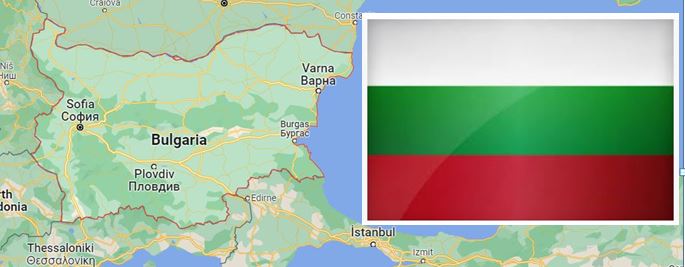
I’ve watched a few videos of modern-day Sofia.  The multitude of ‘places of worship’ are still there as are the relic of the communist era but it somehow seems tidier than it used to and maybe there are not so many missing man-hole covers as there were making it safer for the pedestrian on a night time walk. The tour of Bulgaria by Rick Steves was interesting. I also listened to an interesting interview with Bulgaria’s new Prime Minister, Kiril Petkov.

I must say that I don’t think I’ve got properly under the skin of Bulgaria in this ‘virtual’ visit meaning I’ve not attempted any whimsical imaginary trips so please forgive me. Maybe there were too many other distractions in the month we spent there or maybe I got a bit disillusioned about my failure to meet a Bulgarian.  I think I’d better reign back my ambitions a bit next month.   

Meeting someone from Bulgaria

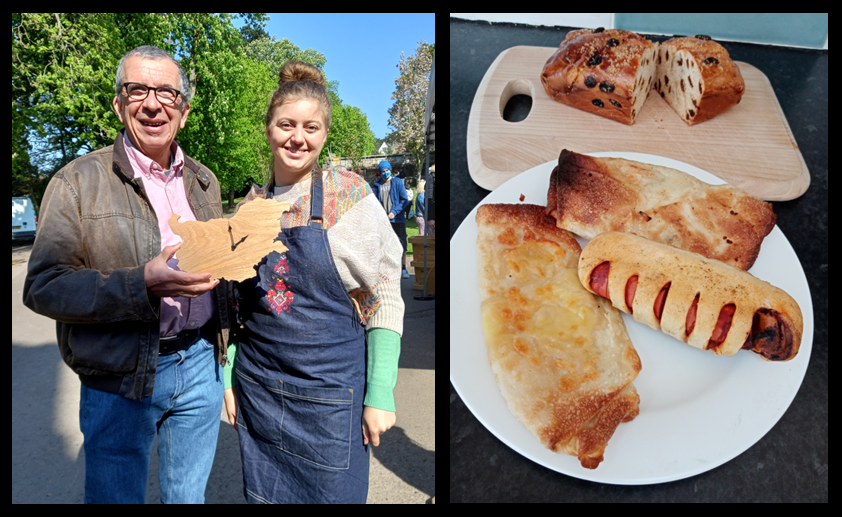
It’s took a while but I did eventually manage to meet a Bulgarian. Sneja, from Plovdiv, Bulgaria runs the Pekarna stall at farmer’s markets. We met up with her at Insole Court and purchased various items made with hand-made filo pastry, a recipe taught to her by her grandmother and a Bulgarian loaf of sweet bread. It was a pleasure to gift her a clock I had made in the shape of Bulgaria.
Food

We had just the one meal at home this month, a Bulgarian moussaka – which is a bit like the Greek version but made with potatoes instead of the aubergines.   And very tasty it was too.

Drink

We found Bulgarian Deer Point wine available and got hold of a couple of different bottles and very palatable it was too.

Literature

Physics of Sorrow by Georgi Gospodinov.  That was sure an interesting read.  A labyrinth of stories.  Provoked a lot of self-reflection in me.  Not difficult to read but in many ways dense and not to be rushed.  I lost the thread at times and read it more as a series of short stories. Well-written and well-translated.

On the lighter side I also read ‘A Brit of Bulgaria’ by Richard Clasby.  Written in diary format, a good intro to life of an ex-pat in Bulgaria, but one who works as an odd job builder, does lots of charity work and grapples bureaucracy with plenty of wildlife thrown in. Strangely enough it was this book that gave me perhaps my greatest insight into modern-day Bulgaria.

Film

Zift (2008) –  A man is freed on parole after spending time in prison on wrongful conviction of murder.  Jailed shortly before the Bulgarian communist coup of 1944, he now finds himself in a new and alien world – the totalitarian Sofia of the 1960s and onwards to the modern day. Filmed in black and white, full of somewhat bizarre characters and events but enjoyable.

Love.net  (2011) – a film about that follows the parallel stories of a number of characters who are trying to change their lives via the Internet or are simply having fun online.  Not a great film but not awful. Improves as it goes on and the stories develop.  Too much unnecessary titillation in my opinion (I must be getting old!).  Didn’t get too much insight into modern Bulgaria except that the apartments looked very smart and modern. 

Music

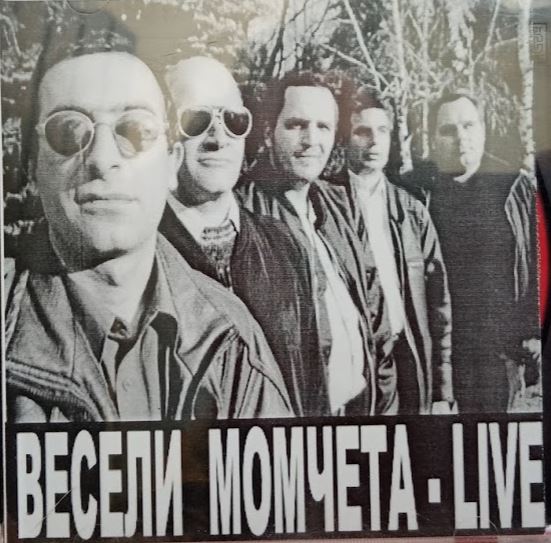
I tried a number of Bulgarian playlists on Spotify but I kept coming back to a CD I purchased in Sofia when I was in there in 2004. Looking back at my notes from that trip it was a band of five male singers, three of whom were blind, with an accordion performing in the street.  Lots of good harmonies. I wonder if they are still performing?
A friend also recommended that I try listening to Ivo Papasov and his Bulgarian Wedding Band.  Turned out to be a good recommendation. 

Clock

I managed to obtain a nice bit of off-cut hardwood from a local carpentry business from which to make a clock in the shape of Bulgaria.  Another interestingly shaped country, perfect for a clock!

Charity

Casting my mouse around to see if there was a Bulgarian charity I would like to support I came across the work of Friends of Bulgaria which focuses on the wellbeing of children growing up without parents or family in institutional care.  What particularly caught my eye was an upcoming triathlon they are competing in and raising funds for Ukrainian refugees in Varna.

Railways

Bulgaria is the first country on our virtual tour we’ve visited that has an extensive railway network.  I contacted my friend Ian who is aiming to travel by rail in every European country.  He’s almost made it. And yes, he has been to Bulgaria and was kind enough to share with me his blog of his 11-day trip there.  I was tired just reading it!  Ian is a great planer and record keeper as well as someone who finds interesting things to do and see even in destinations described as dull and boring in guide books. I can tell you that on his trip there in 2011 he travelled 1154 miles by train at an average speed of just 30mph. He’s also good at finding restaurants, another reason I like travelling with him! 

New Siemens loco about to be delivered to Bulgaria in 2022

Stamps

Used Bulgarian stamps are very inexpensive and you end up with quite and eclectic mix. Art and theatre seem to be one theme they concentrate on as well as sporting achievements.

Geocaching

When I went to Sofia in 2004 geocaching was still in its infancy.  There were a few geocaches in Bulgaria but not in Sofia itself.  I had an idea of creating a virtual geocache whilst I was there and did all the homework but when I returned home, put it all together and submitted it for review, it was rejected on the basis that I was not a resident of Bulgaria and could not maintain it, even though it was a virtual cache and did not have a physical geocache at the end of it.  Bulgaria remains one of the few European countries where I have not found a cache.

As part of this challenge I want to solve a mystery cache in each country I visit virtually.  Things have changed a lot and there are now loads of caches there including many mystery caches.  I tried to solve one based on the tile game 2048 and must have attempted it more than ten times but failed every time.  Instead I solved one called For Bravery and based on the date of the Serbian-Bulgarian War.  Not only was it interesting but it reacquainted me with using Excel spreadsheets.

Highest Point

The highest peak in Bulgaria is Musala which stands at 2,925 metres (9,596 ft).  A peak that is reasonably accessible in summer months, in particular on days the gondola is running which takes you part way up.  It is snow-covered for many months over autumn-winter-spring making ascents much less common. Rob Woodall gives a good account of his ascent, when he was unfortunate enough to turn up on a July day when the gondola was not running.

Sport

Again I failed to find a game Bulgaria were competing in where I could cheer them along.  After a bit of research I came across the high-jumper Stefka Kostadinova.  Her world record of 2.09 metres has stood since 1987. That’s a long time! She was the 1996 Olympic champion, a twice World champion, and a five-times World Indoor champion. 

Farewell Bulgaria

A lot seems to have changed since I was last in Bulgaria in 2004.  Perhaps the biggest change is that Bulgaria is now in the European Union and the UK isn’t.  One day it would be nice to go back there in person.
If you enjoyed reading this you may like to read about other countries we have visited as part of our Armchair travel Challenge.
Rwanda

Initial Impressions

The random number generator we use to select the next country for us to visit appears to like Africa.  It chose Rwanda this time.   Some early homework revealed Rwanda is a country which has some tasty food with lots of bananas included.  We thought we’d even aim to source some banana beer.  Rwanda looks green and lush and is called the ‘Land of a 1000 hills’.  It didn’t enter the Winter Olympics nor did they qualify for the finals African Cup of Nations football competition currently underway so I chose to concentrate on their cycling competition.  My other initial impression was that it’s an excellent shaped county to make a clock of!  It looks a bit of a no-nonsense country so I’d better watch my step.  Please remember therefore that the following tales are all in my imagination.

Travel in Rwanda

Well that was a surprise.  Rwanda is not what I was expecting at all.  Perhaps that’s why I got so many things wrong and ended up, how can I put this, in trouble.

I should have guessed that my preconceived ideas of Rwanda being a desperately poor and underdeveloped country was wrong when I went to see Arsenal play and their shirts were emblazoned with ‘Visit Rwanda’ slogans.

Like many of you no doubt, the last I had heard of Rwanda was the 1994 genocide when close to a million people were killed in the space of 100 days.  A lots been going on since then with reconciliation being at the heart of it.  I’m not going to paint a scene of a bed of roses and with an administration in power that could be described as authoritarian, I’m going to watch my step.

I flew from Heathrow on with the swanky RwandAir straight into the capital Kigali.  Rwanda is a small, landlocked country, about half the size of Wales, mid way down the eastern side of Africa.  I had an image of dry, arid, dusty capital but no its not.  Kigali is almost as green as Wales and nothing like I imagined.  It is modern, swanky hotels, new cars, lots of scooters and very welcoming.  Something I wasn’t prepared for.

I’ve learnt to travel over the years without drawing attention to myself.  I dress down and carry what I need for the day in a plastic carrier bag.  That way I aim to look just like I am out doing a bit of grocery shopping.  This time however that policy got me into trouble.  None of my mates told me plastic bags are banned in Rwanda!  The policeman was very kind.  He let me off with just a warning provided that I attended one of the monthly clean-up days that Kigali has. 

I turned up ready to do my penance but it seemed everybody else in the country had done something wrong. The place was packed with litter pickers. No wonder the city is so clean.

I also got into trouble when I walked into a bar and asked for the local banana beer.  It was brown and cloudy – a bit like a Bass in the 1970s.  I complained saying it looked like it had been made from bananas that had been wrapped in banana leaves and buried underground for three days before being retrieved and fermented.  It turned out that’s exactly how banana beer is made.

(A video that helped give me an insight into the country: Oscar and Dan)

Railway

We had a bit of a problem catching a train initially in Rwanda as there aren’t any.  But we weren’t going to let that deter us.  Rwanda has become known a place where it is easy to do business.  It’s like a Singapore of Africa.  There’s been lots of tentative plans to build a railway in the past but nothing had materialised – not till now.  It seemed like plans are all well and good but if you keep falling out with your neighbours then things aren’t easy.  Having said that if the UK and France can build the Channel Tunnel and even get it to meet in the right place in the middle then anything is possible. 

Our plan was to build a north-south and an east west railway line to the borders with DRC, Uganda, Tanzania and Burundi. That would show a sense of willing and if the neighbours wanted to join up the line they could.  Even if they didn’t we thought it would be a great tourist attraction. 

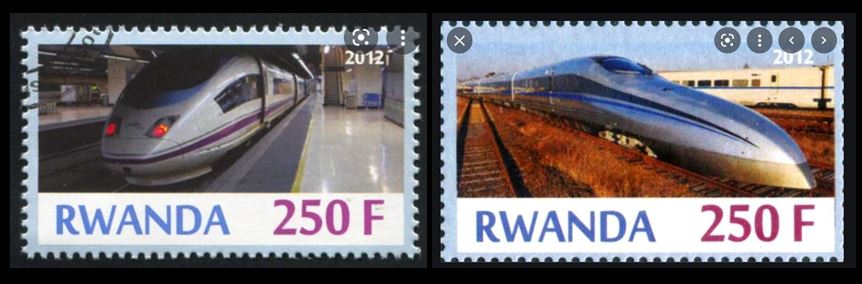
One slight problem though.  Rwanda is also known as the Land of 1000 Hills and hills aren’t always conducive to building railways.  Not to worry, if we can build railways in Wales then Rwanda should be a doddle.  We just kept to the valleys and went around any hills.  The idea of the prototype trains seen on past Rwanda stamps however had to be shelved. With those long noses they just couldn’t get around the sharp bends we had put in.  

Highest Point

They say everything you read about Rwanda is about gorillas and genocide.  From my experience it’s true. The books I’ve read and films we’ve watched all focus or mention them, oh, and banana beer – its everywhere. These next couple of days would be no exception.  We were heading up to Rwanda’s highest point, the volcano Karisimbi and at 4507 meters, 14,787 feet, and it’s a bit of a beast.  It lies in north west Rwanda right on the DRC border, and in the Volcano National Park, famous for its mountain gorillas.  We were told that if the gorillas don’t get you the kidnappers will, hence the need for guides and a military escort.

Most people we met were in the area to start their gorilla treks.  We were lucky because on the first day a couple of gorillas popped out to see us on the forest trail.  I think they wanted to see me in my green wellies.  Well, it is the rainy season and pretty muddy, and that’s me saying that from Wales.

We camped just below the summit and the solders lit fires and were kind enough to share their food with us – potatoes and bananas.  We were up before dawn the next day, quickly climbing above the tree-line and on the summit by mid-morning luckily escaping any altitude sickness which some suffer from climbing this peak. The other thing I wasn’t expecting was the snow at the top!   There’s no road up here but there is a communications mast, built by hand apparently – they must like communicating. In no time at all it was time to head back to Kigali.

(Account plagiarised from Eric and Matthew Gilbertson’s Country Highpoints)


Food

We have had our first experience of cooking plantain – looks like a banana but is starchy rather than sweet.  Igisafuliya means “pot” in Kinyarwanda, one of the official languages of Rwanda, and so named because it is all made in one pot.  It consists of chicken (not a lot), onions, leeks, pepper, tomatoes, celery (or in our case celeriac), plantain and spinach. The addition of rice and garlic bread was not in the original recipe.

Drink

Every Rwandan book read and film I watched seemed to have a reference in it to banana beer. I managed to find an online purveyor of Rwandan beer/wine and thought I would be daring and order some.  It was a bit of a nerve-wracking experience since as soon as I placed the order I received an e-mail back saying that my luxury handbag was on its way from a delivery company in America. Exactly the same thing happened to a friend who writes an excellent beer blog Big Alex’s World Beer Blog and picked up on my discovery of a source of Rwandan beer and ordered some. Fortunately our beer arrived safely and not our luxury handbags. I found the 11% banana beer pretty refreshing.  It may look like the homebrew I made in college days but tasted like a fizzy punch.

We also managed to find some Rwandan coffee.  One of the books I read described the challenges of developing a coffee industry and the need to get the freshly picked coffee beans to the washing plant within four hours. The lack of transport made this difficult hence initiatives started up to provide loans for people to purchase bikes to transport the beans.

Film

We managed to find three films to watch about Rwanda:

‘Shooting Dogs’ with John Hurt and Hugh Dancy.  A film about the 1994 genocide from the point of view of a priest  and an English teacher who share their school with UN peacekeepers.  A harrowing watch which leaves you asking ‘what would I have done?’

‘Hotel Rwanda’ . Another film about the awful 1994 genocide.  It portrays hotelier Paul Rusesabagina and his efforts to shelter over 1000 people in the besieged Hôtel des Mille Collines during the genocide. Since leaving Rwanda in 1996, Paul Rusesabagina has become a prominent critic of the Rwandan regime and is currently serving a lengthy jail sentence.

‘Gorillas in the Mist’ starring Sigourney Weaver as the American naturalist Dian Fossey who goes to Rwanda to study the mountain gorillas. She is appalled by the poaching of the gorillas for their skins, hands, and heads. She is eventually murdered by person/people unknown. Her efforts are said to have helped save the gorillas from extinction and made the administration in Rwanda realise the tourist potential of the mountain gorillas. Part of the income generated from gorilla treks now contributes towards their preservation.  The film seems pretty dated now but still a moving watch.

Literature

There was no shortage of literature for me to read.  I ended up reading four books in all, two fiction and two non-fiction books, a bit of a record for me as I’m normally a slow reader.

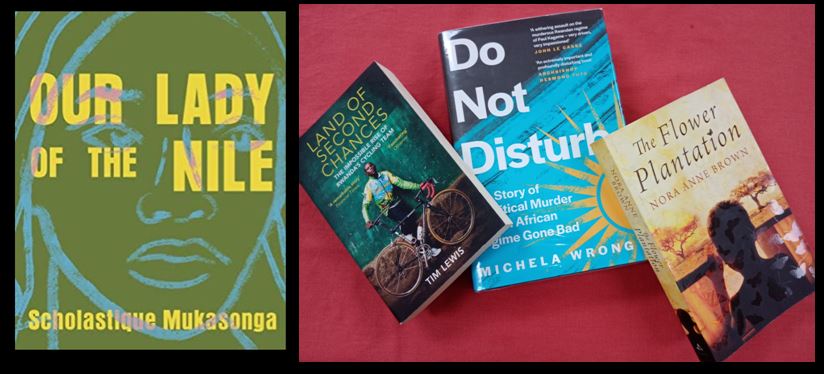
‘Our Lady of the Nile’ by Scholastique Mukasonga.  It may seem strange but out of the films and books on Rwanda this is the best I’ve encountered for giving me a real insight into the country, customs, food, countryside and its people. It is told from the point of view of the pupils at the Our Lady of the Nile boarding school and has translated very well from its original French.

‘The Flower Plantation’ by Nora Anne Brown – beautiful writing. I hadn’t realised how it dovetailed into the ‘Gorillas in the Mist’ story  till part way through

‘Do Not Disturb’ – Michela Wrong.  A weighty tome.  A piece of investigative journalism looking at Rwanda over the years. Puts the genocide in context.  Not a book to take with you on holiday to Rwanda.

I extended my ‘virtual’ stay in Rwanda to follow the Tour du Rwanda and read ‘Land of Second Chances’ by Tim Lewis. I don’t pretend to know a lot about cycling but now know more than I did before and much more about life in Rwanda. A good read, well written and more than just about cycling.

Stamp

Gorillas seem to be synonymous with tourism in Rwanda so what better stamp for me to get as part of my ‘virtual’ holiday than one with a gorilla pictured.  They look fine creatures. 

Geocaching

I tackled solving the only Puzzle Cache currently in Rwanda.    It was called Never Again and gave me an opportunity to learn more about the genocide and to spend time reflecting on past atrocities in the country.  Here’s wishing Rwanda a bright future moving forward. 

Charity

I was happy when I discovered Rwanda Restored, a local charity based here in Cardiff that is supporting education in Rwanda.  Rwanda Restored seeks the advancement of education of young people in Rwanda by building or improving schools, relieving financial hardship by providing money for food, housing, education, clothes and social support for widows and orphans across Rwanda.  It was certainly  interesting learning more about the valuable work they have been doing in Rwanda over the years, building a school and financially supporting pupils who attend.

Clock

I’m continuing to try and make a clock in the shape of each country I visit.  Rwanda is another nice shape for a clock.  I failed in my attempt to meet anyone in Rwanda in Cardiff so rather than have the clock sit on my bookcase I gifted it to Rwanda Restored and they kindly took it out to their school in Kigali where it now of the wall. Many thanks.   

Sport

I stayed on a bit longer in Rwanda than I originally intended to in order to catch some of the Tour du Rwanda cycling race.  I didn’t find a live stream of the race but the highlights on the official YouTube channel were good to watch.  As well as the cycling it was interesting to see countryside and people. Stage 6 was won by Ukrainian Budiak Anatoli, a valiant effort considering the terrible things happening in his home country.

Rwanda – Music

Rwanda is quite a musical and dance nation as far as I could tell. Like the Rwanda nation itself it has modernised quickly and there is a lot of hip-hop music around.  Searching Spotify and I came up with quite a few playlists that appealed to me from gospel to traditional music with a strong bass and harmonies.    

Farewell Rwanda

The modernisation of Rwanda had completely passed me by so it’s been an excellent month learning about Rwanda old and new.  I haven’t met a Rwandan as yet but did get the opportunity to meet up with some people who had visited the country and it was great to listen to their experience. Farewell my friends. 

Meeting someone from Rwanda

When we had our ‘virtual’ month in Rwanda earlier in 2022 I never managed to arrange meeting anyone in Cardiff from Rwanda. 

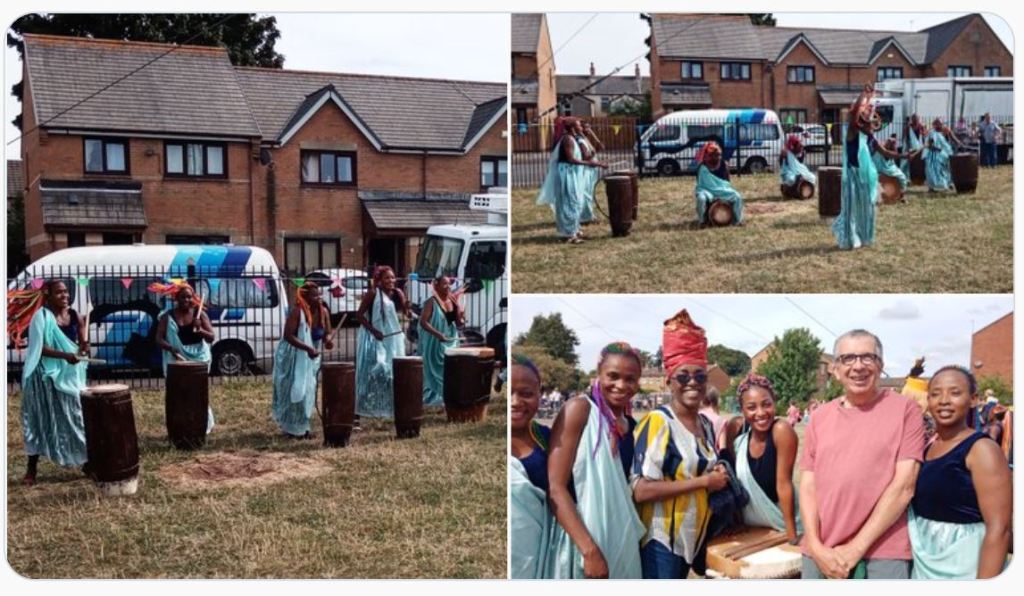
In August 2022 presented an opportunity to put that right.  We had the pleasure of seeing and meeting Ingoma Nshya – the ground-breaking Woman drummers of Rwanda.

I learnt that for centuries in Rwanda, drumming was an activity reserved exclusively for men. Women were not permitted to touch the drums  or even approach the drummers.

They played at the Clifton Street Festival and gave it their all.  Well done.

Iver

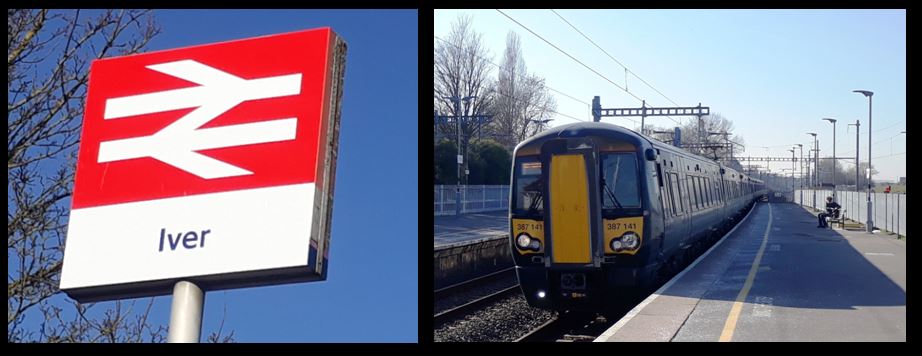
I realised I’d had it easy up till now, experiencing no real problems finding a station beginning with letters A to H.  Finding a station beginning with I was a little more challenging.  I did however have a stroke of luck.  We had a wedding to attend in London and that meant I could widen my search area.  Hence I stumbled upon I for Iver.  It is west of London, on the GWR mainline, some 14 miles from Paddington.  I did some homework on Iver and failed to come up with anything that would entice my wife to accompany me on the journey so instead she spent the morning at the V&A museum and I headed out to Iver.

Iver Railway Station

If I told you how I had tried to sell the idea of Iver to my wife you may begin to understand why I failed.  Firstly I’d had to admit that the train station isn’t in Iver at all and she faced a walk to get to the town.  Then I described Pinewood Studios (but we weren’t allowed in there) and Heatherden Hall, a mansion where the agreement to form the Irish Free State happened to be signed (don’t think we are allowed in there either), and Richings Park which is where RAF Bomber Command used to be briefly in WWII before it was destroyed – can’t go there wither as it has been developed into housing.  And that’s why I went on my own.

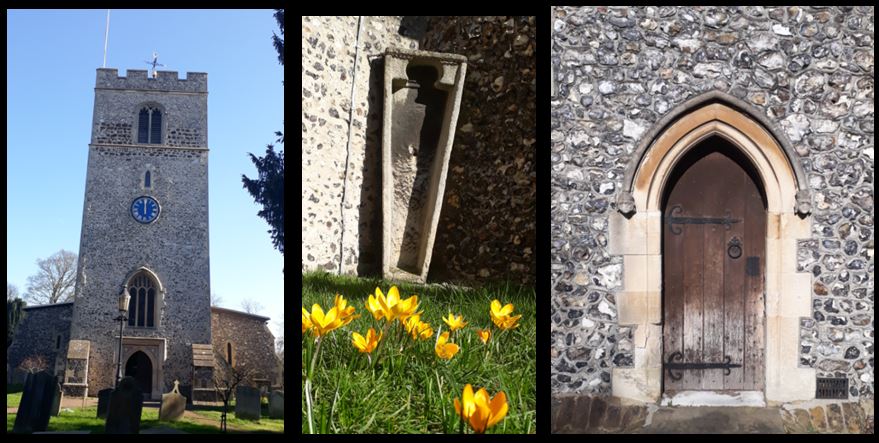
The was construction work ongoing at Iver station when I arrived.  May be it was all part of the handover of the station from GWR to Crossrail.  It certainly had me confused when I was looking for the Sidetracked – Iver geocache.  I found the Grand Union canal and went for a stroll along it but to be hones canals don’t look their best in February, all rather grey. From there I headed the half mile north towards the town centre. I stopped off to explore St Peter’s church and read a bit about its history which goes all the way back to Saxon times.  The history included the interesting fact that in the Eighteenth Century  the churchwarden made payments for killing a wide range of ‘vermin’ —polecats, stoats, hedgehogs (porpentines), and sparrows.

St Peter's church, Iver, Bucks

From the church I headed north up Swan Lane to find a couple more geocaches and admire the houses.  Returning to the church I then went west into the centre of Iver.  If I’m being honest with you I don’t find a lot there to explore or write about.  The old pub looks nice, there is a village sign and the local restaurant try and make a play on words with their names. I wandered back to the churchyard and ate my lunch musing on what other properties in the town may have been called.  Would the GP have been Iver Temperature and the dentist Iver Toothache?

Iver Village

I scampered back down to the station, caught the train back to Paddington where I met my wife before we caught the train back to Cardiff.

Date of visit: 25 February 2019

See progress to date: A-Z of Railway Stations

Ebbw Vale

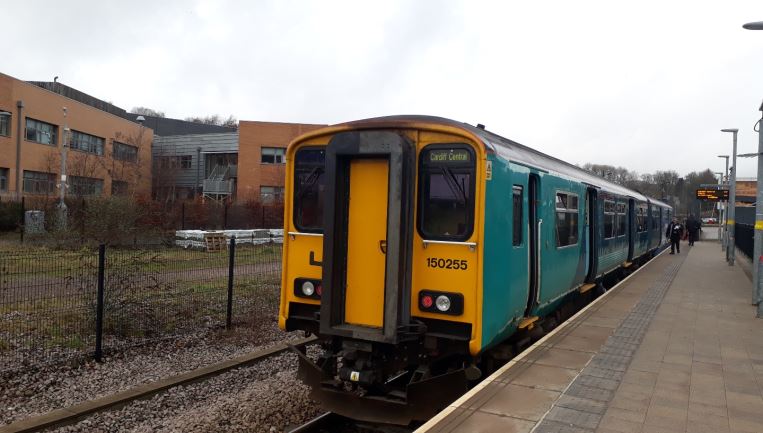
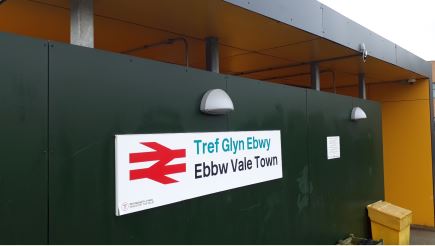
Ebbw Vale Town stationIt takes an hour from Cardiff Central to get to Ebbw Vale Town by train. The line heads towards Newport and then swings off north just before Newport and heads up the valley through Rogerstone and Risca.
Up until 2015 the line used to stop at what is now Ebbw Vale Parkway but the new station of Ebbw Vale Town was constructed at a cost of £11.5 million. You don’t get a lot for your money judging by looking at the station buildings but I guess it is all to do with laying the like and signalling etc.

My train at Ebbw Vale Town station
My train at Ebbw Vale Town station still in Arriva livery.

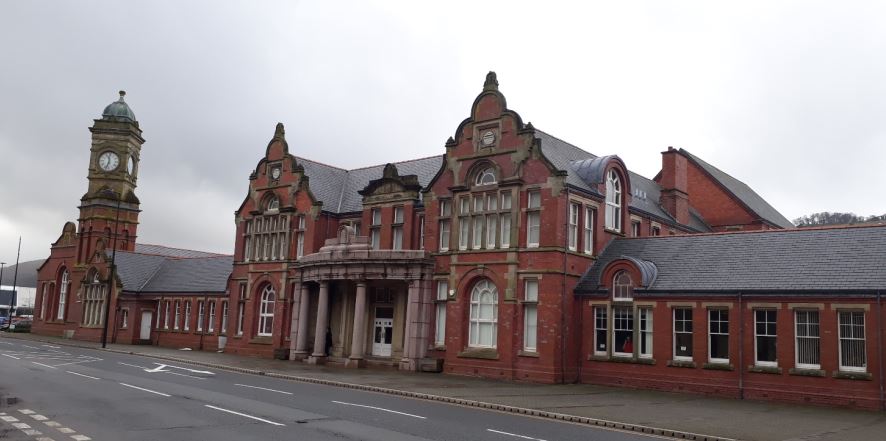
The Ebbw Vale Works Museum is based in the General Offices, the former HQ for the Steelworks, and what a grand building it is. The museum, staffed by former employees it seemed, full of enthusiasm to tell me all about the former steel works. Entrance is free but donations always welcome. It is well worth a visit.  The building, with its fine clock tower, also houses various other offices and a small café.

Ebbw Vale Works Museum

Anyone with ancestors in Gwent will find the modern Gwent Archives building a very useful resource, and easy to get too as it is next to the station.

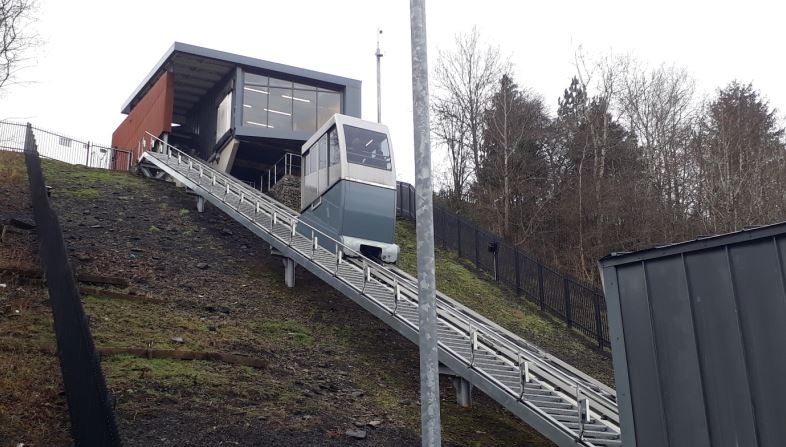
There is a small funicular present that takes you up from the level of the station and college up to the level of the town. When I was there it was pretty busy with students from the college using it.  Unfortunately is does seem to get vandalized on a regular basis and is frequently out of operation.  It cost £2.3m in 2015 and has broken down 250 times since then. For some reason the press wants to call it a cable car.

Ebbw Vale Funicular

Once I was up in the town of Ebbw Vale I had a wander up and down the main street.  There were a few modern sculptures that interested me as did the  old Ebbw Vale Literary and Scientific Institute, now preserved and used for arts and entertainment purposes it seems. It was built 1853-55 by the Ebbw Vale Iron Company.

A town still somewhat struggling to recover following the closure of the steel works there 40 years ago.  The ‘Circuit of Wales‘ race track on top of a mountain never came into being which I can’t help think was a good thing, or may be I’m just saying that because it is not a sport that attracts me.  Cyber security company Thales have recently announced jobs going being created in Ebbw Vale which sounds good.  Lots of European money have invested but the population still has a significant pro-Brexit majority.

Ebbw Vale dragon
In 2014 a derelict piece of land was transformed into an attractive public open space featuring a four metre high dragon. I must admit I liked the dragon. There is a geocache nearby too in case you are wondering.

Date of visit: 6 February 2019

See progress to date: A-Z of Railway Stations

Dinas Rhondda

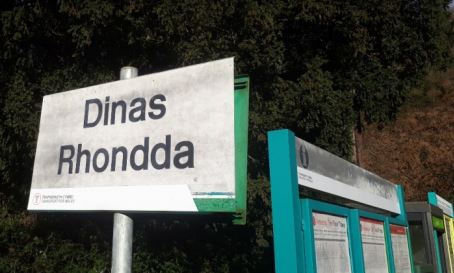
Dinas Rhondda station signThis was a day out in January 2019, not so much to visit a town, but to walk up a hill.  Dinas Rhondda is as the name suggests, in the Rhondda valley, between the more sizable towns of Porth and Tonypandy, the later town being where Winston Churchill controversially sent the troops in during a miners’ strike riot in 1910.  Dinas Rhondda is one of the train stops on the way to Treherbert.

Dinas Rhondda station - Pacer on its way to Treherbert - January 2019
Dinas Rhondda station – Pacer on its way to Treherbert

It was a cold and frosty January day but the forecast was good and it did indeed stay dry all day, though the temperature never seemed to get above freezing.  It was one of those days when its best to keep moving.    After exiting the comfort, I use that word loosely, of my Pacer train, taking a few pics, I explored a bit of Dinas, picking up a geocache in the process.  One thing I wasn’t expecting to stumble across in the town were pigs.  I was stood just on the other side of the wall when I spotted them.  I had quite a freight. My dog looked a bit surprised too I must say. Their black colourings blended in very well with the colour of  field (that’s another loosely used word).

Dinas Rhondda pig - A bit like a moth, this pig blends into its background very well
A bit like a moth, this pig blends into its background very well.

Time to head for the hills.  I’m still getting used to the fact that in South Wales you can quickly escape the noise and clutter of the town and soon be on the hills and hardly notice the towns below in the valley.  I thought I had done that today.  After a half hours walk the path was flattening out and the views beginning to appear.  The last thing I expected to see up here was a town.  Trebanog seems to break the rules.  Its not nestling down in the valley like most Welsh towns but for some reason but perched high up on a hillside.  It’s as if someone in the planning department didn’t understand contour lines when looking at a map and decided to build a village just here.  I can imagine it gets a bit nippy up here in winter when the wind is blowing. Fortunately for me today all was calm.  I was even more surprised when I read Dorothy Squires spent her last few years living here. (I had a lift off her pianist once when hitchhiking in the 1980s).

Trebanog - Rhondda Valley - South Wales
Trebanog – seems a strange place to build a town

The geocache I had come to find is aptly called Edge of the World.  I’d like to say it was a simple straightforward find but I’d be lying.  It took a fair old time to work out from the description given where I should be.  The undergrowth in January should be short but the tufty reeds could hide a lot.  I read and reread the logs previous finders had left.  It seemed I was in the right place but just couldn’t lay my hands on it.  I didn’t want to give up.  It was a long way to walk back up here another time in the future.  Eventually I got it.  Phew!

Looking up the Rhondda Valley

I headed further along the path I had walked up and realised that if I was lucky I could descend off the hill a different way and end up in Porth and catch the train home from there.  The plan worked reasonably well except that the track, once it became metalled, also became very icy.  A pair of skis would have come in handy.  Luckily I stayed upright the whole way down though it was touch and go at times.  I’ve never seen a dog loose his footing so much.  My poor collie dog sliding all over the place.

Half way up Mynnyd Y Cymmer

The path down bought us almost into the middle of Porth.  There was just one geocache left to find and with the help of my decoy-dog it wasn’t too tricky.  Another nice warm Pacer train, still in Arrive Trains Wales livery, brought us back to Cardiff.

Date of visit: 30 January 2019

See progress to date: A-Z of Railway Stations

Chepstow

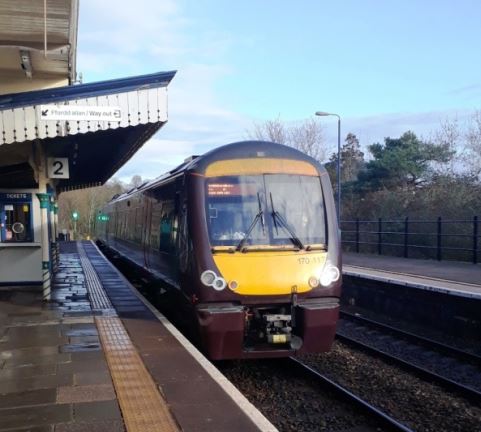
My 700 Series Crosscountry train leaving for Birmingham

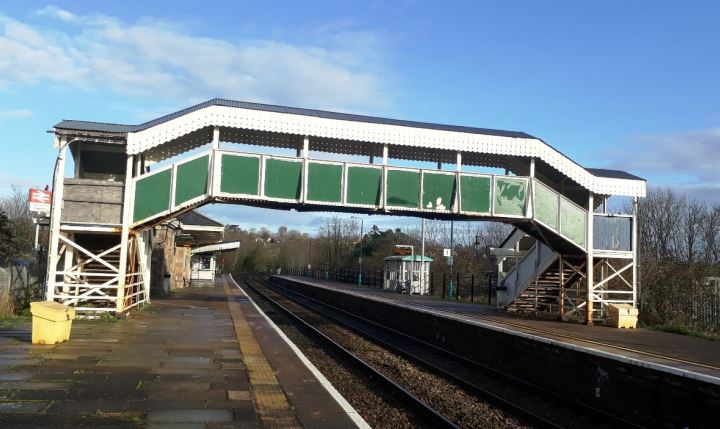
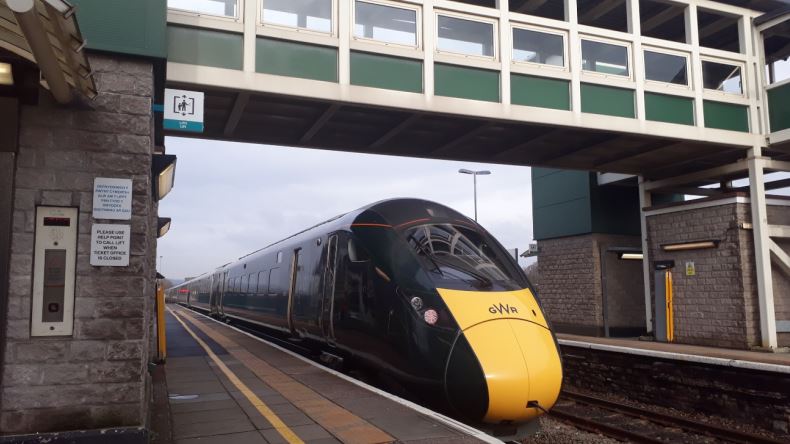
And so another day out on the train in January 2019 and for C I had chosen Chepstow.  What a hidden gem it turned out to be.  If I had been here before in my days as a delivery driver then I had forgotten about it.  It’s easy to get there from Cardiff Central station, no change of train needed.  And what’s more it’s a picturesque ride along the Severn estuary too.  In no time at all I was arriving at Chepstow station, one of those stations where it seems time has stood still.  There’s an old covered footbridge, a small brick ticket office and even a little café.  I almost didn’t want to leave the station.

Old footbridge at Chepstow station.

I forced myself to head off towards the town.  Be warned this isn’t the most charming entry into a town you’ll get.  Yes, over the years the M4 and other main roads have taken some traffic away from Chepstow but there is still a fair amount of traffic wanting to drive around it and you have to get over or under those roads before you get to the heart of Chepstow. 

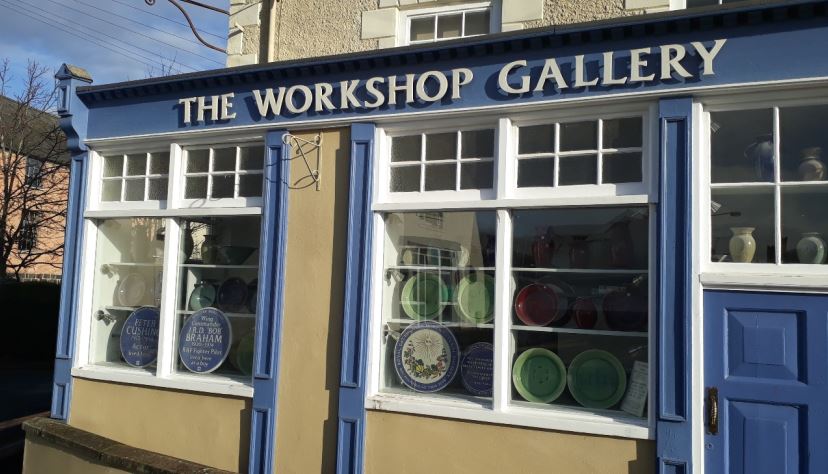
Workshop Gallery Chepstow. I have been looking for a company that happens to make blue plaques.

I was here not only to explore the town, absorb the atmosphere, learn about the history of the place but also to do an extended geocache, on a route that would start and end in the town centre but also take me down to the river and castle.  The pedestrian route from the town to the river I found also a bit confusing but then again I was looking for clues on my trail so wasn’t following the most direct route but it did show me some of the hidden away places in the narrow windy backstreets that can still maintain a small independent shop or two.

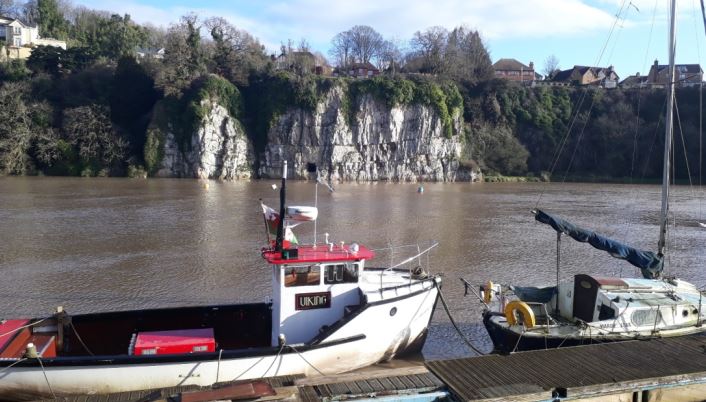
Chepstow quayside - much quieter here now than it was 100 years ago
Chepstow quayside – much quieter here now than it was 100 years ago.

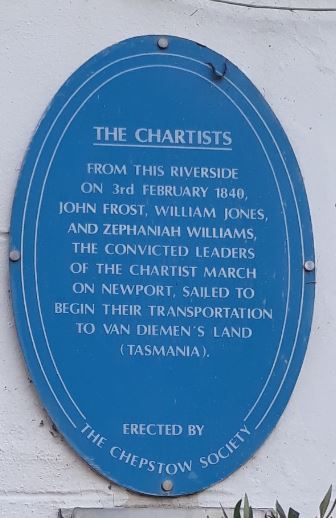
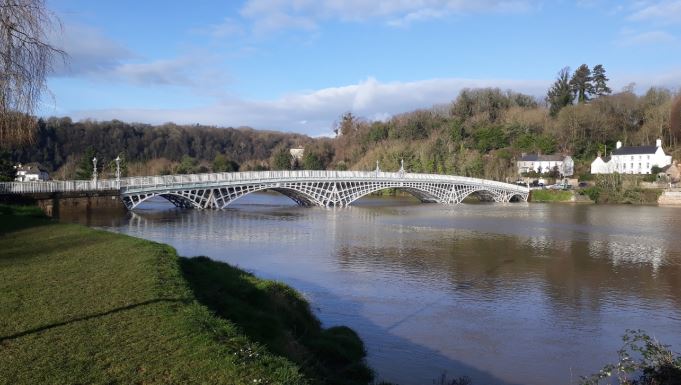
The last the Newport Chartists saw of WalesHaving meandered through the narrow roads and lanes I was suddenly at the quayside and I think this was my favourite part of the town.  It was not holiday season and it was relatively early and I seemed to have the place to myself.  It’s almost as if I had discovered the river, the charming pubs, the bandstand, the beautiful Bigsweir iron bridge over the River Wye. This is the quay which back in Victorian times would have been busy with people making the trip back and from to Bristol.  Back further in time it was the place where some of the Newport Chartists were deported to Tasmania, probably never to see the green green grass of home ever again.
I had been on the other side of the River Wye last year when walking the first section of the Offa’s Dyke path – and not walked another section since.  One day I’ll get back to it.  That walk had taken me high up on the cliffs where I overlooked the river and the town and barely got an idea what was here below.  Today, as I turned the corner and started to head back up the hill towards the town I found the museum housed in an old Georgian townhouse, the Norman castle commissioned by William the Conqueror, nice green open spaces, all of which I left mainly unexplored as there was so much else to see.

Bigsweir bridge over the River Wye in Chepstow

Around a few more corners and across a car park I was in the bustling town centre.  The quayside may have been quiet but the town centre was alive.  People purposely going about their business and the Georgian and Victorian architecture of the buildings and shops looking good.

Chepstow Castle, one of the oldest surviving castles
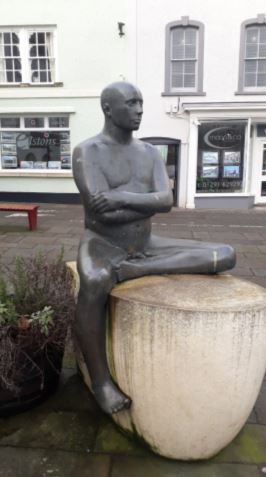
The boatman sculpture in Chepstow. Must get chilly in the Winter months

As I headed back down towards the river, having not gathered all the clues to solve puzzle I was working on, there was the town hall, the naked sculpture of the boatman, representing Chepstow’s past. I didn’t want to stare but I was trying to find the clues I needed. 

One more circuit of the town and I managed to find most but not all the information I was after.  It can be surprising what you spot second time around, looking behind you when you didn’t the first time around.  I battled the main road again and even had time back at the station for a cup of tea before my train back to Cardiff arrived.

The colourful Georgian houses of Chepstow

Date of visit: 25 January 2019

See progress to date: A-Z of Railway Stations

Bridgend

Bridgend station ticket office
The modern ticket office at Bridgend station.

Well this is an easy challenge so far.  I was spoilt for choice of where to go for a station beginning with a B. Would it be Barry or Bristol, Britton Ferry or Birmingham?  In the end I decided on Bridgend, more because I fancied a trip combined with a bit of geocaching.  And so in January 2019 I headed west to Bridgend. It’s an easy trip from Cardiff that’s for sure as Bridgend is on the main Cardiff to Swansea line and most trains stop there.  Have I been there before?  Not that I can recall, though I must have been through it on the train many times before.

So regular is the service I didn’t even bother planning my trip – just turned up at Cardiff Central and caught the next train to Bridgend.  Fortunately for me it turned out to be one of the new Class 800 trains.  My dog gave it the thumbs up and lay down quietly for the journey.

One of the new Class 800 trains at Bridgend station
One of the new Class 800 trains at Bridgend station.

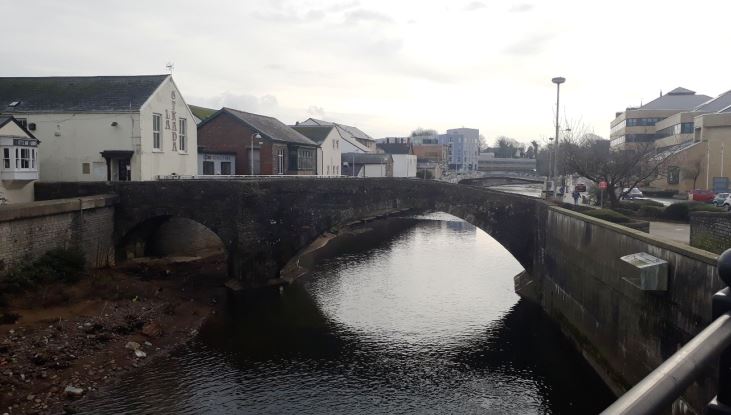
Once at Bridgend I had a nose around the station which is quite a mix of modern and old.  It was then out and virtually straight into the centre of town.  Yes, the River Ogmore does pass through the centre of Bridgend but if I was being honest it is not at its most attractive at this point.  The historic bridge in the centre of Bridgend, imaginatively called the Old Bridge dates back to 1425 and is a scheduled ancient monument.  

The historic bridge in the centre of Bridgend

My hound isn’t at his most comfortable in town centres – mainly sniffing out scraps of food that people have dropped.  So maybe I should have written – I am not at my most comfortable with my dog in town centres.  He’s probably perfectly happy.  We soon escaped the main streets and the rest of the day was spent geocaching to the south west of the town along the banks of the River Ogmore, finding all bar one of the geocaches we looked for.  Some were a bit tricky but most were OK, some quite inventive in the way they were hidden.

One of these creatures wasn't real.
One of these creatures wasn’t real.

Date of visit: 21 January 2019

See progress so far: A-Z of Railway Stations

Aberdare

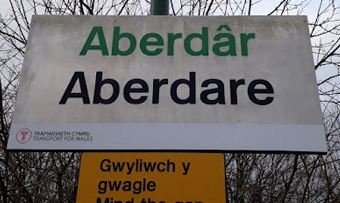
Aberdare station signYes, I admit it.  I’m a bit of a list man.  So with my challenge to have a pint of Guinness in every European Capital City soon drawing to a close it was time to think of a new challenge.  That’s where this one came from.  The idea was to travel a bit more by train, but to take the effort of having to think about where to go next I thought I would go through the alphabet, hence A is for Aberdare.  There’s quite a few stations starting with A in Wales so why did I choose Aberdare?  Well it’s not a town centre I have explored much in the past, only sort of driven through it – not that there is that much of a town centre. Someone asked if I was doing the challenge in Welsh or English.  No need to decide just yet.  They both begin with A.  So in January 2019 I thought let’s go and see what there is.
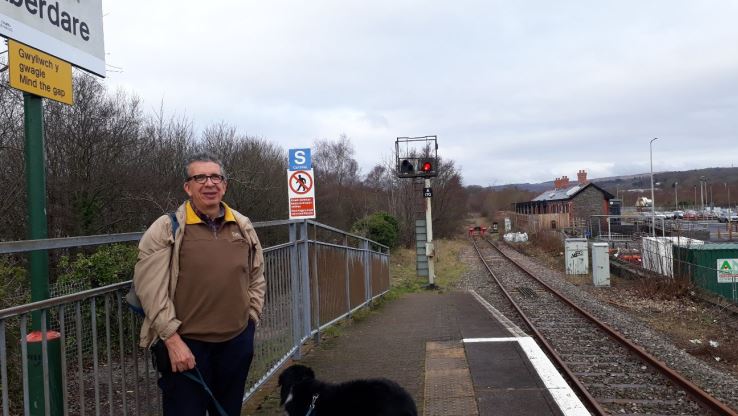
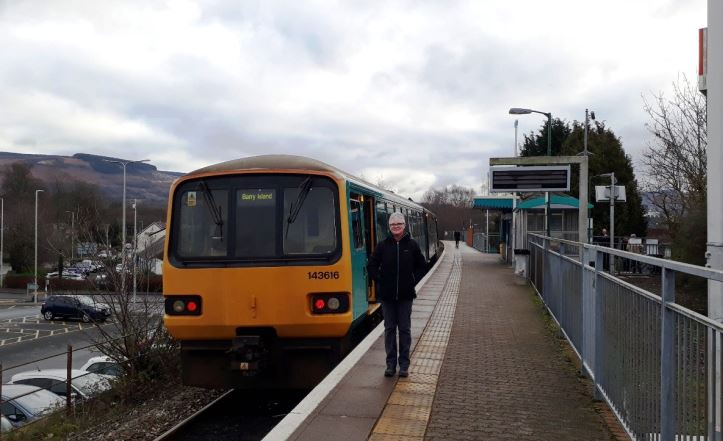
Aberdare stations - Me and my stationary dog - you would have thought he would have been excited enough to look at the camera. Apparently not.
Aberdare stations – Me and my stationary dog – you would have thought he would have been excited enough to look at the camera. Apparently not.
Aberdare Station
Thought I had better get a shot of the train that I arrived on – after all the days of these old trains are numbered I believe, Also my wife decided to join me of this first trip. I am honoured.

From the train station it is only a short walk up into the town though not exactly in a straight line. There are some main roads to get across and the route is a bit wonky.

Aberdare town centre
Aberdare Constitutional Club - a great looking building
Aberdare Constitutional Club – a great looking building

From Aberdare town centre we walked up to Dare Valley country Park. It’s a pleasant walk of around an hour I guess, though I was dawdling quite a bit or should I say geocaching, which slowed up progress a bit as some of the geocaches were tricky to find. It was a good route for the dog too.  At the end we were rewarded with finding a tea shop.  No dogs allowed in the main tea room but they are allowed in the foyer of the building on the opposite side of the courtyard so we went there and sheltered from the cold weather.

Dare Park - Not the train we were going home on luckily
Dare Park – Not the train we were going home on luckily

There was just time to walk back down to town and meet up with a friend for a drink in a good Aberdare pub before heading home having enjoyed the start of another challenge.  Only 25 letters to go now.  Will I make it I wonder?

Date of visit: 11 January 2019

See progress so far: A-Z of Railway Stations