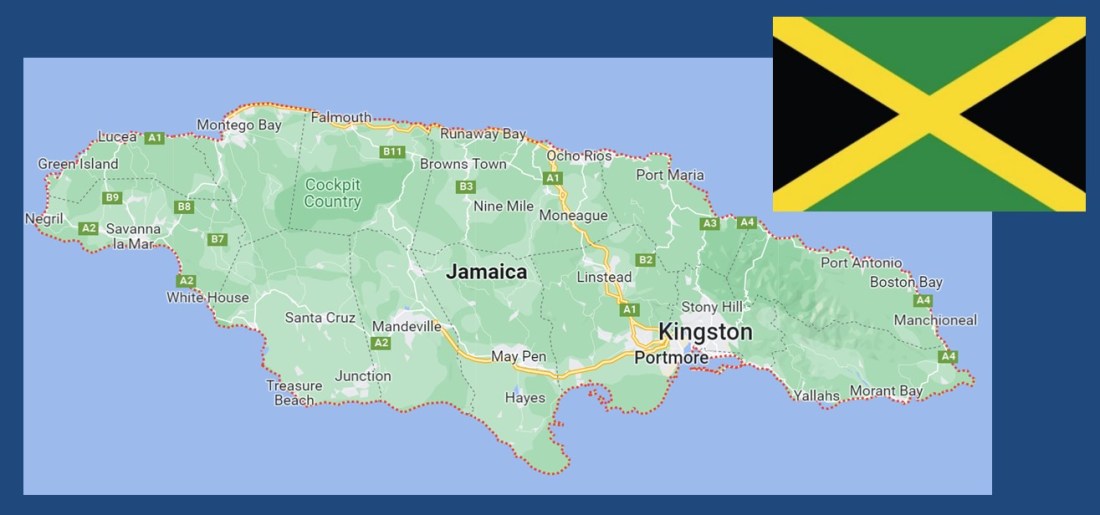
Jamaica

Food

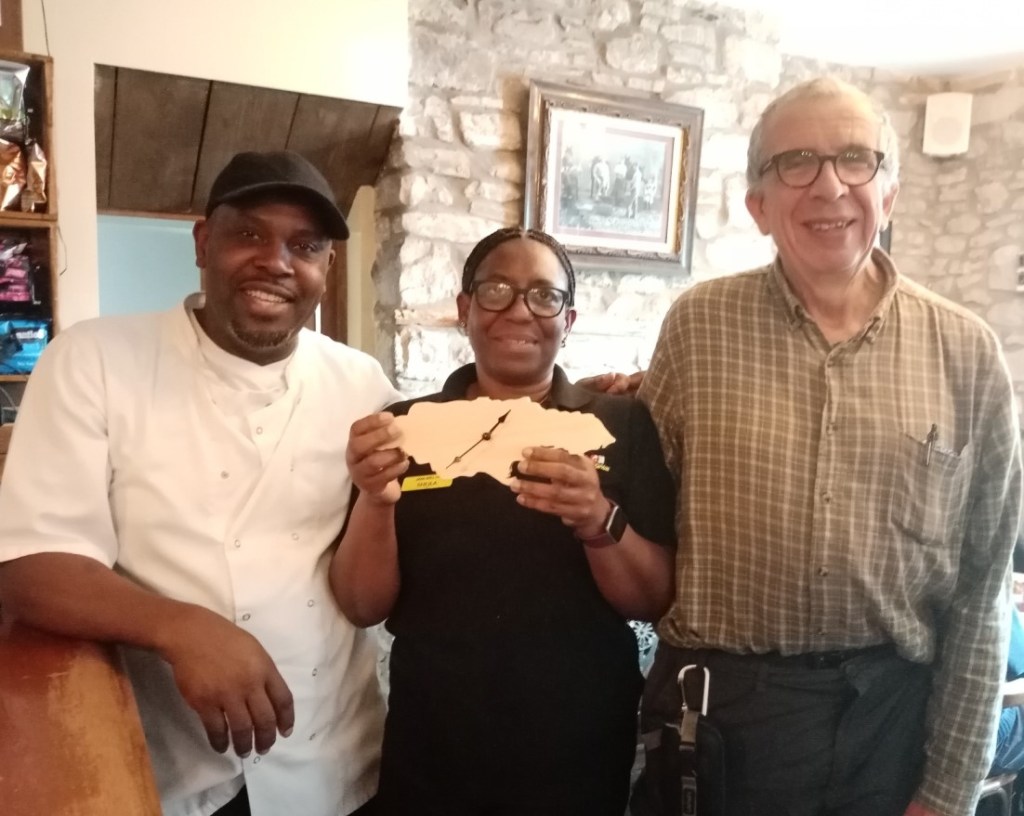
We wanted to sample some Jamaican cuisine was part of my Armchair Travel Challenge and had heard about Jam-Welsh based at the Horseshoe Inn, Llangattock.  We had a lovely Coconut Vegan Curry served in ½ pineapple and a Jamaican Spice Jerk Chicken Breast Burger, served with chilli & mango salsa, chips & coleslaw. I later gifted chef Raymond and Sheila a clock in the shape of Jamaica I had made earlier in the week.

Drink

When walking through a park in Butetown, Cardiff following a party I noticed the bins were full of empty bottles of a Magnum Jamaican Tonic Wine (16% Alcohol) – made in Jamaica.  The nearby international supermarket had never heard of it but a tiny corner shop near the police station had some in the fridge – bottle purchased for future consumption. The bottle reminded me of cough mixture and there was something about the taste that had a similar resemblance too. We drank the Magnum with some Jamaican Jek chicken made at home.

Jamaica JerkcChicken and Magnum Tonic WIne

Clock

Not a bad shaped country for making a clock but barly enough room to nail the hanging triangle in on the back. Out of hands now – must remember to get some more.

Literature

I made several attempts to read ‘A Brief History of Seven Killings’ by Jamaican author Marlon James but must admit I struggled with it and never finished it.  Ah, well, that’s how it goes sometimes.

Music

I’ve always liked a bit of reggae so how better to spend our ‘virtual’ time in Jamaica than by playing Bob Marley, the king of reggae.

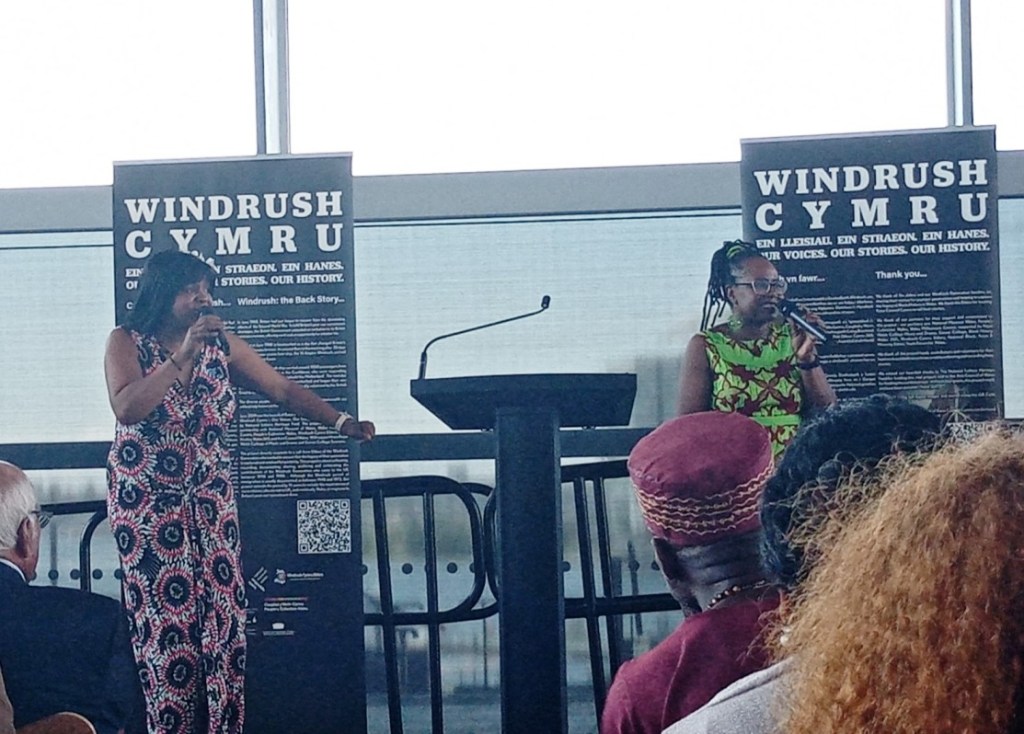
I also heard some live Caribbean music when I gate crashed a Windrush event at the Senedd in Cardiff Bay. I caught some of the closing speeches, lots of thank yous followed by 20 minute fun Caribbean music sing-along. They started with Swing Low, Sweet Chariot.  I desperately tried to remember the background to the controversy of the song being sung in rugby matches.

Windrush Cymru

Film

Staying on the theme of Bob Marley we watched the 2004 film One Love about a young Rasta musician falls in love with the gospel-singing daughter of a Pentecostal preacher, meeting her as they both sign up for a music contest. It stars one of Bob Marley’s children Ky-Mani Marley.  I must admit I think we watched it by mistake after I had read there was a biographical film about Bob Marley called One Love.  It turns out that one has only recently been released.

Railways

Well, I wasn’t expecting to discover that.  There is a railway in Jamaica!  Only just and not many.  In fact Jamaica has a long association with railways going all the way back to when the first tracks were laid in 1845.  The railways of Jamaica were mainly for agricultural purposes and in later years more for industry, specifically transporting bauxite (aluminium) ore. There have been passenger services in the past but they died out until in the past year or two a school-train service started up and as far as I can tell is still in existence. I like the way the seats are in the same colour as the Jamaica flag.

Geocache

There are presently no Puzzle geocaches in Jamaica for me to solve.  I had a look at some of the Earth caches there but I just don’t like Earth caches – and that’s putting it mildly.  I find the answers can be so ambiguous.  In the end I took a look ay a Virtual cache Rainbow Country that is at Bob Marley’s birthplace. It encourages visitors to find the piece of rock, now painted with a rainbow design, where Marley used to sit and compose some of his songs.

Sport

Jamaica appeared in the FIFA Women’s World Cup finals in Australia in August 2023. They made it through the group stage with a 0-0 draw against Brazil and into the last 16.  If they had managed to beat Columbia they would have played England in the Quarter Final but unfortunately they lost 1-0.

The other sporting event that took place whilst we were ‘virtually’ in Jamaica was the World Athletics Championships held in Budapest.  Needles to say Jamaica did well in both the men’s and women’s events. In the 200m race Shericka Jackson became the second fastest woman ever with a time of 21.41 seconds.

I also kept an eye on how Jamaica were doing at the World Lacrosse Championships in San Diego, California as I was also following how the Welsh team were getting on there.

Highest Point

The highest point in Jamaica is Blue Mountain Peak in the south east of the island.  It is 2,256 metres (7,402 ft) and home of Blue Mountain coffee. By a stange coincidence I came across Blue Mountain when I was putting together a talk this month on the Mackintosh family. Alexander Mackintosh, the 24th chief of the Mackintosh Clan became a merchant in Jamaica, built a house there called Moy Hall (the same name as the family base in Inverness shaire, Scotland).

The Blue Mountains are popular for hiking and camping. The traditional Blue Mountain trek is a 7-mile (11 km) hike to the peak and consists of a 3,000-foot (910 m) increase in elevation. Jamaicans prefer to reach the peak at sunrise, thus the 3- to 4-hour hike is usually undertaken in darkness. Since the sky is usually very clear in the mornings, Cuba can be seen in the distance.  Judging by the YouTube videos I watched however the summit of often shrouded in fog).

Stamps

I purchased a set of 1971 stamps celebrating the 300th anniversary of the post office in Jamaica. One of the stamps is upside down presumably a replica of an actual printing error in the past.

Current Affairs

I read around a bit about the news from Jamaica.  There was quite a bit about the proposed move to cut links with the British monarchy and form a republic, a view that appears to be gaining traction since the death of the Queen last year. There was also continued discussion concerning reparations for slavery in the past.

Touring Jamaica

We were able to fly to Montego Bay, Jamacia direct from Birmingham with TUI. Where did we go? Well, naturally we didn’t stay in the same place all the time. We took some inspiration from some suggestions I found online such as the Ultimate five day tour of Montego Bay and the Jamacia Travel Guide blog by Oliver.

Belarus

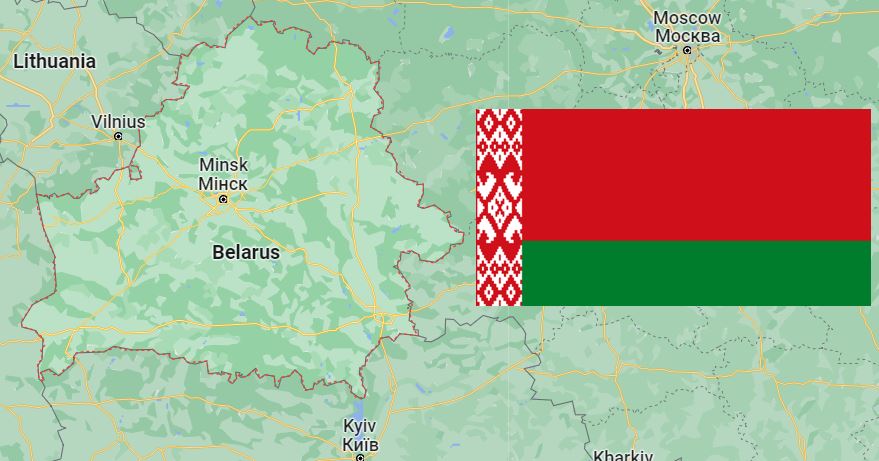
I’ve visited Belarus previously. I was there in 2015 as part of my European Capital City Guinness Challenge. I’ve just re-read my notes from that trip.  It was a great adventure and I enjoyed it. A country rarely visited by tourists.  It was good to go back ‘virtually’ and cover some aspects I’d missed on my 2015 trip.

Food and Drink

We looked up what they eat in Belarus and had a go ourselves.  Here’s our attempt at a traditional Belarusian dish – draniki (potato pancakes) with a pork stew washed down with a bit of vodka.

Music

I’ve been listening to jazz trumpeter Eddie Rosner. His story is told in a documentary Jazzman from the Gulag.  I eventually found it as part of a Zoom call on YouTube. He escaped occupied Warsaw and settled in Białystok, which was then part of Belorussia. Rosner was already well known, and he formed a Big Band, which soon became the State Jazz Orchestra of the Belorussian Republic of the USSR, and which toured the Soviet Union. Rosner was promoted to running the Soviet State Jazz Orchestra, before falling into disfavour in the 1940s, and spending eight years in a Gulag.

Literature

I read  Chernobyl Prayer by Svetlana Alexievich who won the Nobel Prize for Literature in 2015. I think that’s the most depressing and gruelling book I’ve ever read. It is a series of monologues derived from interviews with Chernobyl survivors. The story is very similar to that dramatised in the TV series Chernobyl but has a very different impact on the reader/viewer. In the drama you get lost in the cinematography, the science, the characters. In the book it is straightforward grim – the illness, sickness, poverty and political regime. It also left me both thinking and confused. The scientific academic viewpoint seems mainly to be that deaths and illness (acute and chronic) were relatively few, in strange agreement with the Eastern Belarusian/Russian/Ukrainian ‘official’ view and in contrast to the picture painted in documentaries and literature.

I also read The Ticket Collector from Belarus by Mike Anderson and Neil Hanson and tells the story of Britain’s Only War Crimes Trial. This was a very readable book and evoked different emotions such as ‘Why am I enjoying reading this book when it is about a truly abominable event – the Holocaust’?

Film

I watched In The Fog, a Belarusian film about events in German-occupied Belarus in WWII. A good film and not what I was expecting at all.  I agree with a reviewer who described it as a melancholic masterpiece. 


Clock

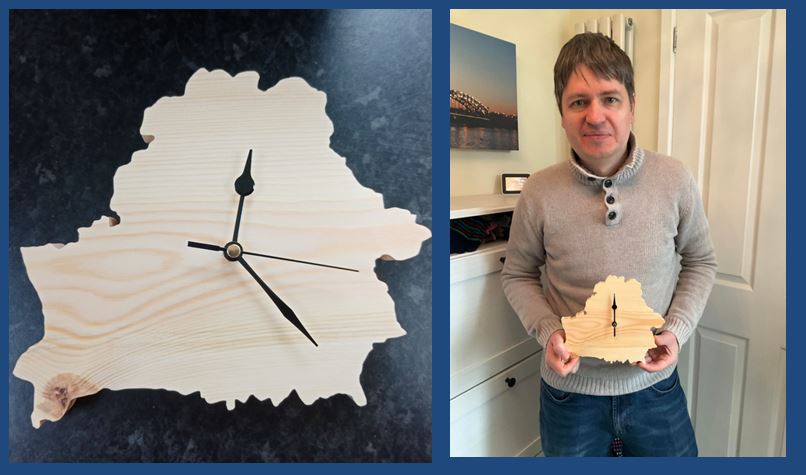
I managed to rediscover my clock-making mojo which had been missing for quite a few months and shape a clock in the shape of Belarus.  This was helped by the local timber merchants who went to the trouble of finding me a nice 2m bit of timber when I explained I wanted it for craft purposes.

Then came even more of a pleasant surprise. Via a friend, the clock managed to get to Belarusian Dzmitry who lives in Wales. 

Railways

No need for me to imagine a journey on a Belarusian railway as I’ve previously visited the country and enjoyed a bit of train travel.  I travelled from Minsk to Brest by train and met some lovely Belarusian people on the train.  In Brest I went to a railway museum.  A few days later I travelled from Brest into Poland on the Moscow to Nice train. Not many pictures of trains though as taking pictures isn’t exactly encouraged in Belarusian stations.  I did get some of the sleeper train after I disembarked in Poland.

Highest Point

Belarus is a pretty flat country  and must have one of the lowest high points for a country of its size anywhere in the world.  The high point is Dzershinsk, west of Minsk and is 345m high. It’s apparently named after the founder of the KGB. The challenge is more getting there than climbing it. On the Peakbagger website someone has jokingly posted a picture of someone summiting using an ice axe.  I enjoyed reading the account of Denise and Richard McLellan from 2019. They made it a bit more of a challenge and managed to get a 9 hour day, 16 mile walk, 2 bus trips and metro ride out of this very straight forward summit- all for less than £2. They reported that Minsk is highly recommended.

Stamps

I purchased a set of five stamps depicting paintings by Belarusian artists.

Sport

I went back in time and recalled Belarusian gymnast Olga Korbut who became the star of the 1972 Munich Games. She was the first gymnast to perform a back flip on the uneven bars which became known as the Korbut Flip. Wikipedia says she now lives in Arizona and works with private gymnastics pupils and does motivational speaking. She sold her medals and in 1999 and has spoken out about alleged sexual assault and rape she suffered at the hands of her coach.

Geocache

When I visited Belarus back in 2015 I was lucky enough to find eight geocaches including Sidetracked – Minsk.  I like to try and solve a Mystery cache as part of my Armchair Travel Challenge. Most Mystery caches in Belarus are understandably in the Cyrillic alphabet but I did find Send More Money GC6MQ50 and managed to solve it. 

Science

I looked at Belarusian-born Zhores Alferov who won the Nobel Prize for Physics in 2000 for the development of the semiconductor heterojunction for optoelectronics. The development of semiconductor heterojunctions revolutionized semiconductor design, and had a range of immediate commercial applications including LEDs, lasers, barcode readers and CDs. Alferov moved to Russia and became involved in politics serving in the lower house of the Russian parliament, the State Duma, as a member of the Communist Party from 1995.

Current Affairs

Lots in the news about the war in Ukraine but my eye was caught by news of another Belarusian Nobel Prize winner, Ales Bialiatski who won the Peace Prize in 2022. This month the  pro-democracy activist  was sentenced in Minsk to ten years in prison.

Tajikistan

Now here’s a different country.  I knew next to nothing about Tajikistan when it got ‘picked out of the hat’ as our next place to visit on our virtual tour of the world. I could perhaps have pointed vaguely to central Asia and told you Tajikistan was somewhere around there but other than that I knew absolutely nothing, not even how to spell it.

It’s been fascinating to spend some time there ‘virtually’, learning a little bit about the people, the history and the culture.  We’ve failed however to meet anyone from Tajikistan, at least as yet.  I remain forever hopeful.

When a new country is chosen for us to visit it leads to not just excitement but also an evening searching the internet for anything to do with the country in question, in particular to see if there is anything local here in Cardiff associated with that country.  In the case of Tajikistan it did lead to one good hit.  It turns out there was, until very recently, a Tajikistan expert here at Cardiff University. Unfortunately we missed Dr Flora Roberts by a matter of weeks as she recently took up a new appointment at a university in Netherlands.  She was however enormously helpful in providing pointers to us for our ‘virtual’ tour of Tajikistan in the form suggestions for reading, film and even a recipe.   We wish Flora all the very best in her new role.

Getting there

No direct flights so the next best option seemed to be via Munich and onwards with an eight hour flight with Somon Air, a private Tajiki airline. We fly into the capital city Dushanbe which means Monday in the local language.  It used to be called Stlinabad until 1961.

Tajikistan borders four countries, Afghanistan, Uzbekistan, Kyrgyzstan and China.  It almost borders Pakistan too but not quite.  The Tajiki people are Sunni Muslim of Persian heritage and the country has been called the Iran of the East.  

Not all Tajiki people live in Tajikistan.  In fact more live in Afghanistan and other countries but you know what its like when trying to create countries, you invariably leave out some people in the wrong country.

Meeting someone

I don’t think I have ever met Tajiki person. I tried contacting a local Sunni mosque here in Cardiff but no luck there.  Many Tajiki people do travel to look for work but mainly to Russia. 

Clock – bit of wood

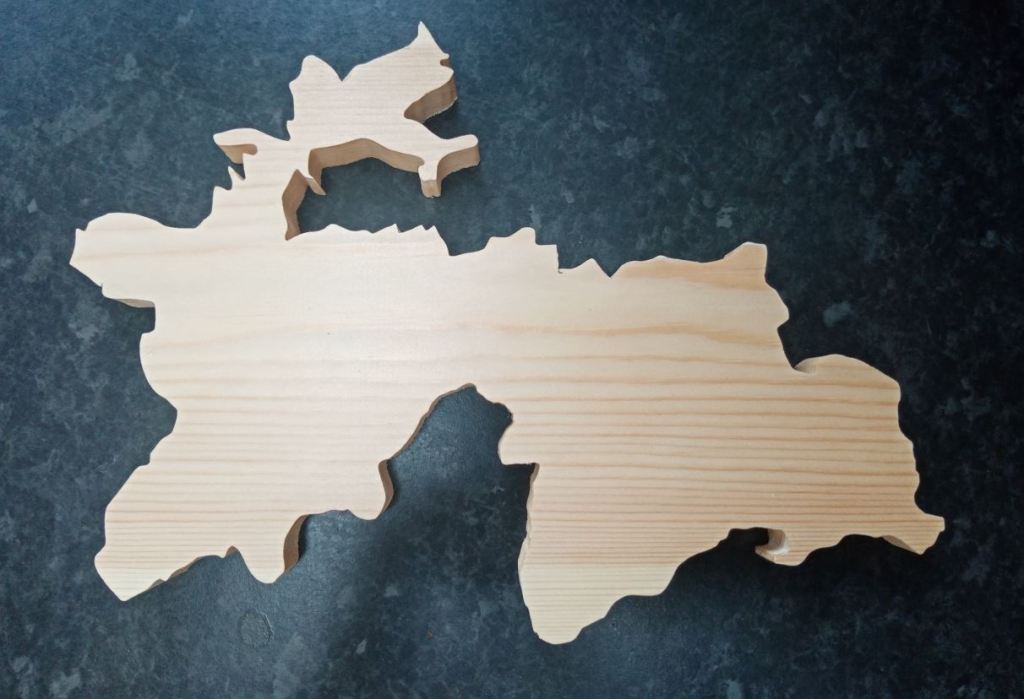
I never did get as far as completing a clock of Tajikistan.  I will it ever there is an opportunity to meet a Tajiki but until then I think I will leave it as a ‘bit of wood’.  It’s a fascinating shape.  It reminded me of a couple of pieces of bunting with an odd bit sticking out of the top.

Food

The most popular dish in Tajikistan appears to be Plov, a one-pot rice dish.  We gave it a go and were impressed.  Having a whole bulb of garlic in the centre of the baked dish was certainly different. 

Drink

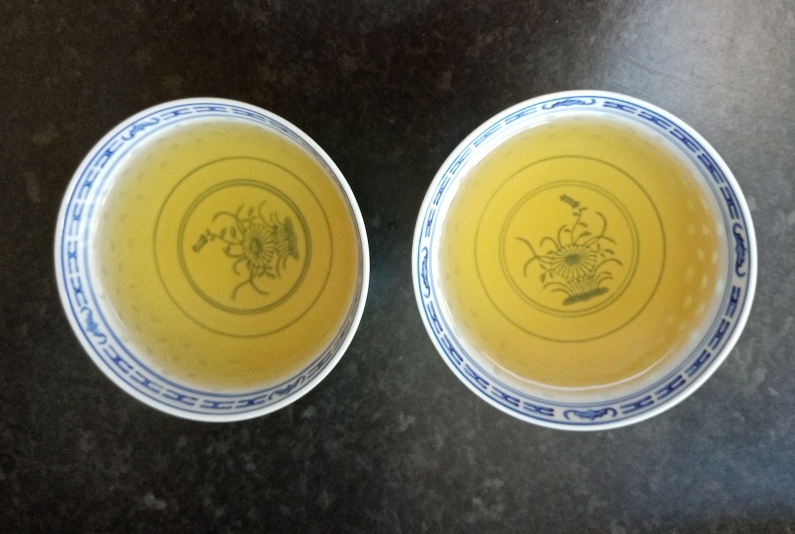
Green tea is the national drink, drunk not from cups but from small bowls.  We had some as we bade farewell to our fascinating stay in this country. 

Sport

It’s Friday and the traditional day for playing one of the national sports in Tajikistan i.e. Buz Kashi.  It’s like polo but instead of using a ball they try and get a decapitated goat’s caucus into the opponents goal 🥴 . I think I’ll give that a miss.

Instead I’ll be going to see the Tajiki U20 footballers as they face Lebanon in the Asia Cup qualifiers. The game kicks off in a few hours in the Pamir Stadium in the capital Dushanbe.  I hope there’s a queue for me to join.  I’ve just got time for a plate of Plov (the national rice dish) and a cup of green tea before kickoff.  

I know what you Brits are like – you’re more interested in the what the weather is like.  So for your information it is 30 degrees, a few clouds and light winds.

Fast forward a couple of weeks and Tajikistan won the 2022 King’s Cup in Thailand.  They beat Malaysia.  It was 0-0 at full time but Tajikistan won 3-0 on penalties. 

I don’t know why I’m telling you all this, you probably already knew and like me were following the game on a dodgy YouTube channel.  Some of the tackles were right vicious.

How many teams took part in this great tournament?  Well, just 4 actually. It’s an annual invitation event held in Thailand.

An what was the crowd at the final?  A whopping 488.  The third place play off attracted over 12,000 but Thailand were playing in that game. The defending champions Curaçao did not participate.

Book

Not an easy country to find literature with English translations. With a bit of help I found The Sands of Oxus: Boyhood Reminiscences of Sadriddin Aini and read the novella: Ahmad the Exorcist. https://worldbooktour.wordpress.com/2017/09/17/tajikistan/

I found it a great short story about evil spirits and mysticism and a father telling his son it was all make believe and not to be worried.  I was amazed it even introduced phosphor luminescence.  Very readable considering its age and that it is a translation.     

Meddling: An OAP in Tajikistan by Stuart Burchell was an intriguing non-fiction book but not one I would necessarily recommend as a good read.  It’s the recollections of a voluntary worker in an agricultural NGO.  It gave me a reasonably good insight into the country, its people and culture. Much of the book however is about the internal politics of the myriad of organisations involved in assisting the agricultural economy of Tajikistan. The frustrations of such work becomes very evident and not a field I would have enjoyed working in.

Sovietstan by Erika Fatland is new and travel writing at its best. I just read the one section on Tajikistan and look forward to borrowing the book again from the library to read about the other Stans when they come out of the hat.

Film

Safe to say that Tajiki films aren’t that easy to find but we did find a copy of Angel of the Right. It was pretty compelling and gave a good insight into rural life in Tajikistan.  A criminal returns to his village to look after his ailing mother and try to redeem himself but isn’t me with open arms by everyone he meets.  It’s said to be based on the fable that everyone had an angel on each shoulder, a good angel and a bad angel.

Highest point

Ismoil Somoni Peak is a big one standing at 7,495m (24,590 ft) and the highest point in the former Soviet Union.  Like the capital its had a number of name changes originally called Stalin Peak and the Communism Peak.  The first ascent is believed to have been in 1933. It’s not a day trip that’s for sure.  Not being a mountaineer myself I find it hard to rate technically.

There’s a few videos on YouTube if you want to do an armchair ascent.  Here’s one or try this one.

Geocache

There are just 31  geocaches in Tajikistan and only three of them are puzzle caches.  I had a go at Ring Ring (GC9P4AH).  Not too tricky to solve I doubt I will ever get to finding the actual geocache but at least I know where it is now!

Railway

A note of optimism greets people researching railways in Tajikistan, a mountainous country where the construction of railways faces engineering challenges as well as the usual economic.  Two separate railway networks exist that are not connected to each other. On my virtual visits to countries I’m usually met with railways that used to be open but are no longer or plans for railways sometime in the distant future if funding ever arrives.  It was therefore a pleasant surprise to hear that trains between Tajikistan’s capital Dushanbe and Tashkent have recently returned.

Music

Lots of modern female musicians to listen to here it seems, Madina Aknazarova being one.   

Vlogs

A nice insight into life in the country of Tajikistan is available in various vlogs including this one.

Stamps

It surprised me how many stamps from Tajikistan were for sale. I bought a bundle featuring mainly animals of the country with a few historical ones thrown in too. 

Rwanda

Initial Impressions

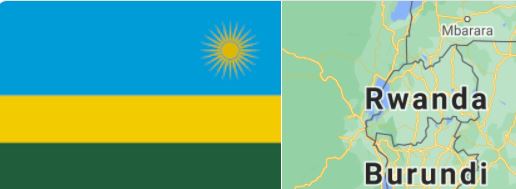
The random number generator we use to select the next country for us to visit appears to like Africa.  It chose Rwanda this time.   Some early homework revealed Rwanda is a country which has some tasty food with lots of bananas included.  We thought we’d even aim to source some banana beer.  Rwanda looks green and lush and is called the ‘Land of a 1000 hills’.  It didn’t enter the Winter Olympics nor did they qualify for the finals African Cup of Nations football competition currently underway so I chose to concentrate on their cycling competition.  My other initial impression was that it’s an excellent shaped county to make a clock of!  It looks a bit of a no-nonsense country so I’d better watch my step.  Please remember therefore that the following tales are all in my imagination.

Travel in Rwanda

Well that was a surprise.  Rwanda is not what I was expecting at all.  Perhaps that’s why I got so many things wrong and ended up, how can I put this, in trouble.

I should have guessed that my preconceived ideas of Rwanda being a desperately poor and underdeveloped country was wrong when I went to see Arsenal play and their shirts were emblazoned with ‘Visit Rwanda’ slogans.

Like many of you no doubt, the last I had heard of Rwanda was the 1994 genocide when close to a million people were killed in the space of 100 days.  A lots been going on since then with reconciliation being at the heart of it.  I’m not going to paint a scene of a bed of roses and with an administration in power that could be described as authoritarian, I’m going to watch my step.

I flew from Heathrow on with the swanky RwandAir straight into the capital Kigali.  Rwanda is a small, landlocked country, about half the size of Wales, mid way down the eastern side of Africa.  I had an image of dry, arid, dusty capital but no its not.  Kigali is almost as green as Wales and nothing like I imagined.  It is modern, swanky hotels, new cars, lots of scooters and very welcoming.  Something I wasn’t prepared for.

I’ve learnt to travel over the years without drawing attention to myself.  I dress down and carry what I need for the day in a plastic carrier bag.  That way I aim to look just like I am out doing a bit of grocery shopping.  This time however that policy got me into trouble.  None of my mates told me plastic bags are banned in Rwanda!  The policeman was very kind.  He let me off with just a warning provided that I attended one of the monthly clean-up days that Kigali has. 

I turned up ready to do my penance but it seemed everybody else in the country had done something wrong. The place was packed with litter pickers. No wonder the city is so clean.

I also got into trouble when I walked into a bar and asked for the local banana beer.  It was brown and cloudy – a bit like a Bass in the 1970s.  I complained saying it looked like it had been made from bananas that had been wrapped in banana leaves and buried underground for three days before being retrieved and fermented.  It turned out that’s exactly how banana beer is made.

(A video that helped give me an insight into the country: Oscar and Dan)

Railway

We had a bit of a problem catching a train initially in Rwanda as there aren’t any.  But we weren’t going to let that deter us.  Rwanda has become known a place where it is easy to do business.  It’s like a Singapore of Africa.  There’s been lots of tentative plans to build a railway in the past but nothing had materialised – not till now.  It seemed like plans are all well and good but if you keep falling out with your neighbours then things aren’t easy.  Having said that if the UK and France can build the Channel Tunnel and even get it to meet in the right place in the middle then anything is possible. 

Our plan was to build a north-south and an east west railway line to the borders with DRC, Uganda, Tanzania and Burundi. That would show a sense of willing and if the neighbours wanted to join up the line they could.  Even if they didn’t we thought it would be a great tourist attraction. 

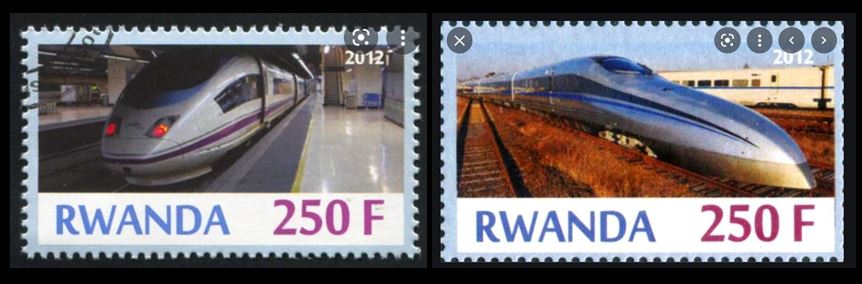
One slight problem though.  Rwanda is also known as the Land of 1000 Hills and hills aren’t always conducive to building railways.  Not to worry, if we can build railways in Wales then Rwanda should be a doddle.  We just kept to the valleys and went around any hills.  The idea of the prototype trains seen on past Rwanda stamps however had to be shelved. With those long noses they just couldn’t get around the sharp bends we had put in.  

Highest Point

They say everything you read about Rwanda is about gorillas and genocide.  From my experience it’s true. The books I’ve read and films we’ve watched all focus or mention them, oh, and banana beer – its everywhere. These next couple of days would be no exception.  We were heading up to Rwanda’s highest point, the volcano Karisimbi and at 4507 meters, 14,787 feet, and it’s a bit of a beast.  It lies in north west Rwanda right on the DRC border, and in the Volcano National Park, famous for its mountain gorillas.  We were told that if the gorillas don’t get you the kidnappers will, hence the need for guides and a military escort.

Most people we met were in the area to start their gorilla treks.  We were lucky because on the first day a couple of gorillas popped out to see us on the forest trail.  I think they wanted to see me in my green wellies.  Well, it is the rainy season and pretty muddy, and that’s me saying that from Wales.

We camped just below the summit and the solders lit fires and were kind enough to share their food with us – potatoes and bananas.  We were up before dawn the next day, quickly climbing above the tree-line and on the summit by mid-morning luckily escaping any altitude sickness which some suffer from climbing this peak. The other thing I wasn’t expecting was the snow at the top!   There’s no road up here but there is a communications mast, built by hand apparently – they must like communicating. In no time at all it was time to head back to Kigali.

(Account plagiarised from Eric and Matthew Gilbertson’s Country Highpoints)


Food

We have had our first experience of cooking plantain – looks like a banana but is starchy rather than sweet.  Igisafuliya means “pot” in Kinyarwanda, one of the official languages of Rwanda, and so named because it is all made in one pot.  It consists of chicken (not a lot), onions, leeks, pepper, tomatoes, celery (or in our case celeriac), plantain and spinach. The addition of rice and garlic bread was not in the original recipe.

Drink

Every Rwandan book read and film I watched seemed to have a reference in it to banana beer. I managed to find an online purveyor of Rwandan beer/wine and thought I would be daring and order some.  It was a bit of a nerve-wracking experience since as soon as I placed the order I received an e-mail back saying that my luxury handbag was on its way from a delivery company in America. Exactly the same thing happened to a friend who writes an excellent beer blog Big Alex’s World Beer Blog and picked up on my discovery of a source of Rwandan beer and ordered some. Fortunately our beer arrived safely and not our luxury handbags. I found the 11% banana beer pretty refreshing.  It may look like the homebrew I made in college days but tasted like a fizzy punch.

We also managed to find some Rwandan coffee.  One of the books I read described the challenges of developing a coffee industry and the need to get the freshly picked coffee beans to the washing plant within four hours. The lack of transport made this difficult hence initiatives started up to provide loans for people to purchase bikes to transport the beans.

Film

We managed to find three films to watch about Rwanda:

‘Shooting Dogs’ with John Hurt and Hugh Dancy.  A film about the 1994 genocide from the point of view of a priest  and an English teacher who share their school with UN peacekeepers.  A harrowing watch which leaves you asking ‘what would I have done?’

‘Hotel Rwanda’ . Another film about the awful 1994 genocide.  It portrays hotelier Paul Rusesabagina and his efforts to shelter over 1000 people in the besieged Hôtel des Mille Collines during the genocide. Since leaving Rwanda in 1996, Paul Rusesabagina has become a prominent critic of the Rwandan regime and is currently serving a lengthy jail sentence.

‘Gorillas in the Mist’ starring Sigourney Weaver as the American naturalist Dian Fossey who goes to Rwanda to study the mountain gorillas. She is appalled by the poaching of the gorillas for their skins, hands, and heads. She is eventually murdered by person/people unknown. Her efforts are said to have helped save the gorillas from extinction and made the administration in Rwanda realise the tourist potential of the mountain gorillas. Part of the income generated from gorilla treks now contributes towards their preservation.  The film seems pretty dated now but still a moving watch.

Literature

There was no shortage of literature for me to read.  I ended up reading four books in all, two fiction and two non-fiction books, a bit of a record for me as I’m normally a slow reader.

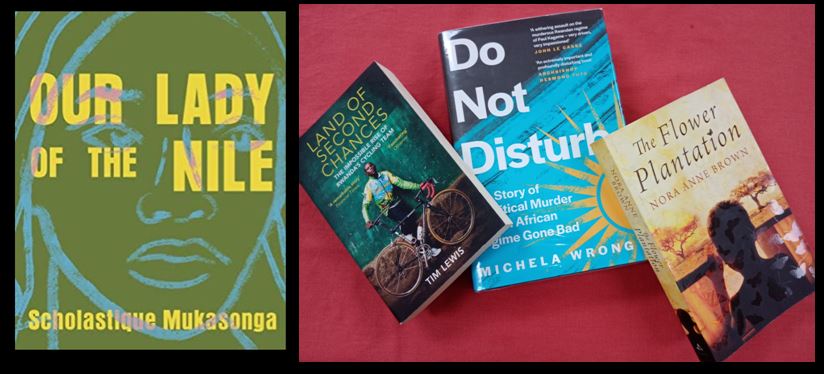
‘Our Lady of the Nile’ by Scholastique Mukasonga.  It may seem strange but out of the films and books on Rwanda this is the best I’ve encountered for giving me a real insight into the country, customs, food, countryside and its people. It is told from the point of view of the pupils at the Our Lady of the Nile boarding school and has translated very well from its original French.

‘The Flower Plantation’ by Nora Anne Brown – beautiful writing. I hadn’t realised how it dovetailed into the ‘Gorillas in the Mist’ story  till part way through

‘Do Not Disturb’ – Michela Wrong.  A weighty tome.  A piece of investigative journalism looking at Rwanda over the years. Puts the genocide in context.  Not a book to take with you on holiday to Rwanda.

I extended my ‘virtual’ stay in Rwanda to follow the Tour du Rwanda and read ‘Land of Second Chances’ by Tim Lewis. I don’t pretend to know a lot about cycling but now know more than I did before and much more about life in Rwanda. A good read, well written and more than just about cycling.

Stamp

Gorillas seem to be synonymous with tourism in Rwanda so what better stamp for me to get as part of my ‘virtual’ holiday than one with a gorilla pictured.  They look fine creatures. 

Geocaching

I tackled solving the only Puzzle Cache currently in Rwanda.    It was called Never Again and gave me an opportunity to learn more about the genocide and to spend time reflecting on past atrocities in the country.  Here’s wishing Rwanda a bright future moving forward. 

Charity

I was happy when I discovered Rwanda Restored, a local charity based here in Cardiff that is supporting education in Rwanda.  Rwanda Restored seeks the advancement of education of young people in Rwanda by building or improving schools, relieving financial hardship by providing money for food, housing, education, clothes and social support for widows and orphans across Rwanda.  It was certainly  interesting learning more about the valuable work they have been doing in Rwanda over the years, building a school and financially supporting pupils who attend.

Clock

I’m continuing to try and make a clock in the shape of each country I visit.  Rwanda is another nice shape for a clock.  I failed in my attempt to meet anyone in Rwanda in Cardiff so rather than have the clock sit on my bookcase I gifted it to Rwanda Restored and they kindly took it out to their school in Kigali where it now of the wall. Many thanks.   

Sport

I stayed on a bit longer in Rwanda than I originally intended to in order to catch some of the Tour du Rwanda cycling race.  I didn’t find a live stream of the race but the highlights on the official YouTube channel were good to watch.  As well as the cycling it was interesting to see countryside and people. Stage 6 was won by Ukrainian Budiak Anatoli, a valiant effort considering the terrible things happening in his home country.

Rwanda – Music

Rwanda is quite a musical and dance nation as far as I could tell. Like the Rwanda nation itself it has modernised quickly and there is a lot of hip-hop music around.  Searching Spotify and I came up with quite a few playlists that appealed to me from gospel to traditional music with a strong bass and harmonies.    

Farewell Rwanda

The modernisation of Rwanda had completely passed me by so it’s been an excellent month learning about Rwanda old and new.  I haven’t met a Rwandan as yet but did get the opportunity to meet up with some people who had visited the country and it was great to listen to their experience. Farewell my friends. 

Meeting someone from Rwanda

When we had our ‘virtual’ month in Rwanda earlier in 2022 I never managed to arrange meeting anyone in Cardiff from Rwanda. 

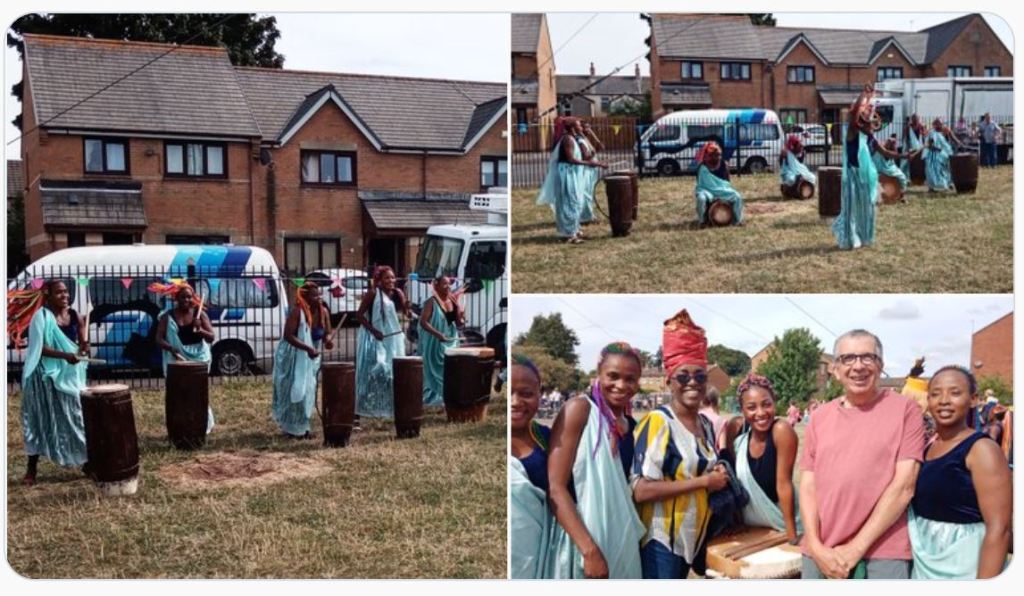
In August 2022 presented an opportunity to put that right.  We had the pleasure of seeing and meeting Ingoma Nshya – the ground-breaking Woman drummers of Rwanda.

I learnt that for centuries in Rwanda, drumming was an activity reserved exclusively for men. Women were not permitted to touch the drums  or even approach the drummers.

They played at the Clifton Street Festival and gave it their all.  Well done.

Libya

Getting to Libya

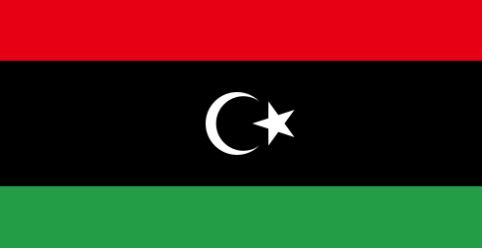
It’s a public holiday today – Independence Day.  They are celebrating 71 years of independence since King Idris became their first head of state.  I’m not making that up – his name was Idris.  There must be some Welsh blood in there somewhere.

Libya flag

Welcome to Tripoli, the capital of Libya.  It’s sunny and 18 degrees. Getting here was not easy and things here are, let’s say, a little bit tense.  Tourist visas don’t exist so it was a case of obtaining a working visa, not an easy task.  We flew in via Tunis and were met by our official guide at Tripoli airport.  This isn’t a place to wander around alone.  Our guidebook was published in 2002 and a lot has changed since then!

Today was also supposed to be the day of Presidential elections but they got postponed on Wednesday, hence things are even more tense than normal.

Many Libyans were looking forward to casting a vote and getting a taste of an election process – maybe next month.  One of the candidates was Saif al-Islam Gaddafi, the son of former leader Muammar Gaddafi.  Some of the other candidates were equally controversial.

After being taken on a tour of Tripoli, seeing some of the ancient buildings in the Medina built in the 4th century, the modern Tripoli and the blue of the Mediterranean, we have escaped back to our apartment to make Independence Day dinner. We had Mbatan Batata – stuffed and fried potato wedges, accompanied by couscous and fried vegetables.

Here’s wishing you all a Happy Christmas. May your couscous be free of sand.

To get a feel for what it is like in modern Tripoli through the eyes of actual independent travellers I recommend these two videos: Drew Binsky – This Is Libya and Indigo Traveller – Walking the Streets of Libya’s Capital City

Travel whilst in Libya

There’s a lot of Libya.  It’s one big country.  But as everyone will tell you most people live along the coast and have done for generations.  This included the Romans.  They build a huge city here called Leptis Magna, the largest Roman city in Africa.  Our local guide took us the roughly 150km ride to see the remains.  There was hardly anyone there.  I made my usual weak jokes about how it will be nice when it is finished which didn’t go down too well and I was told the remains would have been even more intact had the French not nicked a lot of it, shipped it back to France and incorporated it into the chateau of Versailles. 

Libya Highest Point

The highest point in Libya is Bikku Bitti,  2,266 metres (7,434 ft).  It is located in southern Libya, near the Chad border and is incredibly remote, deep in the Sahara Desert.  Add to that that the area is extremely arid and littered with landmines and ordnance, the risk of bandits and it is illegal to visit.  It only has one recorded ascent, by British mountaineer Ginge Fullen.  I say only one recorded ascent but when he got up there, with a couple of guides, on his third attempt, there were same cairns at the top.  That must in one way have been somewhat disappointing.  There is an interesting report of the successful expedition, but no summit photos mind you.  It states that on reaching the top Ginge left a bottle up there with Gadaffi’s Green Book inside which he had signed and dated, a toubou knife along with some M&Ms inside a cairn along with his walking stick. 

For our trip, Alex and I went well prepared.  We weren’t going to let a scarcity of water defeat us so we took a very long hose pipe, heavy and time consuming to lay but worth it in the end.  I had told Alex it only rains there once every 30 years but we still took our macs – after all we are from Wales.  It took an age to reach the summit and boy were we glad to find a packet of M&Ms someone had left us and a knife to open them.  We left an tin of spaghetti hoops and a copy of the Western Mail. 

Libya Train Journey

You just wouldn’t believe how difficult it was to get to go on a train journey in Libya.  Ian told me it wouldn’t be easy, there being no railways, but I was up for the challenge.  First we had to overcome the problem that tourists aren’t allowed into Libya at present.  Going under the guise of a pair transport consultants overcame that hurdle.  We soon hooked up with our guide/fixer who had connections in all sorts of places. 

To say Libya hasn’t a railway isn’t quite correct. It doesn’t have a functioning railway.  It has a short section of track and one train – and boy, what a story there is behind it.  The train is an Italian IC4 ‘given’ to Colonel Gaddafi by then Italian prime minister Silvio Berlusconi in 2009.  I say ‘given’, it was one of those gifts that had conditions attached i.e. if I give you a train, you give Italy a big railway construction project.   The flaw in this plan was that Gaddafi was overthrown before the contract came to fruition. 

The other flaw was that it wasn’t Silvio Berlusconi’s train to give away.  It was part of a contract to deliver 83 trains to Denmark.  It took Denmark a number of years to discover they only had 82 trains  and what had happened to their missing train.  The giveaway was that the IC4 in Libya had signage in Danish all over it.  

Anyway, this IC4 train is still laid up in Tripoli – until now that is.  Our guide/fixer was very clever and had many friends.  First he discovered that the key had been left on top of the front wheel.  Then he got his friends to give the train a service, some new oil and even to construct some extra track for us to use.

And we were off.  An early start as I know how Ian likes to have his cooked breakfast on board a train.  Before Berlusconi shipped the train to Libya he had arranged for a bit of an upgrade.  He didn’t want to see Gaddafi slumming it after all.  One carriage was converted into a suite and another into a conference room.  Ian and I made best use of these facilities we could, careful not to spill any couscous on the carpet.

Before we knew it, it was time to park up the IC4 back where we found it, lock up put the key back.  Another great international armchair railway adventure.

Reference:   Gaddafi’s Personal Italian High-Speed Train

Libya Geocache

Yes I know I said I was aiming to solve a Puzzle Geocache in each country I ‘virtually’ visit but the problem here is that there aren’t any in Libya.  Instead, I chose to ‘virtually’ visit Acacus – First earthcache in Libya   (GC18KWH) . Anyone who caches with me will know I’m no great fan of Earthcaches (and that’s putting it mildly).  You would have thought being a scientist that I would like them but I’m afraid geology just doesn’t rock my boat.  So to try and make things easier I invited Olddandare to join me. I’m sure I recall him telling me he knew a thing or two about riding camels and picked it up watching John Noakes ride one on a Blue Peter expedition.

This earthcache is in the Fezzan region of Libya in the South-West, where its hot and sandy and as I’ve found out from reading, a long way from anywhere.  It’s an area that used to be popular with tourists but in recent years not so much.  You still need as permit from the authorities to visit and a 4×4 or in our case, some good camels. 

The scenery was stunning and the evenings chilly.  Apart from the unusual rock formations there are ancient wall paintings in the area.  What these reveal is that the area hasn’t always been desert as amongst the paintings are things like rhinos and crocodiles. 

Last night was indeed a bit chilly in the desert, but made bearable by the high quality sandwiches prepared by Olddandare. I did have trouble getting to sleep though because someone kept humming Maria Muldaur’s – Midnight At The Oasis. Not sure if it was Olddandare or the camels.

And could I answer the question on the cache page?  No, of course we couldn’t.  Back to school for us.

Olddandare reported back that he’d had some difficulties with the visa but thanks to my insider knowledge he arrived in the country. We had two types of sarnies representative of the national dish(es) of Libya the traditional tuna and harissa and also Imbattin, which is fried potato and beef. We got sand in them but surely that’s part of the fun of a picnic in the desert?!

He said he could have done with a bit more padding on the camel, and I bet he/she was struggling under the load.

Charity in Libya

In all the reading I’ve been doing about Libya in the past month, migrants and refugees feature highly, whether it be the part migration has played in Libya’s history or the present day migration crisis.  In recent years, stories of migrants and refugees is about the only time we hear Libya mentioned in the UK media.  The country is on the main migration route from Africa to Europe and the last African county refugees visit before embarking on the dangerous crossing of the Mediterranean.  Reports often feature stories of exploitation, gangs, imprisonment and violence.  Some of the refugees are from Burkina Faso, the country I ‘virtually’ visited before Libya.  They are fleeing the violence that’s been occurring in the north of Burkina Faso in recent years.  I don’t pretend to have any answers.  It hasn’t been easy for charities to work in Libya but one organisation that seems to be doing so is the International Rescue Committee.  I was interested to read that their roots go back to founder Albert Einstein.

Libyan Film

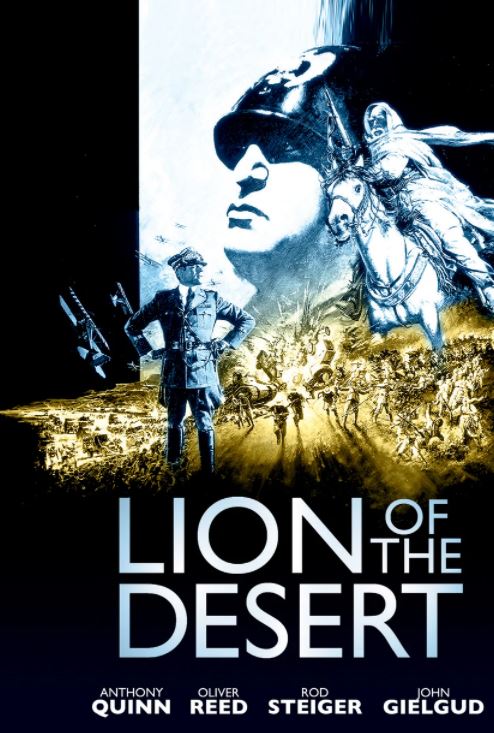
Lion of the Desert filmLibya doesn’t appear to have an established film-making industry.  I therefore had a search around to see if I could find any films that had been filmed in Libya.  I came across ‘Lion of the Desert’, a 1980 film about the Second Italo-Senussi War, starring Anthony Quinn as Libyan tribal leader Omar Mukhtar, a Bedouin leader fighting the Italian Army and Oliver Reed as Italian General Graziani.  It also starred Rod Steiger as Mussolini.  Even John Gielgud was in it.  Quite a star cast.  It is set in the 1930s and tells the story of Omar Mukhtar and his men fighting  the Italian colonization of Libya.

A tough film to watch in some ways but educational at the same time.  The last hour of the three was hard going.  It was also a  whole new experience for me – renting a film on-line.  This project is teaching me all sorts of new things! 

Libyan Literature

I read ‘The Bleeding of the Stone’ by Ibrahim al-Koni, Libya’s leading novelist and published in 2003. He has been called a master of magical realism.  I don’t begin to say I understood all the symbolism that was no doubt present but it certainly helped to develop the sense of the area and well as the Bedouin people.  I don’t think I’ve heard of them since school geography lessons. It’s a book about deserts, man’s relationship with nature, spirituality and religion, environmentalism and the effects of solitude as well as a good dose of mysticism.

I also read ‘Green Mountain’ by Gwyn Williams, a Welsh poet who was Professor of English at the University of Libya in the 1960s.  The book is a travel book about the Cyrenaica region of north east Libya.  As you may expect from a book written by a poet, it is well-written with lovely descriptions, and has lots of history.  It’s also a book that contains a snapshot of the time, around the time oil wells were being developed and pre-Gaddafi.

Libyan Music

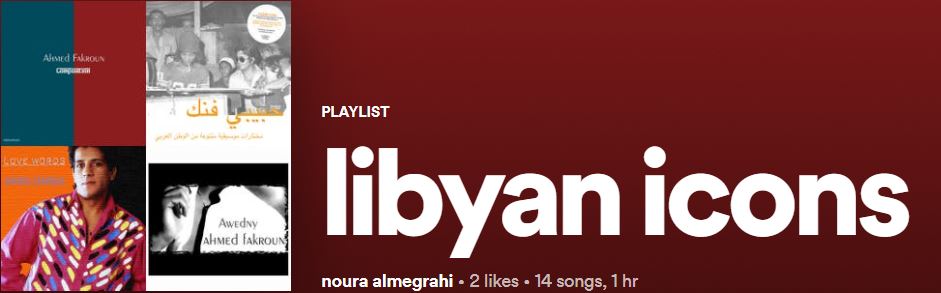
I was struck with what a high proportion of Libyan music was labelled as ‘wedding music’.  It was only when I read about the average Libyan wedding lasting over a week did I realise why – they need a lot of music to fill that time.  I listened to some Libyan folk and other selections on Spotify including the Libyan Icon playlist

Libyan Food

We made a couple of Libyan recipes over the month.  They certainly reacquainted us with couscous which we hadn’t had for a long while.  It used to be one of our regular starch accompaniments but for some reason had got forgotten about.

I’ve already mentioned the Mbatan Batata – stuffed and fried potato wedges, accompanied by couscous and fried vegetables.   This takes more patience than some dishes as the potato wedges have to be carefully stuffed and fried.  Our son proved he had the necessary patience to make them – thanks.  And very tasty they were too.

I ventured into the kitchen and had a go at making Kusksu (Libyan Couscous with Spicy Beef and Vegetables).  My wife helped by laying out all the ingredients I needed making sure my patience wasn’t tested by not being able to locate thing.  Yes, I know if I cooked more often I would get to know where things are.  For this recipe I needed to make a Hararat spice mix and here’s what went into it:  cinnamon sticks, cumin seeds, coriander seeds, chilli flakes and allspice berries.  They were roasted before being  ground.  The meal was very tasty though I can tell by the quality of my photograph that I’m never going to be a cook with thousands of followers on social media.

Libya Sport

I get the impression Libya isn’t famed for its sporting superstars.  That’s no doubt doing a disservice to the many Libya sportspeople toiling away on the training  grounds. My guidebook, albeit 20 years old now, writes how Colonel Gaddaffi’s son is the captain of the national football team and attempted to bring Pele and Maradona to Libya to make him the best player in the world. I think that’s the same person currently standing in the Presidential election so I guess he is focusing his efforts elsewhere at present. 

As I couldn’t find a big match to follow live I thought I’d take a look back at the Libyan involvement in this year’s Olympic games i.e. the 2020 Olympic Games (good quiz question for the future – When were the 2020 Olympic Games held?). They had 4 participants.   Hadel Aboud competed in the Woman’s 100 meters and came 5th in her heat with a personal best time of 12.70 seconds, not fast enough unfortunately to qualify for the next round. Their flag-bearer was  Al-Hussein Gambour who competed in the men’s single skulls rowing.  He qualified for the finals, rowing the 2000 meters in 7min 47.64sec but in the end ranked 29th, an improvement on his position of 32nd at the 2016 Olympics in Rio. Rumours are that the others were competing in the best selfie competition.

Libya Stamps

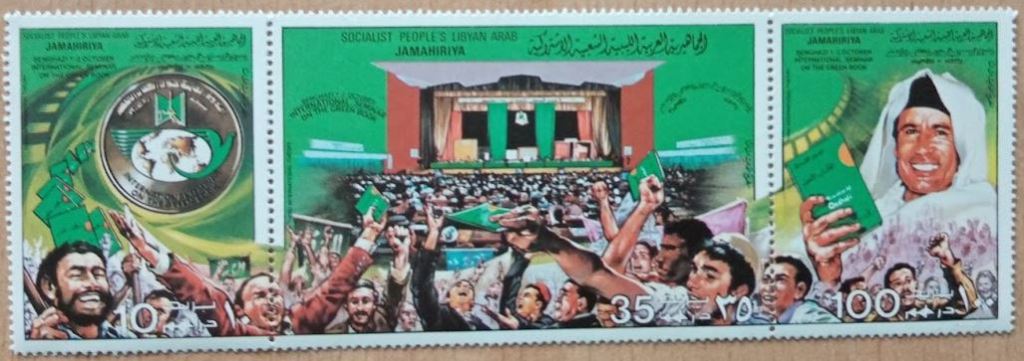
My selection of stamps may appear strange.  It was a set of three 1979 stamps featuring Colonel Gaddafi and the Green book.  It is in no way meant to convey any support for the Colonel, more  a look back in history.  The Green Book contained Gaddafi’s political philosophy.  It was widely distributed in Libya and abroad in Arabic and in English.   The book contained some interesting ideas, the last being:  ‘Spectatorship in sports, theatre and other entertainments is foolish. People should engage in sports directly, deriving the benefits of athletics for themselves, rather than standing by and watching others perform’. 

Libya Clock

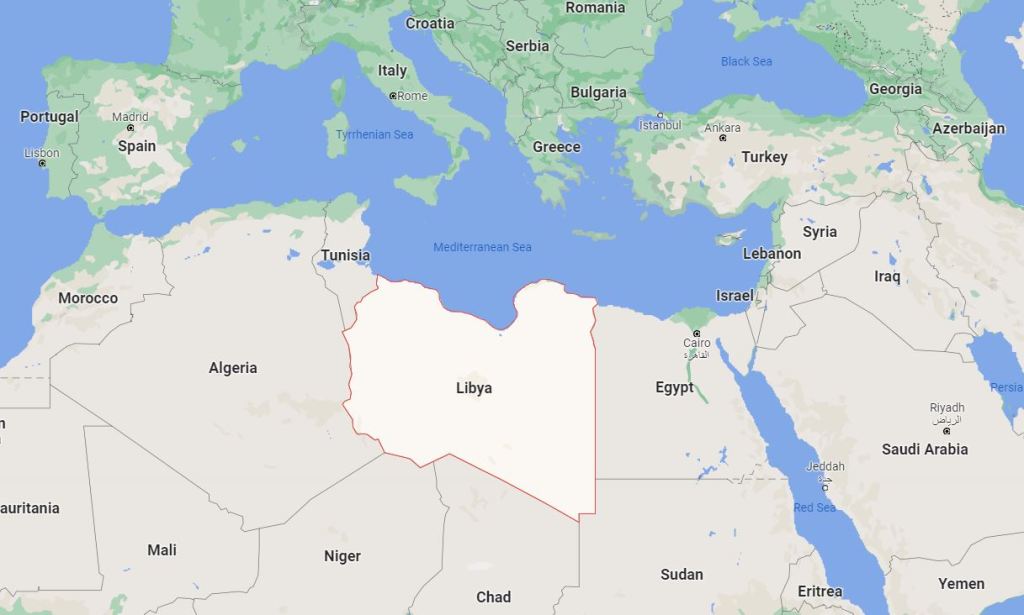
Libya was another good shaped country to make into a clock.  If only all countries were this easy.  It surprised me how much of their borders were straight lines.  I think that stems from the resolution of relatively recent armed conflicts with neighbouring countries such as Chad.

𝗠𝗲𝗲𝘁𝗶𝗻𝗴 𝗦𝗼𝗺𝗲𝗼𝗻𝗲 from Libya

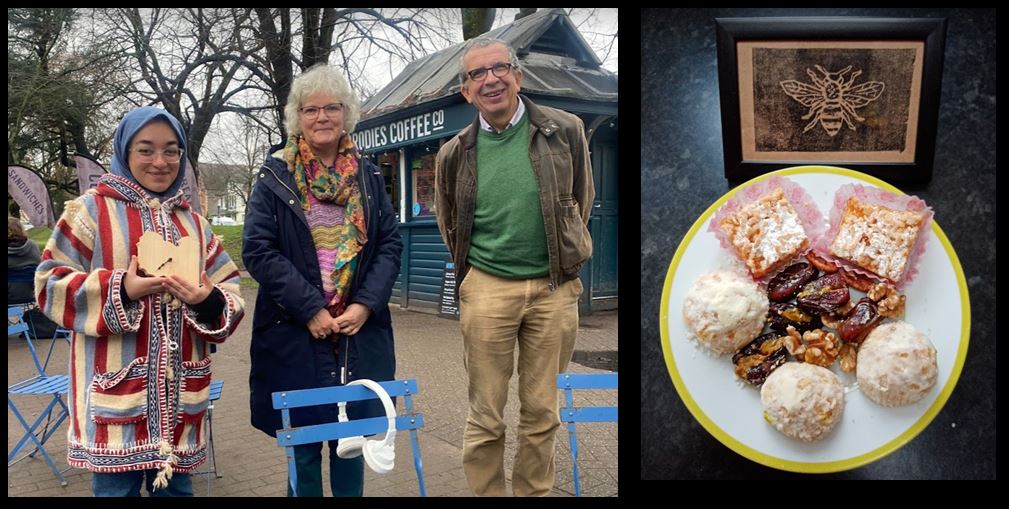
A perfect conclusion to our ‘trip’ to Libya. We met up with Shoruk from Libya for a chat. Shoruk is a charming and bright young lady who my wife taught A-level chemistry.  She has recently gained a degree in Architectural Studies at the Welsh School of Architecture here in Cardiff.  It was lovely to learn some more about Libya from someone who has lived there.  It was great to find a home for the Libya clock and even nicer to gratefully receive some gifts including a picture and some homemade cakes. Thank you Shoruk.

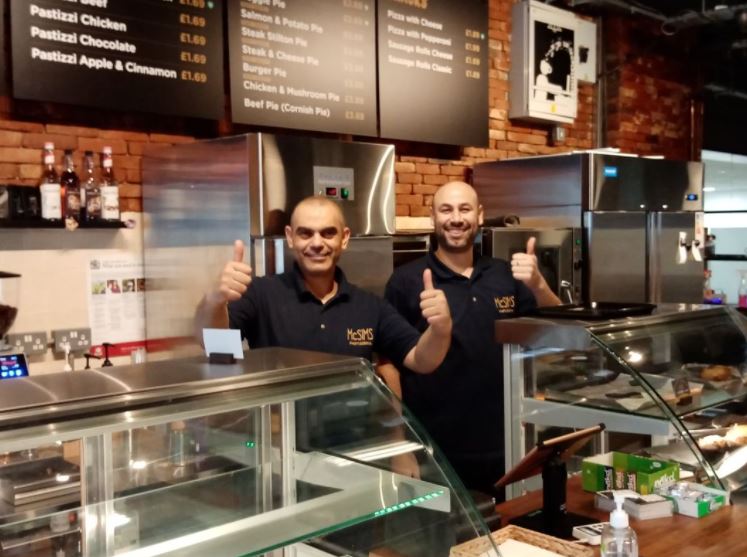
I also met briefly Libyan Adnan Arashi and his son-in-law who run McSims Maltese Bakery on Senghenydd Road. Their pastizzi signature bakes were very tasty. They gave me lots of hints about Libyan food as well as some history and what to look out for as a tourist.

Farewell Libya

I must admit there are some categories here that I haven’t quite got to grips with as yet such as Geography / History / Current Affairs / Economy / Nature / Science etc.  I don’t mean in relation to Libya specifically, I mean in relation to this ‘challenge’.  I don’t just want to sit here and repeat what’s written on Wikipedia and other such websites as it is dull for me and easy for readers to do that themselves.  After all, I may get things wrong. 

Instead, I now bid farewell to Libya. The people I have met and seen on videos are smiling and welcoming. The country is going through difficult times in recent years.  I wish them all the best. 

Progress to date:  Armchair Travel Challenge

Burkina Faso

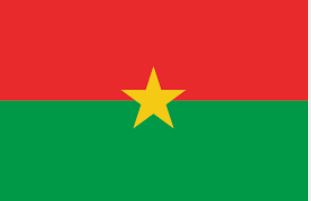
FlagGetting to Burkina Faso

I’ve arrived and according to the locals I couldn’t have chosen a better time of the year to be here. November is the dry season but still hot – by my standards anyway, 370C today!

I’ve had all the jabs imaginable on top of my Covid booster: Hep A & B, polio, MMR, rabies, typhoid, diphtheria, meningitis, cholera, yellow fever, hay fever and Saturday Night Fever.
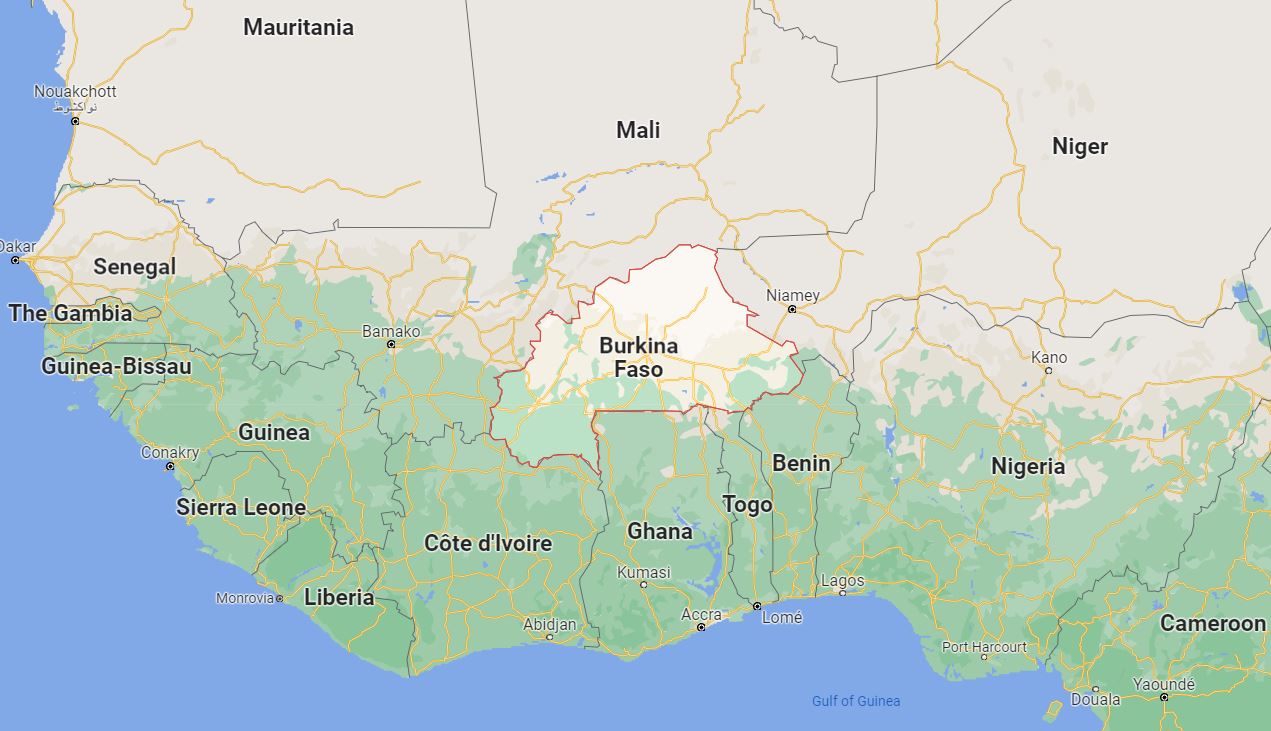
Burkina Faso map

Obtaining a visa was tricky. No Burkinabe embassy in UK so I had to apply to their embassy in Brussels.

The money is something I’ve never come across before. It is the West African CFA Franc, a shared currency between eight West African countries and the value pegged to the Euro. In 2019, it was announced that the West African CFA franc would be reformed, which will include renaming it the Eco and reducing France’s role in the currency.

I couldn’t find a direct flight from home so it was a case of travelling Air France via Paris. I arrived in the capital Ouagadougou and made a great discovery, the airport, the Thomas Sankara Airport (more of him another time) is in the city and I could walk to my hotel – never had that before on my travels. With it being the dry season the air is thick with an orange dust.

I thought I’d treat myself to a bit of luxury at the beginning of the trip – after all its not real money is it. I chose the Bravia Hotel – solely because I love the way they fold the towels.


Burkina Faso Travel

A well written travel blog can take you to your destination and you can almost imagine you are there. This blog by Joan and Lou Rose does just that. It dates back to 2005 when they toured Africa. With Joan suffering from heat exhaustion, Lou takes off alone on a 48 hour round trip to Gorom Gorom in the north-east, somewhere people are advised not to travel today because of the terrorism threat. Rather Lou than me!

Burkina Faso Food
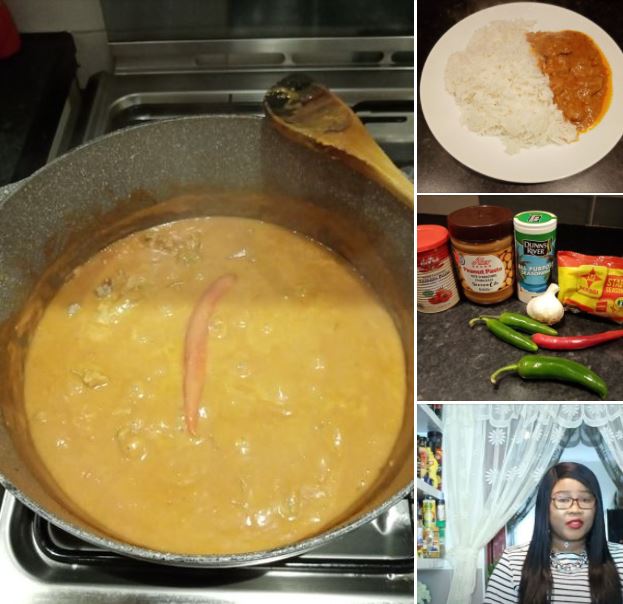
Peanut StewMargaret kindly served up our first taste of Burkinabe food last night. We found this enthusiastic lady, Estelle, on YouTube and her peanut butter recipe.

A visit to a local African food shop on Clifton Street and Sainsbury’s was called for to assemble the ingredients. That’s a chilli in the pot by the way, not one of Margaret’s fingers.

It was very tasty indeed. Quite heavy – you wouldn’t want to go for a five mile run straight afterwards. Already looking forward to having it again sometime.

Another night we tried Riz Gras, the national dish of Burkina Faso apparently. And very tasty it was too! Thank you again Margaret.

I had a go at making Ragout d’Igname (Yam Stew) and Burkinabé Tô. It was supposed to turn out like the picture on the left and take about five minutes to prepare. It didn’t. Note the lack of Burkinabé Tô in my picture. Millet flour took about 2 hrs to track down in the shops. My mix was grey and runny – not possible to form into balls (we are convinced the proportions in the recipe were wrong). The Yam Stew was a lot better though not as picturesque as in the recipe – and about three hours longer in preparation.
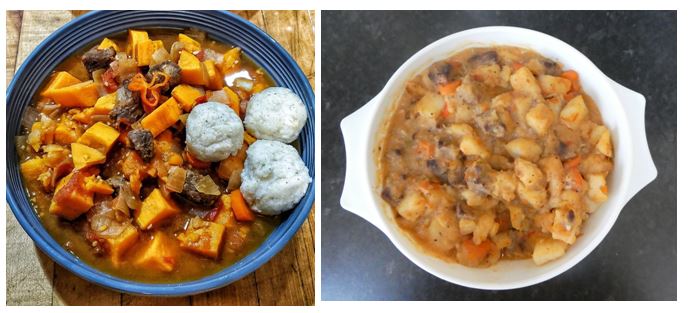
RAGOUT D’IGNAME – TRADITIONAL BURKINABÉ YAM STEW

Went out to dinner one nigh to get a taste of West African food. Visited Afrikana on City Road. I had the I had the ‘What Cheese Said’ – butterfly chicken breast loaded with melted cheese. Served with jollof rice, kachumbari and plantain. Margaret had the ‘Fried Chicken is Life’ – crispy deep-fried chicken breast tossed in a jerk sauce, served with rice and peas and plantain. The restaurant was busy and vibrant and cosmopolitan as only City Road can be – very nice.

Burkina Faso Literature

American Spy – a good read – very much enjoyed it. Not by a Burkinabe author the book certainly provided a good insight into the country and its history. Inspired by true events when Thomas Sankara, a popular Marxist revolutionary led Burkina Faso from 1983 to his deposition and murder in 1987. A fine first book by Lauren Wilkinson. A couple of copies in Cardiff Libraries.

The only English language book I could find by a Burkinabe author was The Parachute Drop by Norbert Zongo. It is about a fictional African country with a despotic leader who comes unstuck. I’ll let you guess which country was actually being written about and which leader. Zongo was an newspaper editor and was assassinated after this book was written.

Burkina Faso books

Burkina Faso Sport

So you join me today on my way not to Burkina Faso, but on a mad-dash trip to Algeria. For the sporting part of the challenge I am going to watch Burkina Faso play their last match in the World Cup Qualifiers against Algeria later today.

I was up way before dawn to make my egg and sardine sandwiches before setting off for London Gatrow. My Air Algerie flight leaves shortly from Terminal 3¾. I’ll just have enough time in the air to finish brushing up on the National Anthem, team news and some key phrases like “Offside Referee!”

After a mad dash out of the airport and into a taxi I have made it to the Stade Mustapha Tucker stadium at Blida, some 35km from Algiers. An expensive ride, but only in the imagination. There’s 14,000 supporters here, mainly Algerian naturally, all vaccinated with stringent health protocols will be in place. I was expecting fine weather but it is 160C and raining. Where’s my mac when I need it.


The team is nicknamed Les Etalons, which means “The Stallions”. It is in reference to the legendary horse of Princess Yennenga. The Burkinabe supporters have a percussion band with them making a heck of a din and mimicking the sounds of galloping horses.

I’m in the Burkinabe section and hoping for a miracle – a 13-0 win that will take us through to the next round of the World Cup qualifiers to be played next Spring. The African nations have just five places allocated to them in the Qatar World Cup due to be played at the end of next year. Here’s hoping for a Burkina Faso vs. Wales final.

The team news isn’t great. Bertrand Traoré, our star striker who plays for Aston Villa, is out injured.

The teams have just come onto the pitch. Now’s the time to sing the Burkina anthem with all my might – I’ve got the words written on the back of my hand. I’ll let you know how it goes.

Half time in a tense first half and it is one a piece. The Man City winger Riyad Mahrez put Algeria ahead after 21 minutes and Burkina Faso came back with a goal from Zakaria Sanogo who plays his football in Yerevan, Armenia.

I treated myself to a Mhajeb at halftime which is Algerian flatbread with tomato and onion stuffing. Yum yum.

An equally dramatic second half ensued with Sofiane Feghouli taking the lead again for Algeria after 69 minutes before Issoufou Dayo who plays for RS Berkane, Morocco, equalized again in the 84th minute. And so it wasn’t to be the 13-0 win I was hoping for but tense never the less. I’m off to share a strong mint tea with my new Burkinabe friends before heading home.

Postscript: Apparently they didn’t have to win by 13 clear goals, they just had to win.  Just goes to prove that my understanding of football can be somewhat lacking at times.

Burkina Faso Music

One of the pleasurable discoveries of this virtual challenge to date has been Burkinabe music. Something that would have been difficult to access a number of years ago is now easily discovered via Spotify playlists. Here’s my favourite Burkinabe playlist.  I also dipped into Volta Jazz and even some Smockey plus some traditional instrumental music too.

Burkina Faso Geocaching

Spoiler photoThe hobby of geocaching involves using a GPS or Smartphone to find a container someone has hidden. Some of the geocaches are puzzle meaning that a puzzle has to be solved first to get the coordinates of where the geocache is hidden. My idea for this ‘virtual’ tour of the world is to try and solve a puzzle cache in each country. I naturally won’t be able to log the geocache as a ‘find’ but it should still be fun. There are only 6 geocaches in Burkina Faso, 5 traditional and one puzzle cache so my choice was limited to one: Le Centre Noomdo.  It is an interesting cache and that has only been found once since it was hidden in 2017. I had soon solved and added to my ‘to find list’!  Just better to remember to take the photo with me when I go.

Burkina Faso Charity

I came across this charity when doing my virtual geocahe – see above. Le Soleil dans la Main (the Sun in the Hand) is a Luxembourg based charity providing education in Burkino Faso.

Le Soleil dans la Main

Burkina Faso Clock

Years ago I used to make clocks in the shape of different countries.  Shapes like Wales and Ireland were particularly popular.  I even sold them in local craft shops.  I thought for this challenge I would try and get back into making them. So after restocking some of the materials and bits necessary I sat down at the saw and manged to craft a Burkina Faso clock. It’s been fun getting back into doing some scroll saw work. I have a notion of trying to meet someone from Burkina Faso here in Cardiff, in a public place like outside the castle, shaking hands (or more like knocking elbows these days) and gifting them a clock.  So serious question, does anyone know anyone in Cardiff from Burkina Faso?

Burkina Faso clock

Burkina Faso Train journey

Our choice of where to go by train in Burkina Faso was rather limited – there is only one track. It runs 622km from Kaya, north east of the capital to the border with Côte d’Ivoire. The train used to run all the way to the Ivory Coast coast but because of the worry over Ebola the border has been closed. We picked the train up at the capital Ouagadougou. Again our choice was somewhat limited, there are just three trains a week, so you don’t want to turn up on the wrong day.

I say ‘we’, I was travelling in my imagination with my friend Ian, train enthusiast, and great organiser – there was no chance of me getting lost here. It was a bit of a surprise for him – in fact he’s only just found out.


They got some new trains in 2019. When I say new, I mean second-hand from Switzerland, so they know they can keep good time. We were worried we hadn’t bought enough sandwiches so looked out of the window to find there was plenty of people wanting to sell us snacks for the journey.

We were going as far as Banfora, not too far from the Ivory Coast border. I hadn’t told Ian why – I’ll break it to him gently. Our train journey would take around 24 hours. It would have been faster by bus but where’s the fun in that. There was just enough time to have a quick wander around some places en-route. We stopped off at Bingo and in the 30 minutes we were walking around saw two fat ladies, Danny La Rue, two little ducks and a garden gate. The station building at Bobo Dioulasso was something else. Bobo is Burkina Faso’s second city and one famous for its music. They were playing Volta Jazz tracks at full blast.


Back on board and onto our final destination at Banfora. The station here looked much more what I was used to. And so I broke the news to Ian that we were here to climb to the highest point in Burkina Faso.

(above ideas cam from and Journey blog from 2015 by Robbie Corey-Boulet and a 2019 blog from The Barefoot Backpacker🙂

Burkina Faso Highest Point

According to Wikipedia, Mount Tenakourou is Burkina Faso’s high point at 747 meters or 2,451 feet. One of the attractions is that the summit offers a view over three countries: Burkina Faso, Mali at a distance of 3 kilometres (2 mi) and Ivory Coast at 13 kilometres (8 mi). Important side note: the French apparently felt that Burkina Faso’s high point deserved to be a nice round number so they laid out a 3 meter high pile of rocks at the summit to boost the height to an even 750 meters. I checked with the highest authority on Welsh mountain surveys, who has red-carded them. That doesn’t count – the official summit is still listed as 747 meters.
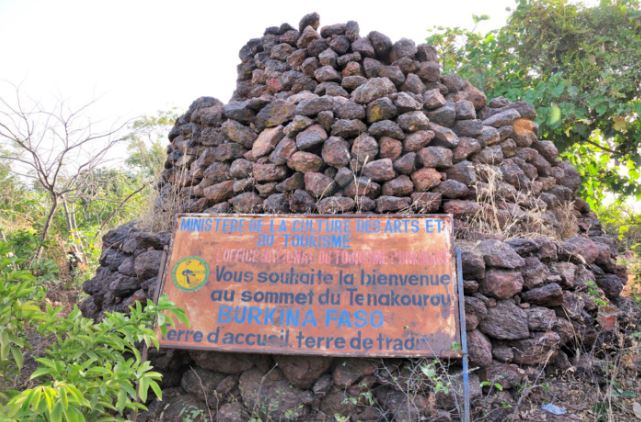
Mount Tenakourou

We arrived in Banfora at 10h00, just in time to get a guide who ‘sold’ us a 4X4 and driver for R1300. There was no other transport except motorbikes, and considering my dislike for them, we paid the exorbitant price.

A dusty 90 km followed before we reached the village where we paid the chief dash and were given one of his wives to hike with us.

All along the way she gave us wild fruit she picked. The Cairn was the biggest I’ve seen. The guides wanted to take us to the waterfalls but we declined, and the dusty 90 km back followed, with a flat tire to make sure life didn’t get boring.

(Text borrowed and adapted from The Gray Mountaineer and Sunrise on Africa’s Peaks)

Burkina Faso Film

The Man Who Stopped the DesertBurkina is known for its annual African film festival called Fespaco and cinema going is very popular in the capital. I failed to find a feature length Burkinabe fictional film but watched some documentaries which gave a good insight into the country. The Man Who Stopped the Desert is about a local farmer that devised a way of growing crops and trees in an otherwise hostile environment by planting outside the traditional season, lower down and adding manure.

Burkina Faso Stamps

Thought I would try and get some stamps from each country – it may make a nice collection if I continue with the challenge. Aren’t the pictures on stamps wonderful.  My Dad used to like collecting stamps more for the pictures than their value.  He used to glue than into an album rather than use mounts of any kind thereby making them all but worthless but he got enjoyment out of them and that’s what counts in life.

Burkina Faso stamps


These last few sections actually came early on in my month in Burkina Faso when I was doing a lot of background reading.  They are a bit dry – after all I don’t want to mess around with important things like history and the economy:

Geography

A land-locked country. Arid in the north where it borders the Sahara.  Crops grown by irrigation. Limited natural resources.

Economy

A particularly low-income country with most people working in agriculture. Cotton is the main cash-earning crop.  Gold is also mined.

History

A former French colony, independent since 1960. French widely spoken though so are the local languages. Used to be called Upper Volta till Thomas Sankara came to power in 1983.  He is often referred to at Africa’s Che Guevara.  Sankara was assassinated in 1987.  He was replaced by Blaise Compaoré who stayed in power till 2014.  Compaoré has been living in exile in Ivory Coast and is currently on trial (in absentia) for involvement in the murder of Thomas Sankara.

Current Affairs

The trial of Blaise Compaoré was due to take place this month but has been postponed.  Terrorist incursions in the north of the country dominate a lot of the news. I picked up some snippets of news from BBC Africa Today.  Also looked at French newspapers online – now Google translates complete web pages painlessly things are a lot easier than they used to be.


Farewell Burkina Faso

Our time in Burkina Faso is drawing to a close. The draw will soon be made for the next place for us to visit.  It’s been a real blast learning about Burkina Faso; eating the food, listening to music, watching videos, reading blogs, taking a train, buying some stamps, reading literature, history and current affairs and a few other things. Still hoping to find someone from Burkina Faso in Cardiff to give the clock to.  Thank you for reading and I hope you will join me in the next country.

Progress to date:  Armchair Travel Challenge