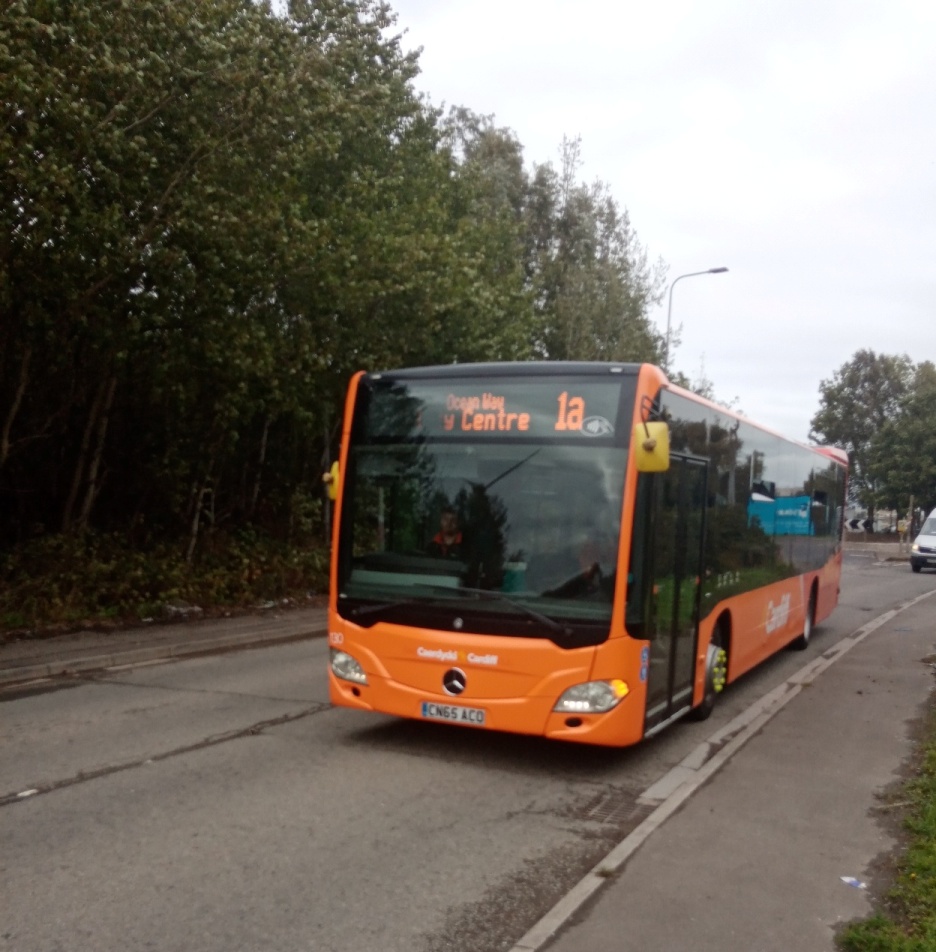
𝗕𝘂𝘀-𝗕𝗼𝗼𝗸-𝗕𝗲𝘃𝗲𝗿𝗮𝗴𝗲. Cardiff Bus No.1A

This challenge is much harder than I imagined it was going to be.

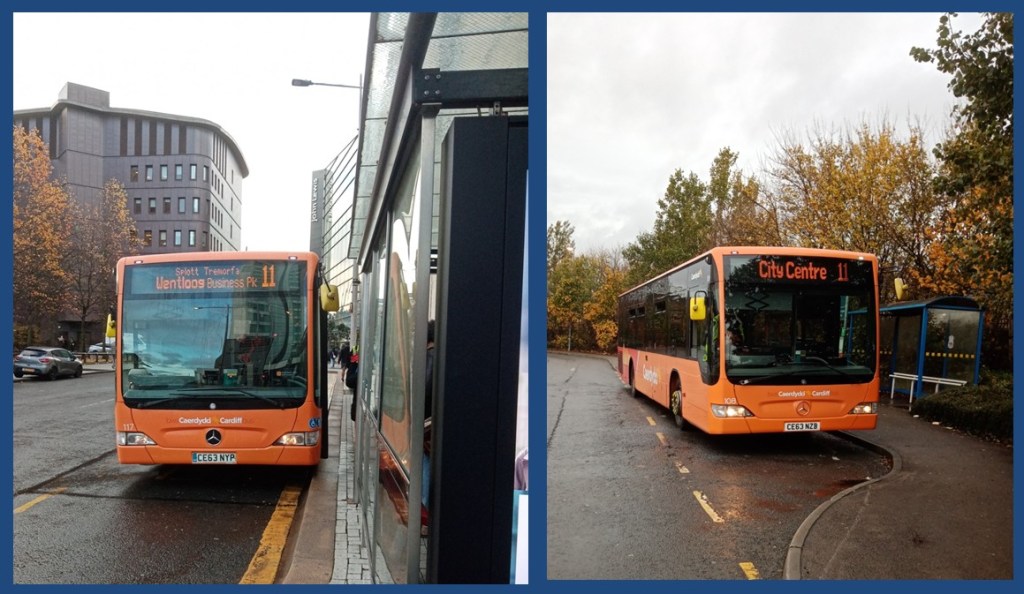
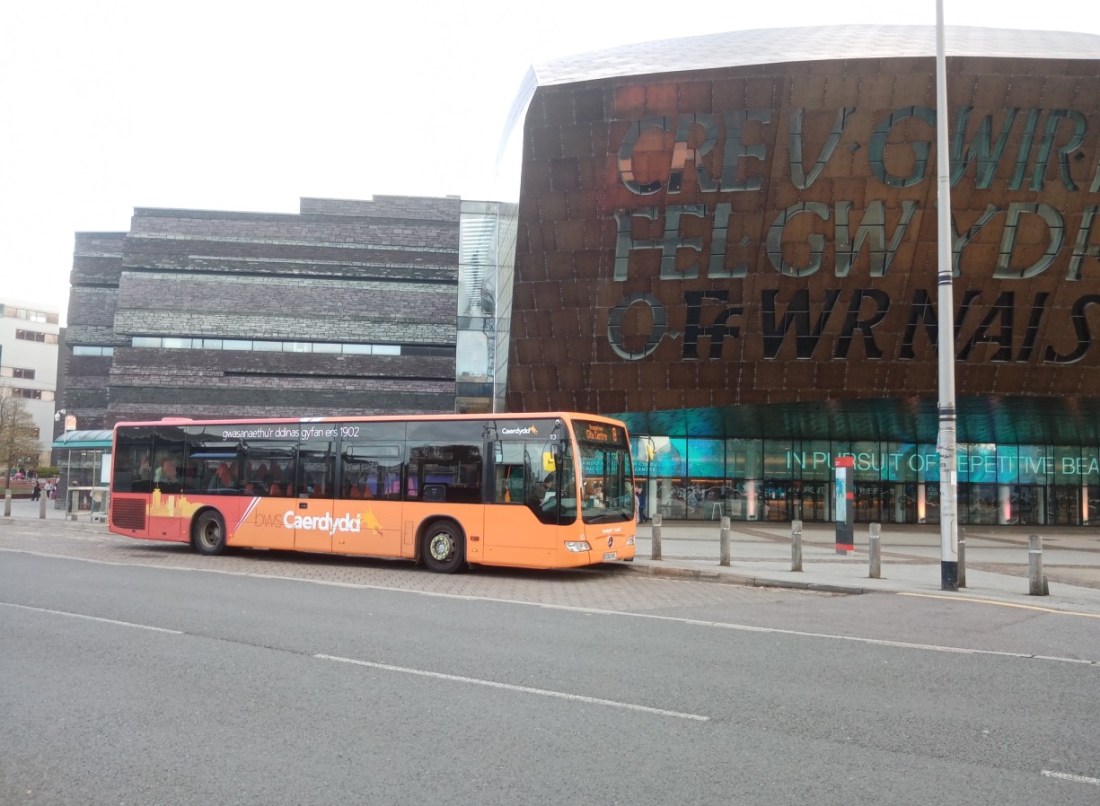
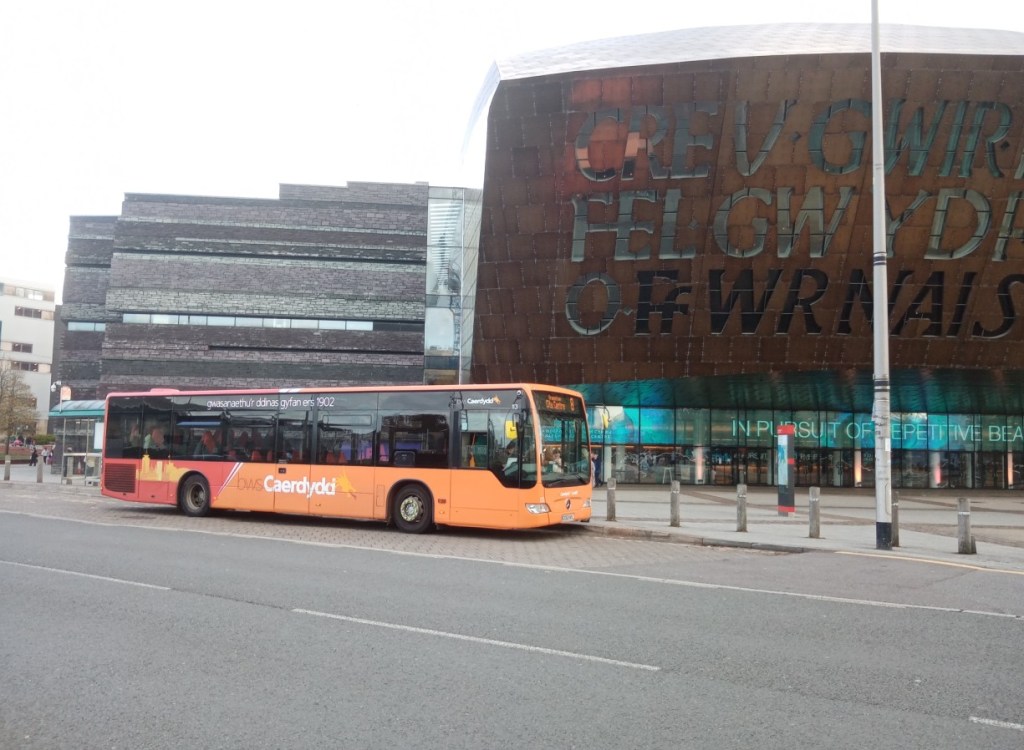
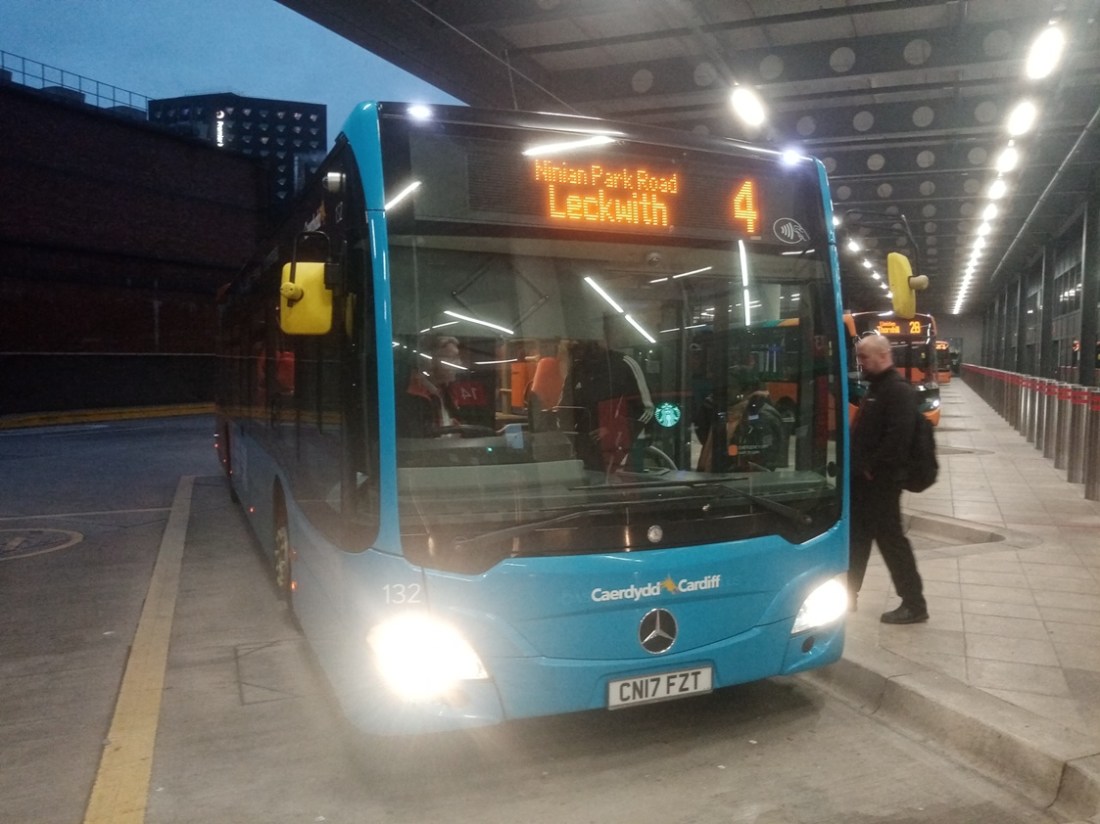
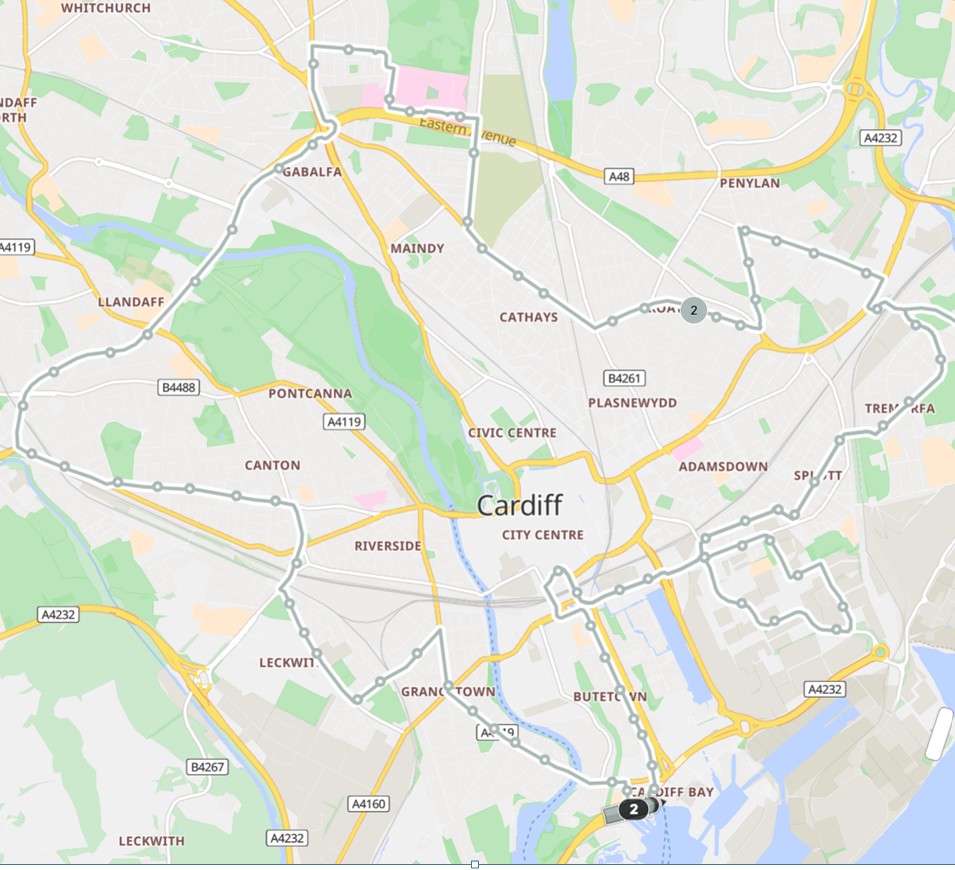
Cardiff Bus 1A Wentloog Business Park

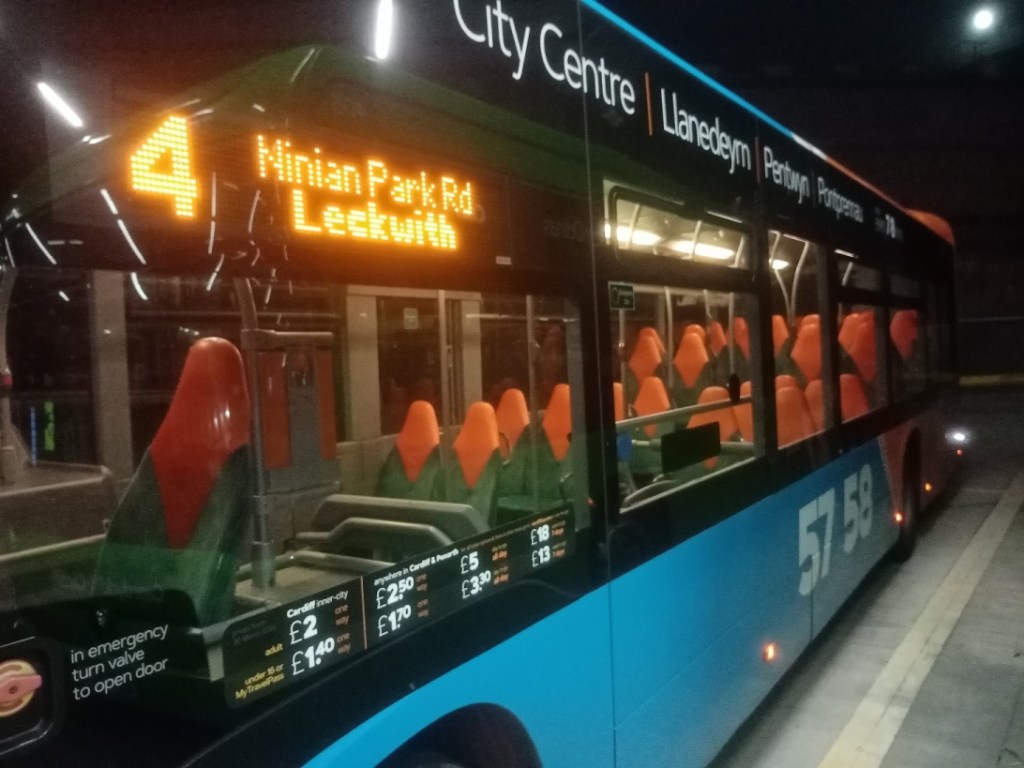
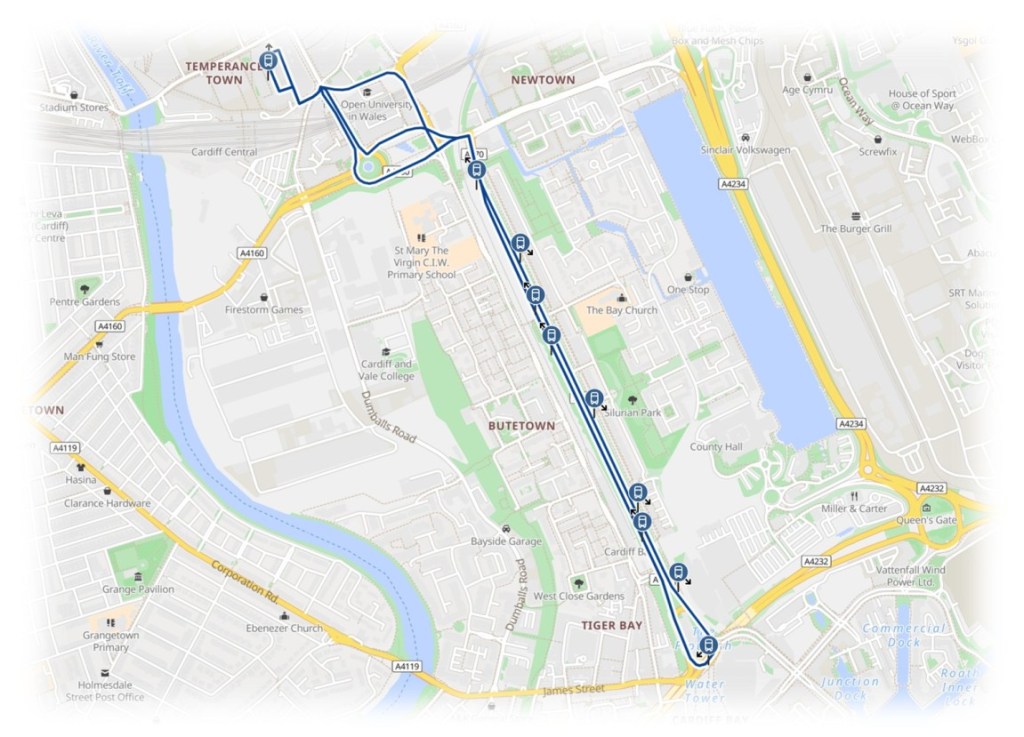
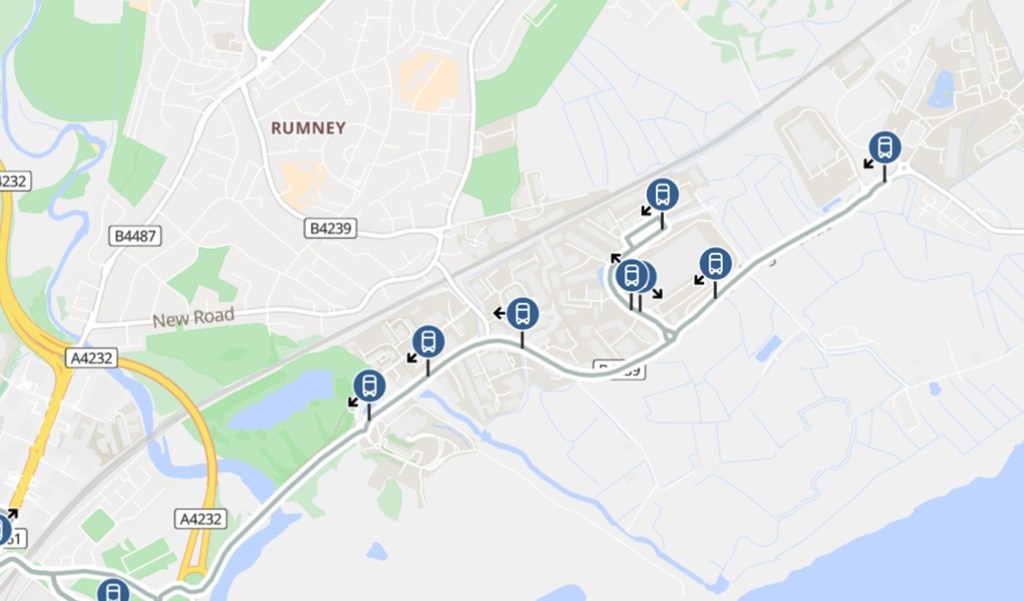
Cardiff Bus 1A goes from Wentloog Business Park into town but only three times day, in the afternoon, coinciding with the finishing times for workers. To make things more difficult for me the bus travels there ‘out of service’ so to catch the 1A I therefore had to somehow get myself there. The answer was to catch a 44 or 45 to Trowbridge and then walk down a dodgy footpath, over the main railway line and onto the industrial estate.

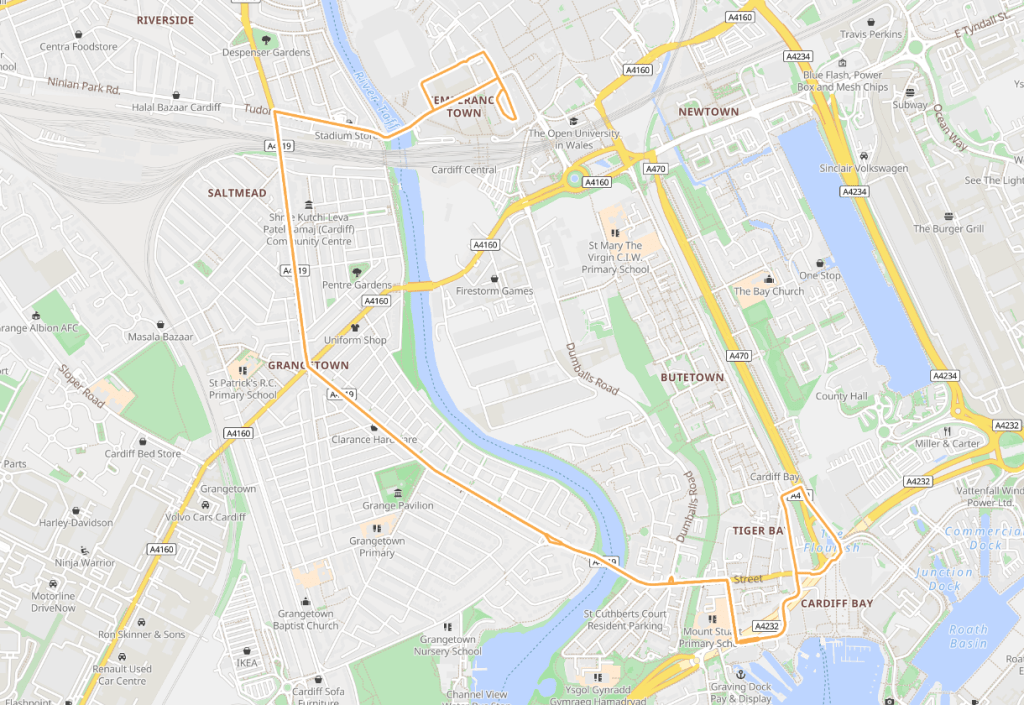
Cardiff Bus 1A route map near Wentloog Business Park

I tried it yesterday and failed. It was a horrible wet day and I got soaked. I managed to get to the 1A bus stop in Wentloog but the bus never turned up. I got even wetter trudging back up to Trowbridge.

My misery was compounded by the fact that I’d picked up a book to read in a charity shop about Peace. The back cover professed it would tell me how to bring about world peace even though I wasn’t a political leader or campaigner. It quickly transpired that the answer being put forward was to pray. Things got worse when I Googled the author, a French Canadian, who had won his fair share of prizes but then had some withdrawn for sexual scandals.

I had it all planned yesterday too. After the bus adventure I still managed to salvage the day and go to a meeting of the Cardiff Scientific Society where Professor Sir Colin Humphreys spoke about ‘Next generation ultra-low-energy consumption 2D semiconductor materials and devices beyond silicon’. This was a very topical lecture given the announcement yesterday about Microsoft investing £ billions in datacenters in UK. To power them we will need more nuclear power stations and still have the most expensive electricity in the developed world. We can only hope that the inventions of Sir Colin Humphreys come to reality, cutting the energy needed to power these datacenters and keep out lights on. I can’t help thinking UK has got the raw end of this trade deal. Once datacenters are built they sit there not employing people but using up massive amounts of electricity. Whereas the US gets a multibillion dollar investment from GSK employing a highly skilled workforce.

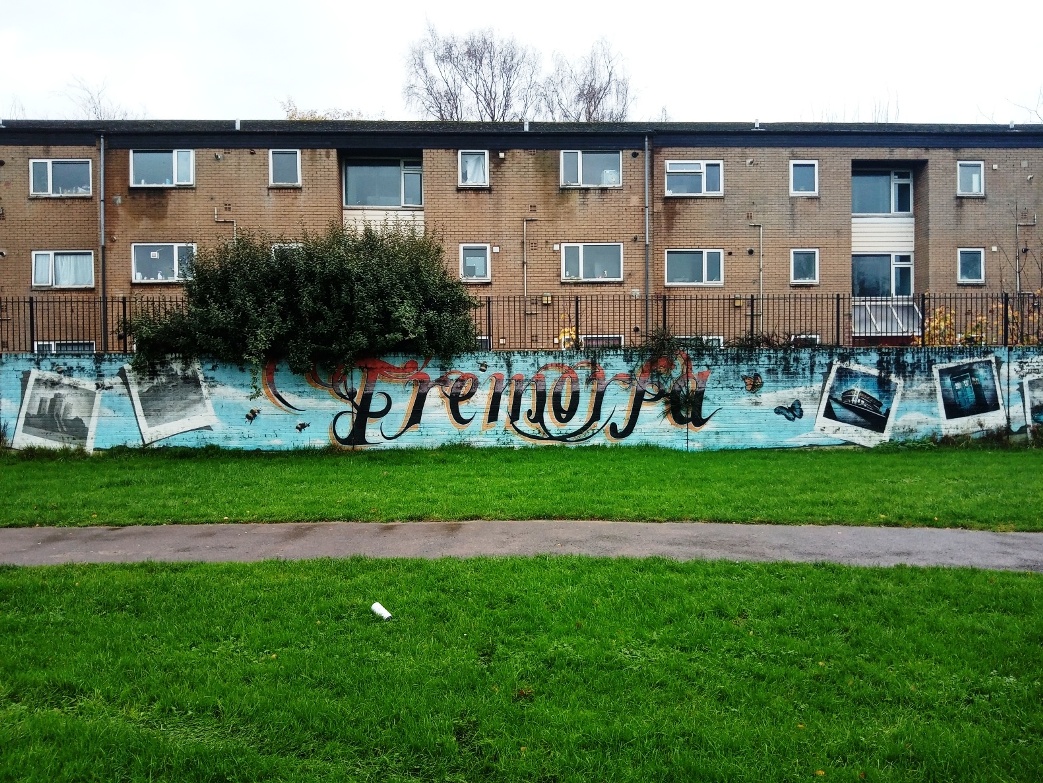
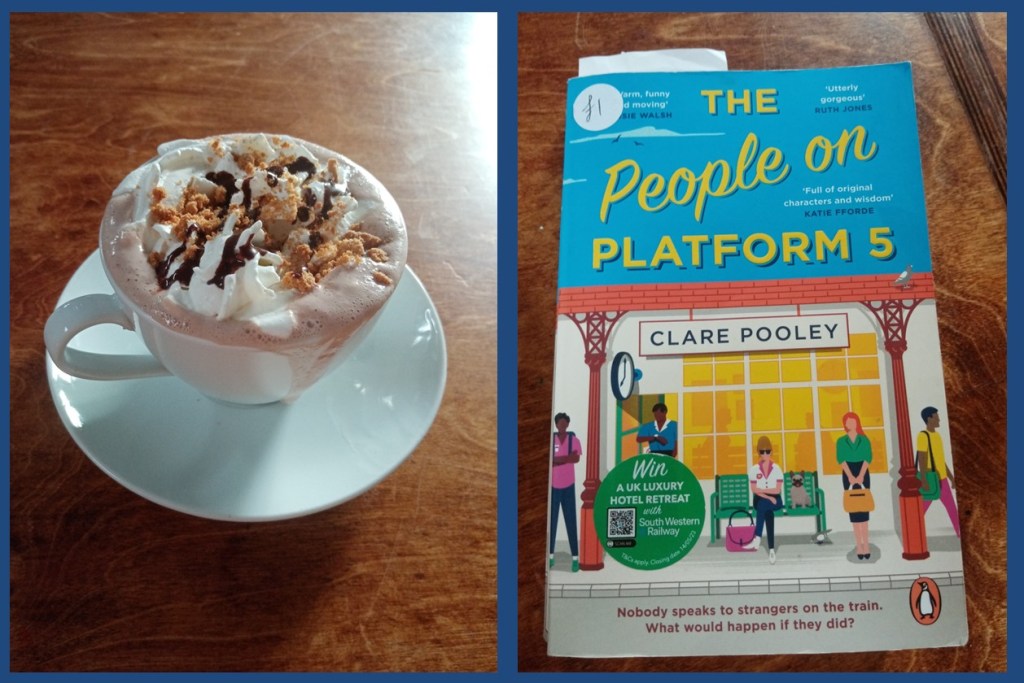
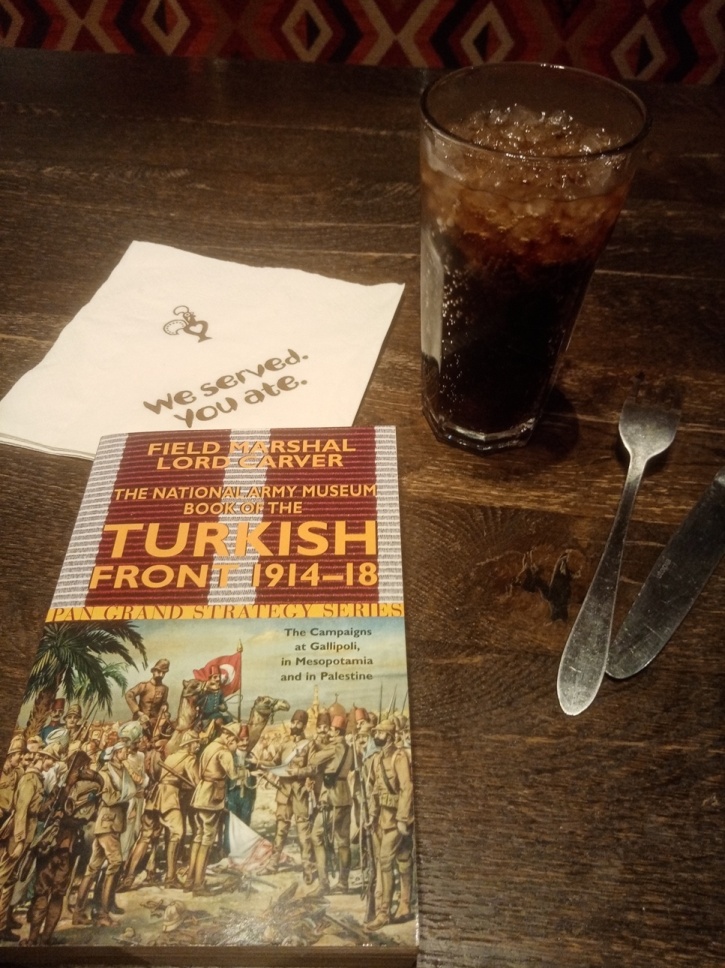
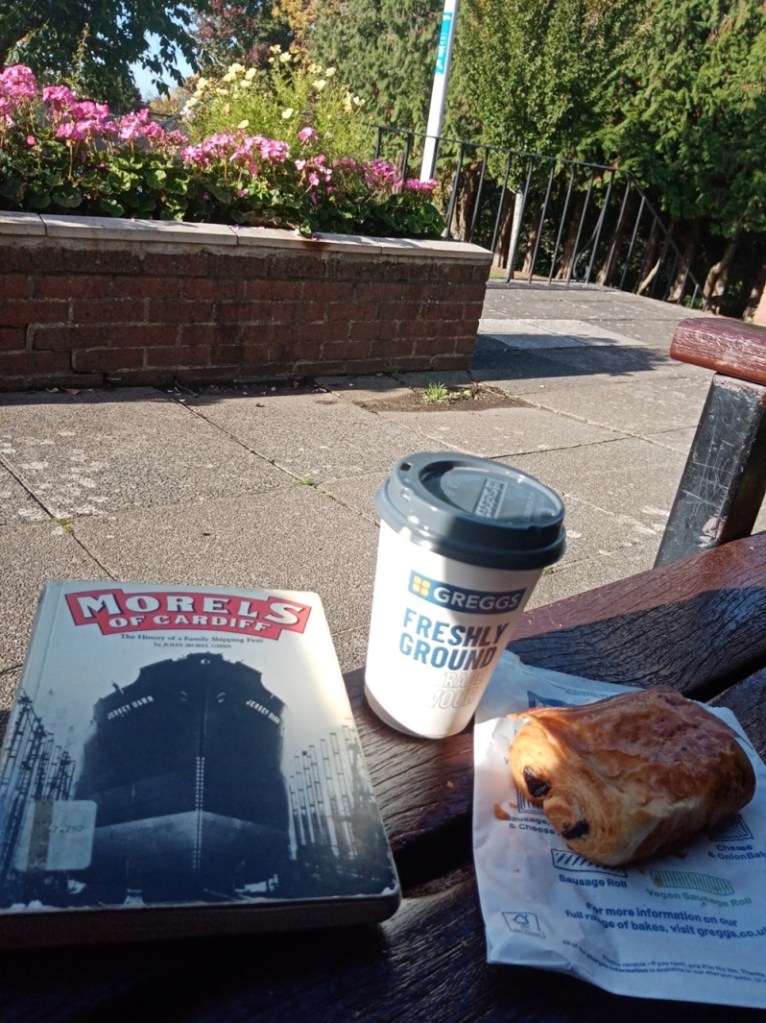
Anyway, back to the bus. I tried again today. I binned yesterday’s book and bought a new one. The bus turned up on time and picked up four other people on the industrial estate before we got to Tremorfa where we joined the conventional City Circle route into town.

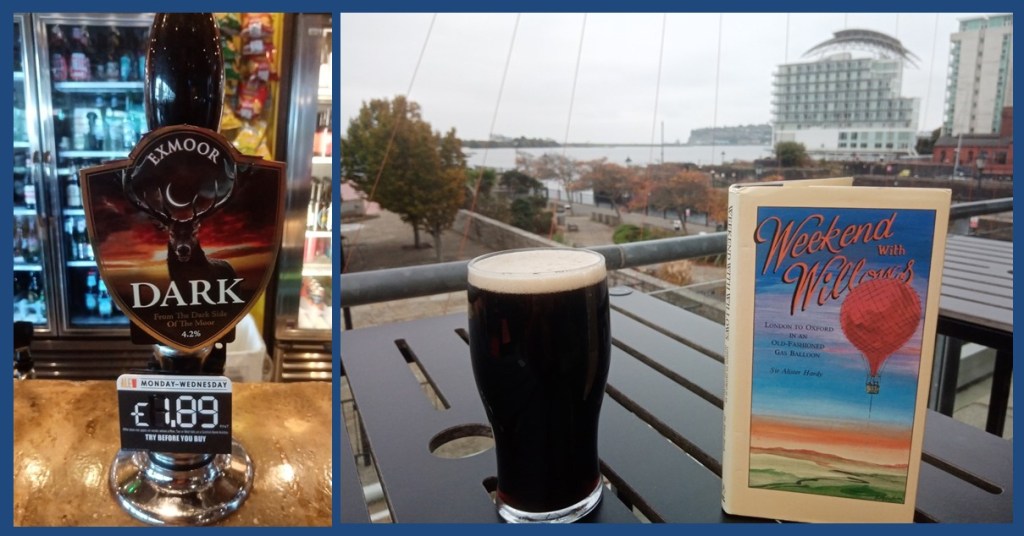
smartJamima’s Pitchfork at the Great Western Hotel, Cardiff

I headed over to the Great Western, (maintaining the transport theme) and ordered myself a pint of Jemima’s Pitchfork, went upstairs and found a quiet corner for a read of Richard Ayoade’s Ayoade On Top. He has a unique style of humorous writing with a rich vocabulary. I was a third of my way down my pint when my corner got invaded by a group of noisy school children, who had no intention of buying anything. In fairness they were fine, having harmless fun playing a card game. I took my hearing aid out and continued to read.

Richard Ayode On Top and a pint of Jemima’s Pitchfork

I wonder what the next bus adventure will bring me.

Click here to see more Bus-Book-Beverage adventures.

𝗕𝘂𝘀-𝗕𝗼𝗼𝗸-𝗕𝗲𝘃𝗲𝗿𝗮𝗴𝗲 Cardiff Bus No.1

A new idea for autumnal days when the weather is looking a bit inclement.

I was introduced to the bustimes.org website recently. Fascinating stuff. It got me thinking of something I could do on days when the sun isn’t shining and I know I shouldn’t be spending all the time hunched over a laptop.

Accompanying me on my journey would be a book for when I got bored with the view out of the window or people watching on board the bus.  I’d also aim to take in a beverage of some sort at some stage on the journey.

Cardiff Bus No.1 Canal Street

So today I felt like Laurie Lee stepping out on a new adventure, my senses heightened.

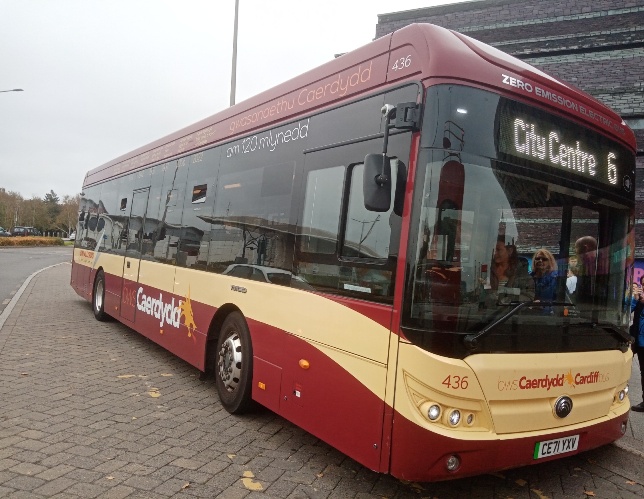
I caught the Cardiff Bus No.1 bus, the City Circle (clockwise). A good place to start I thought. 

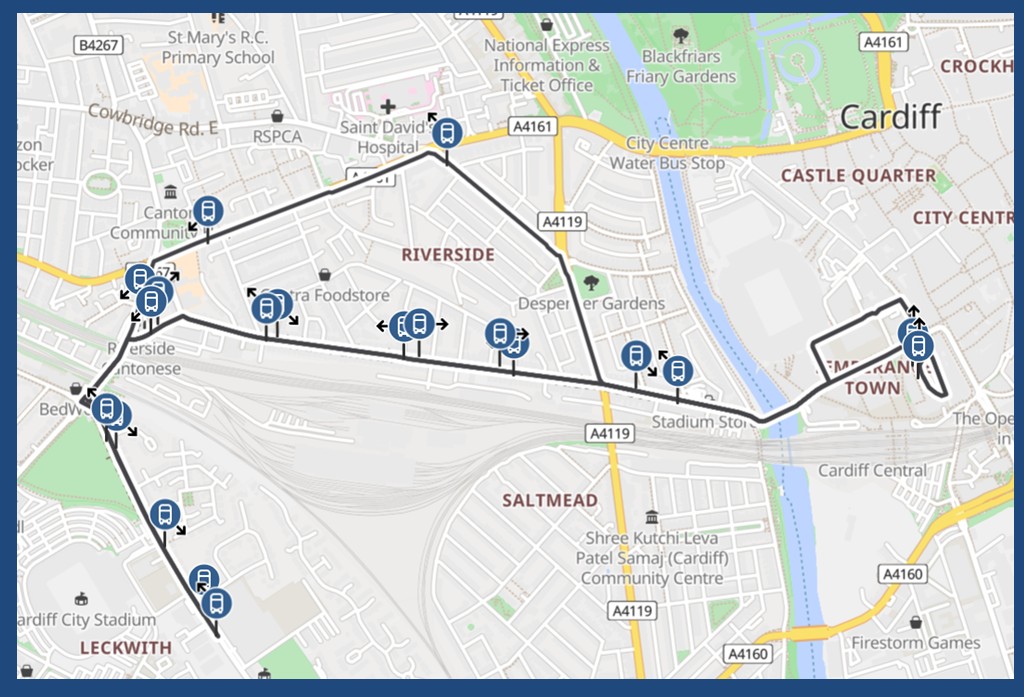
Cardiff Bus No.1 bus route

Embarking passengers took part in the wobbling skittles game i.e. could the somewhat heavy-footed driver make us fall over before we got to a seat.

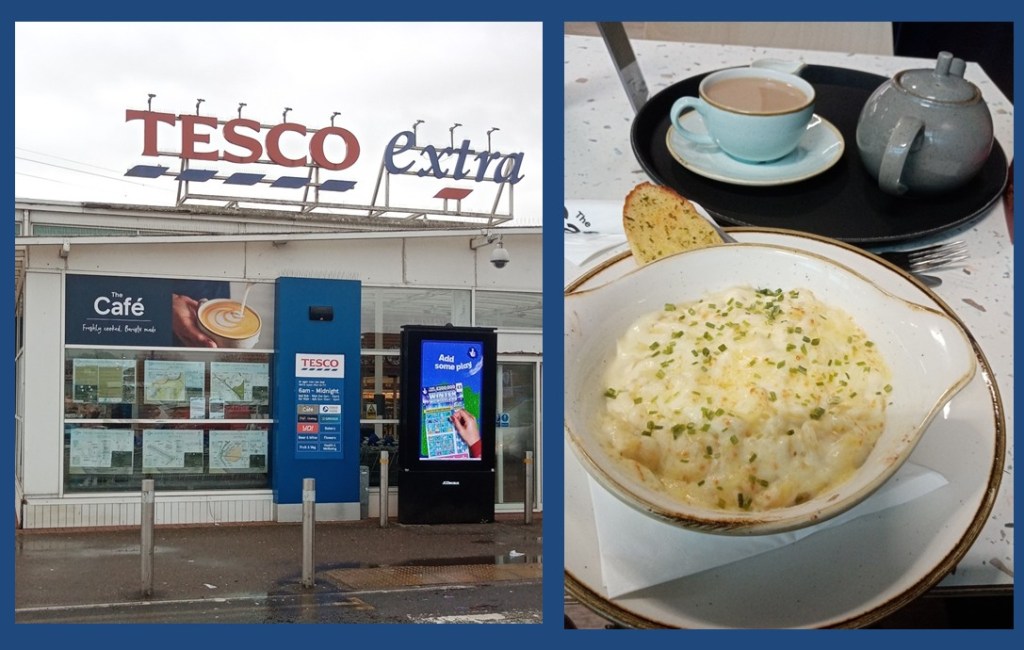
I alighted at the terminus in Canal Street and went and had a coffee in John Lewis. The 3rd floor café is very tranquil, a good place for a read.

John Lewis, Cardiff

I’m part way through ‘The Golden Orphans’ by Gary Raymond. He is an author, critic and presents of The Review Show for BBC Radio Wales. It’s good quality descriptive writing which I’m enjoying.

Gary Raymond – The Golden Orphans – John Lewis Cafe

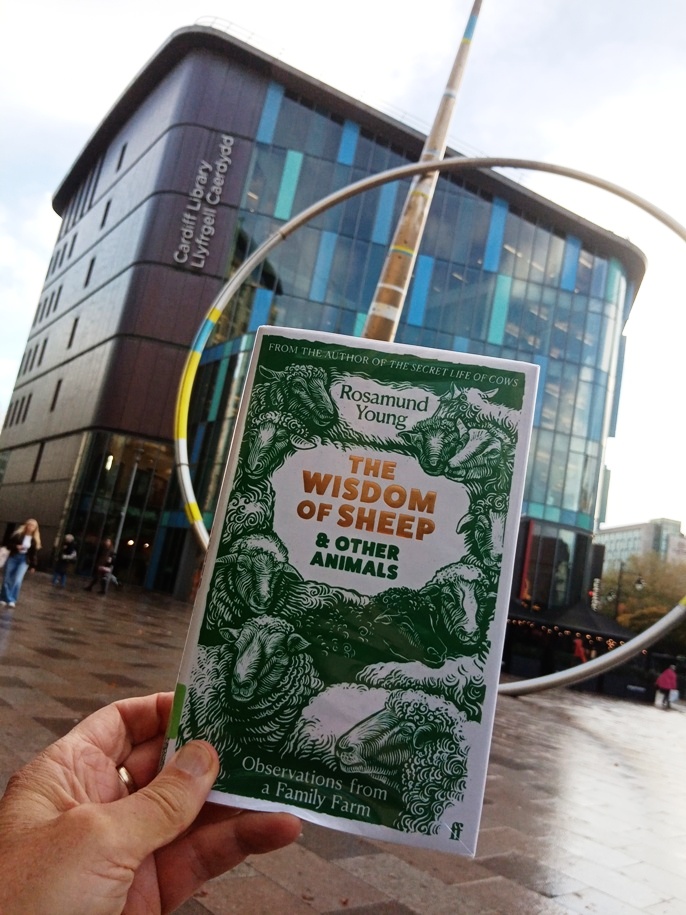
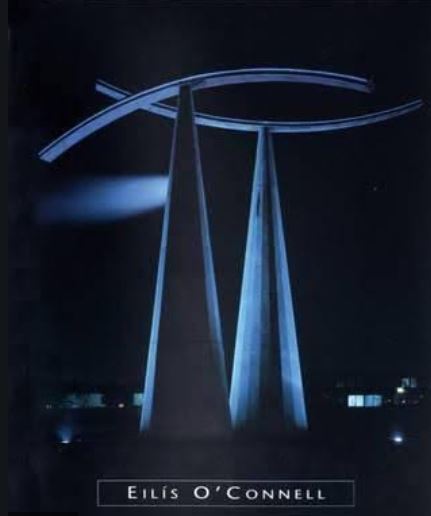
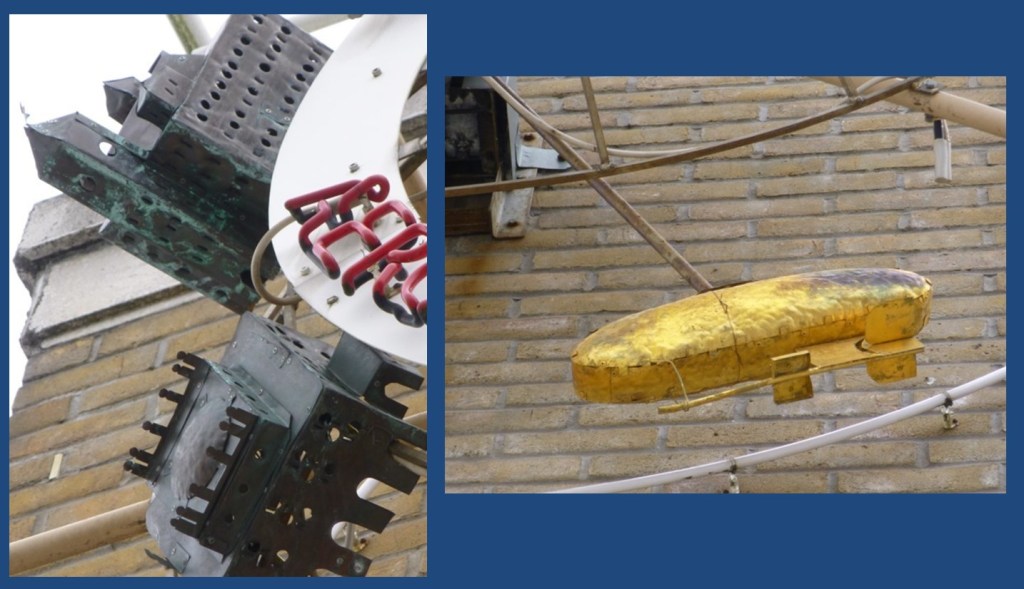
I mooched around the Alliance sculpture by French installation artist Jean-Bernard Metais outside the library.  I think it’s somewhat changed from its original installation, less reliance of moving parts and projected images, but still an impressive piece of art.

Alliance sculpture Cardiff

I caught another No.1 to continue my clockwise journey which stopped off at the hospital for those people requiring A&E after a somewhat jerky ride.  Fortunately, I arrived home unscathed and am now working out the intricacies of the No.1A bus.

Click here to see more Bus-Book-Beverage adventures.

My Dylan Thomas connection

Well, I wasn’t expecting that. It turns out my family has a Dylan Thomas connection.  His great-uncle, the man who inspired Dylan Thomas’s middle name Marlais, was the minister at my ancestor’s church, where my hard of hearing g-g-g-grandfather James used to sit in the pulpit to hear the sermons.  It is also said that the same minister probably inspired the character Rev. Eli Jenkins, in Dylan Thomas’s Under Milk Wood.

 I was looking around the lovely Dylan Thomas Museum on Swansea Marina when for some reason my eye was caught by an open book in a display cabinet.  It was open at a page about Rev. William Thomas (bardic name: Gwilym Marles).  He was the great-uncle of Dylan Thomas or Dylan Marlais Thomas to give the famous poet his full name. 

Dylan Thomas, Swansea Marina

It is said that Dylan’s father decided upon his son’s first and middle names.  Dylan comes from the Mabinogion, the collection of mythical Welsh tales.  Marlais is a derivation of his great-uncle’s name Marles.  In fact Dylan Thomas’s sister also had the middle names Marles.

Rev William Thomas (Gwilym Marles) was a Welsh radical Unitarian minister, poet, school master and political activist.  He led his congregation during the scandalous Llwynrhydowen Lockout of 1876, when they were evicted by the local landowner because of their religious and political views.

Rev William Thomas (Gwilym Marles) – on display at the Dylan Thomas Museum, Swansea

The sentence that had caught my eye in the open book on display at the museum was the first about Rev William Thomas ‘Born in Brechfa, Carmarthenshire in 1834, educated at Ffrwdfal, Carmarthen College and University of Glasgow, took charge of Llwynrhydowen and Bwlchyfadfa in 1860 and in the same year opened a grammar school in Llandyssul, came to the front as a political leader in 1868, became a convert to Unitarianism’.

It was only a few weeks later, the evening before I was about to take a group on a trip to Swansea and to see the Dylan Thomas Museum, did it click into place. 

Bwlchyfadfa, mentioned in that first sentence, is a tiny village in Cardiganshire where my great grandfather Evan Christmas Thomas was born. I’ve visited it a couple of time researching my genealogy.  My g-g-g-grandfather James Thomas is buried there in the churchyard of the Unitarian chapel. The last time I was there I met the present minister who showed me around the chapel and then took me to nearby Llwynrhydowen chapel where we discovered some obituaries in church magazines to my ancestors.

Bwlchyfadfa, Cardiganshire approx equidistant from Cardigan, Aberaeron, Lampeter and Newcastle Emlyn (map credit: Open Streetmap)

The visits were very useful in helping me piece together my family tree. I wrote up my finding in an article ‘It’s beginning to look a lot like Christmas’.

Great grandfather Evan Christmas Thomas family tree, Bwlchyfadfa

Having read the fact that Dylan Thomas’s g-uncle Rev. William Thomas (Gwilym Marles) was minister at the Unitarian chapel in Bwlchyfadfa between 1860 and his death in 1879 I went back my notes. He would have been officiating there when my great grandfather Evan Christmas Thomas was born in the village in 1864.

Evan Christmas Thomas (1866-1936)

It appears Rev. William Thomas officiated my g-g-grandmother Mary’s funeral in 1875.  Her obituary makes sad reading. 

Obituary for my g-g-grandmother Mary Thomas, unmarried, in Ymofynydd magazine, with rough translation using Google translate.

It also appears Rev. William Thomas was also due to officiate at my g-g-g-grandmother’s funeral in 1879 but could not due to ill health (he died later that year).

Obituary for my g-g-g-grandmother Elizabeth Thomas, in Ymofynydd magazine, with rough translation using Google translate.

My g-g-g-grandfather James lived to the age of 84 in 1890.  His obituary stated he was hard of hearing and used to sit in the pulpit in order to hear the sermons.  I’m guessing these included sermons of Rev William Thomas (Gwilym Marles) before he died.  

In 1876, the local landowner evicted Gwilym Marles and his congregation from Llwynrhydowen chapel because he disapproved of their “radical” politics (they supported the Liberal Party and electoral reform) and unorthodox Unitarian faith. The eviction caused a national scandal and Gwilym emotionally addressed 3,000 people on the steps of the locked chapel, famously declaring that while the landlord could take their chapel and its contents, down to the candlesticks, he could never take the burning flame – that could never be extinguished.

I am guessing my g-g-g-grandfather James and maybe Evan Christmas Thomas, being a keen Unitarians in Bwlchyfafa chapel, may well have been among the 3,000 people on the steps of the locked nearby chapel Llwynrhydowen.  

Llwynrhydowen Unitarian chapel information board with information aobut Rev William Thomas (Gwilym Marles) and the lockout at the chapel.

Barred from their beloved chapel and the graves of their ancestors, the congregation built a new chapel a short distance away, but Gwilym, defeated by stress and ill-health, tragically died in 1879 aged just 45, before the opening ceremony of the new chapel, where his body was laid to rest.

It is said that Rev. William Thomas (Gwilym Marles) probably inspired the character Rev. Eli Jenkins, in Dylan Thomas’s Under Milk Wood set in the imaginary village of Llareggub.  Reverend Eli Jenkins is Llareggub’s reverend, preacher, and poet. He addresses the town in the poetic daily sermons he delivers from his doorway, and he is constantly writing, thinking about, reciting, and praising poetry and dreams of Eisteddfodau.  Eli Jenkins loves Llareggub, though he knows that there are places more magnificent and exciting than the small village. He’s in the process of writing a book the town called the White Book of Llareggub. Though Jenkins knows Llareggub’s citizens “are not wholly bad or good,” he thinks that God will judge them on their goodness and forgive them their sins, and he sees Milk Wood as a symbol of “the innocence of men.”

When I next listen to Richard Burton reading Under Milk Wood I’ll be imagining my hard of hearing g-g-g-grandfather James sitting at the feet of Rev Eli Jenkins.

There was one more piece in the family history jigsaw that revealed itself during this little bit of research.  Looking at the information board for Llwynrhydowen chapel online it specifically mentions Christmas Evans, the man who I think my g-grandfather Evan Christmas Evans named himself after. I had known Christmas Evans came from the Llandyssul area but hadn’t realized there was such a local connection to Bwlchyfadfa where my g-grandfather grew up.

Llwynrhydowen Unitatian chapel information board – about Christmas Evans. For more information about Christmas Evans see previous blog It’s Beginning to Look a Lot Like Christmas

Jamaica

Food

We wanted to sample some Jamaican cuisine was part of my Armchair Travel Challenge and had heard about Jam-Welsh based at the Horseshoe Inn, Llangattock.  We had a lovely Coconut Vegan Curry served in ½ pineapple and a Jamaican Spice Jerk Chicken Breast Burger, served with chilli & mango salsa, chips & coleslaw. I later gifted chef Raymond and Sheila a clock in the shape of Jamaica I had made earlier in the week.

Drink

When walking through a park in Butetown, Cardiff following a party I noticed the bins were full of empty bottles of a Magnum Jamaican Tonic Wine (16% Alcohol) – made in Jamaica.  The nearby international supermarket had never heard of it but a tiny corner shop near the police station had some in the fridge – bottle purchased for future consumption. The bottle reminded me of cough mixture and there was something about the taste that had a similar resemblance too. We drank the Magnum with some Jamaican Jek chicken made at home.

Jamaica JerkcChicken and Magnum Tonic WIne

Clock

Not a bad shaped country for making a clock but barly enough room to nail the hanging triangle in on the back. Out of hands now – must remember to get some more.

Literature

I made several attempts to read ‘A Brief History of Seven Killings’ by Jamaican author Marlon James but must admit I struggled with it and never finished it.  Ah, well, that’s how it goes sometimes.

Music

I’ve always liked a bit of reggae so how better to spend our ‘virtual’ time in Jamaica than by playing Bob Marley, the king of reggae.

I also heard some live Caribbean music when I gate crashed a Windrush event at the Senedd in Cardiff Bay. I caught some of the closing speeches, lots of thank yous followed by 20 minute fun Caribbean music sing-along. They started with Swing Low, Sweet Chariot.  I desperately tried to remember the background to the controversy of the song being sung in rugby matches.

Windrush Cymru

Film

Staying on the theme of Bob Marley we watched the 2004 film One Love about a young Rasta musician falls in love with the gospel-singing daughter of a Pentecostal preacher, meeting her as they both sign up for a music contest. It stars one of Bob Marley’s children Ky-Mani Marley.  I must admit I think we watched it by mistake after I had read there was a biographical film about Bob Marley called One Love.  It turns out that one has only recently been released.

Railways

Well, I wasn’t expecting to discover that.  There is a railway in Jamaica!  Only just and not many.  In fact Jamaica has a long association with railways going all the way back to when the first tracks were laid in 1845.  The railways of Jamaica were mainly for agricultural purposes and in later years more for industry, specifically transporting bauxite (aluminium) ore. There have been passenger services in the past but they died out until in the past year or two a school-train service started up and as far as I can tell is still in existence. I like the way the seats are in the same colour as the Jamaica flag.

Geocache

There are presently no Puzzle geocaches in Jamaica for me to solve.  I had a look at some of the Earth caches there but I just don’t like Earth caches – and that’s putting it mildly.  I find the answers can be so ambiguous.  In the end I took a look ay a Virtual cache Rainbow Country that is at Bob Marley’s birthplace. It encourages visitors to find the piece of rock, now painted with a rainbow design, where Marley used to sit and compose some of his songs.

Sport

Jamaica appeared in the FIFA Women’s World Cup finals in Australia in August 2023. They made it through the group stage with a 0-0 draw against Brazil and into the last 16.  If they had managed to beat Columbia they would have played England in the Quarter Final but unfortunately they lost 1-0.

The other sporting event that took place whilst we were ‘virtually’ in Jamaica was the World Athletics Championships held in Budapest.  Needles to say Jamaica did well in both the men’s and women’s events. In the 200m race Shericka Jackson became the second fastest woman ever with a time of 21.41 seconds.

I also kept an eye on how Jamaica were doing at the World Lacrosse Championships in San Diego, California as I was also following how the Welsh team were getting on there.

Highest Point

The highest point in Jamaica is Blue Mountain Peak in the south east of the island.  It is 2,256 metres (7,402 ft) and home of Blue Mountain coffee. By a stange coincidence I came across Blue Mountain when I was putting together a talk this month on the Mackintosh family. Alexander Mackintosh, the 24th chief of the Mackintosh Clan became a merchant in Jamaica, built a house there called Moy Hall (the same name as the family base in Inverness shaire, Scotland).

The Blue Mountains are popular for hiking and camping. The traditional Blue Mountain trek is a 7-mile (11 km) hike to the peak and consists of a 3,000-foot (910 m) increase in elevation. Jamaicans prefer to reach the peak at sunrise, thus the 3- to 4-hour hike is usually undertaken in darkness. Since the sky is usually very clear in the mornings, Cuba can be seen in the distance.  Judging by the YouTube videos I watched however the summit of often shrouded in fog).

Stamps

I purchased a set of 1971 stamps celebrating the 300th anniversary of the post office in Jamaica. One of the stamps is upside down presumably a replica of an actual printing error in the past.

Current Affairs

I read around a bit about the news from Jamaica.  There was quite a bit about the proposed move to cut links with the British monarchy and form a republic, a view that appears to be gaining traction since the death of the Queen last year. There was also continued discussion concerning reparations for slavery in the past.

Touring Jamaica

We were able to fly to Montego Bay, Jamacia direct from Birmingham with TUI. Where did we go? Well, naturally we didn’t stay in the same place all the time. We took some inspiration from some suggestions I found online such as the Ultimate five day tour of Montego Bay and the Jamacia Travel Guide blog by Oliver.
Moldova

Moldova is a small eastern European county, with neighbours Ukraine to the north and east and Romania to the south and west. I visited Moldova for real in 2017 as part of my quest to have a pint of Guinness in every European capital city. Revisiting it now, all be it virtually, Moldova appears to have become more openly western facing, no doubt hastened by the war in neighbouring Ukraine. It is not only openly applying for EU membership but also in the last month hosted a summit of European leaders.

Food and Drink

We dined Moldovan with delicious homemade Sarmale  – cabbage leaves filled with rice, mince then wrapped in bacon and baked with tomatoes. All credit to my wife, not only for the cooking but also for finding the enormous jar of pickled cabbage leaves and carrying them home.

In Majestic Wines I found a bottle of white Moldovan wine – Carpe Diem, which was also delicious.  I never knew you could buy single bottles in Majestic; I always thought it was for cases only.

Literature

The Good Life Elsewhere by Vladimir Lorchenkov is I think the only Moldovan novel translated into English.  It’s a quirky work based on a group of villagers that will do anything to escape the drudgery of Moldovan life for a better one in Italy.  I was worried when I read the synopsis that only a small part would be based in Moldova and the rest in Italy thereby defeating the purpose of me reading it which was to get an insight in to the Moldovan way of life.  I needn’t have worried.  They don’t succeed. A humorous read, almost fairy-tale in parts and well translated.

To add to the quirkiness, my copy that I picked up on eBay was an ex-library book from Stonnington Library which seems to be in Melbourne, Australia.  How these books travel!

Railways

I have travelled by train in Moldova. I wasn’t planning to – it just worked out that way.  When I was there in 2017 in search of a pint of Guinness I was travelling with Ian, a great train enthusiast whose mission is to travel by train in every country in Europe. There is a very limited choice of trains in Moldova but he managed to plan a day out for us from the capital Chișinău to the town of Călărași, and what a day it turned out to be.  We travelled there in a smart Moldovan train and returned on a Russian sleeper train. 

When we were in Călărași we were looking around for the museum when a gentleman came up to Ian and introduced himself as the Mayor.  He kindly arranged for the museum to be opened especially for us as it was closed for repair.  He also arranged for us to have a guided tour by Marianna and her friend Corina.  They very kindly spent the day not only showing us the museum but also the fire station, the police station, the old synagogue, a church and a lot more.

Stamps

Some themes seen on stamps are quite common e.g. sport, transport, wildlife but rarely cakes! I like it. I wonder if the gum on the stamp tastes like the cake.

Film

The Unsaved. A short film about a young Moldovan man, lives with his mother and minor drugs dealer, trying to work out the right way in life. The IMDB summary is pretty accurate. 

Geocache

I have found some geocaches in Moldova but never solved a puzzle cache there.  In fact it seems there are only three puzzle caches there. I chose to have a go at ‘UTM’s outdoor technology museum Mystery Cache GCA9B27 . It wasn’t too much of a challenge.  I just needed to find a binary to text converter.  UTM’s outdoor technology museum is an outdoor park in which you can find old buses, trams, statues, tractors and even helicopters!  I also have a ‘virtual’ look at the park as one does.  

Highest Point

Moldova isn’t a mountainous country.  In fact it doesn’t have a mountain at all if your definition of a mountain is something over 2000 feet.  Their highest point is Balanesti Hill which stands at 1411ft / 430m.  Wales is positively mountainous in comparison to this.  I looked up the successful summiteers of and rather liked the account of Lee Humphries who got to the top of the field in March 2017.  His ascent was more a battle with the train network than it was mountaineering.  

Music

My search for Moldovan music took me down some rather strange avenues. I discovered the folk-punk band Zdob și Zdub and the jazz band Trigon who put together the Moldovan Wedding in Jazz in 1993  described as “a milestone in so-called world music”.  I was however most at home with the Compilation of Moldivan Folk Music by Anatol Rudei.

Sport

Alexandru Borș has just won the gold medal in the U17 category up to 80 kilograms in the 2023 European Championship held in Albania.    Moldovan wrestler won gold medal at European Championship

It has also been a month to keep an eye out for how Moldova do in footballs’ European Championship qualifiers. Things haven’t being going so well there with Moldova loosing to Albania 0-2 last weekend and loosing 2-0 to Poland at half-time tonight. But wait! Just as I published this blog the Moldova team come back and score three times in the second half to give themselves a 3-2 victory over Poland. Bet things are hopping tonight in Chișinău.

Highlights from the game.

Jubilant scenes in Moldova tonight.

Seychelles

Our virtual trip the Indian Ocean islands of the Seychelles has just been completed.  Some challenges were met, others not.  Their President is even over here for the Coronation.  He was interviewed by BBC’s Hardtalk programme apparently – due to be aired next week.  Look forward to watching that.  It looks a beautiful place and their flag must be one of the best. 

Food

Using our imagination we dined on the deck overlooking the white sandy beach as the waves swept in. Margaret kindly prepared a taste of the Seychelles – king prawns with tamarind and coconut with Creole saffron rice.

Literature

Voices: Short Stories from the Seychelles by Glynn Burridge.  An enjoyable read with lots of pirates, coral, aeroplanes, boats, sharks and rays.  

Film

The Seychelles aren’t known for their film industry but I did happen to discover that some of the film Thunderbirds was made there. Now if you’d have told me that Ben Kingsley stared in Thunderbirds I wouldn’t have believed you but he does and was actually very good.  The film bought back childhood memories of watching the TV series.

Highest Point

Morne Seychellois,  905 m (2,969 ft), is the highest peak in Seychelles.  It is located on the island of Mahé in the Morne Seychellois National Park.  It may not be that high but it sounds a devil to get up.  I read these two accounts by Eric Gilbertson and  Lee Humphries  and was left feeling exhausted!  Hats off to them.

Music

Sandra Esparon – A bit poppy but she sounds very Seychellois  and seemed to bring the island vibe into the house.

Railways

There are no railways in the Seychelles so had to improvise a bit a with a Seychelles flag painted on concept train, a picture of a train on a Seychelles stamp and a British steam train called Seychelles.

Sport

Whoever would have known that someone from the Seychelles played in the Premier League, admittedly only one game for Fulham.  Kevin Betsy had a long career playing and coaching in Britain.   

Stamps

Some bargain Seychelles 1970s first day covers depicted colourful island scenes.

Geocache

Puzzle Geocache ‘Seychelles – La Digue – Anse Source d’Argent’ was easy enough solve but looks to be a bit of a scramble to collect it.

Belarus

I’ve visited Belarus previously. I was there in 2015 as part of my European Capital City Guinness Challenge. I’ve just re-read my notes from that trip.  It was a great adventure and I enjoyed it. A country rarely visited by tourists.  It was good to go back ‘virtually’ and cover some aspects I’d missed on my 2015 trip.

Food and Drink

We looked up what they eat in Belarus and had a go ourselves.  Here’s our attempt at a traditional Belarusian dish – draniki (potato pancakes) with a pork stew washed down with a bit of vodka.

Music

I’ve been listening to jazz trumpeter Eddie Rosner. His story is told in a documentary Jazzman from the Gulag.  I eventually found it as part of a Zoom call on YouTube. He escaped occupied Warsaw and settled in Białystok, which was then part of Belorussia. Rosner was already well known, and he formed a Big Band, which soon became the State Jazz Orchestra of the Belorussian Republic of the USSR, and which toured the Soviet Union. Rosner was promoted to running the Soviet State Jazz Orchestra, before falling into disfavour in the 1940s, and spending eight years in a Gulag.

Literature

I read  Chernobyl Prayer by Svetlana Alexievich who won the Nobel Prize for Literature in 2015. I think that’s the most depressing and gruelling book I’ve ever read. It is a series of monologues derived from interviews with Chernobyl survivors. The story is very similar to that dramatised in the TV series Chernobyl but has a very different impact on the reader/viewer. In the drama you get lost in the cinematography, the science, the characters. In the book it is straightforward grim – the illness, sickness, poverty and political regime. It also left me both thinking and confused. The scientific academic viewpoint seems mainly to be that deaths and illness (acute and chronic) were relatively few, in strange agreement with the Eastern Belarusian/Russian/Ukrainian ‘official’ view and in contrast to the picture painted in documentaries and literature.

I also read The Ticket Collector from Belarus by Mike Anderson and Neil Hanson and tells the story of Britain’s Only War Crimes Trial. This was a very readable book and evoked different emotions such as ‘Why am I enjoying reading this book when it is about a truly abominable event – the Holocaust’?

Film

I watched In The Fog, a Belarusian film about events in German-occupied Belarus in WWII. A good film and not what I was expecting at all.  I agree with a reviewer who described it as a melancholic masterpiece. 


Clock

I managed to rediscover my clock-making mojo which had been missing for quite a few months and shape a clock in the shape of Belarus.  This was helped by the local timber merchants who went to the trouble of finding me a nice 2m bit of timber when I explained I wanted it for craft purposes.

Then came even more of a pleasant surprise. Via a friend, the clock managed to get to Belarusian Dzmitry who lives in Wales. 

Railways

No need for me to imagine a journey on a Belarusian railway as I’ve previously visited the country and enjoyed a bit of train travel.  I travelled from Minsk to Brest by train and met some lovely Belarusian people on the train.  In Brest I went to a railway museum.  A few days later I travelled from Brest into Poland on the Moscow to Nice train. Not many pictures of trains though as taking pictures isn’t exactly encouraged in Belarusian stations.  I did get some of the sleeper train after I disembarked in Poland.

Highest Point

Belarus is a pretty flat country  and must have one of the lowest high points for a country of its size anywhere in the world.  The high point is Dzershinsk, west of Minsk and is 345m high. It’s apparently named after the founder of the KGB. The challenge is more getting there than climbing it. On the Peakbagger website someone has jokingly posted a picture of someone summiting using an ice axe.  I enjoyed reading the account of Denise and Richard McLellan from 2019. They made it a bit more of a challenge and managed to get a 9 hour day, 16 mile walk, 2 bus trips and metro ride out of this very straight forward summit- all for less than £2. They reported that Minsk is highly recommended.

Stamps

I purchased a set of five stamps depicting paintings by Belarusian artists.

Sport

I went back in time and recalled Belarusian gymnast Olga Korbut who became the star of the 1972 Munich Games. She was the first gymnast to perform a back flip on the uneven bars which became known as the Korbut Flip. Wikipedia says she now lives in Arizona and works with private gymnastics pupils and does motivational speaking. She sold her medals and in 1999 and has spoken out about alleged sexual assault and rape she suffered at the hands of her coach.

Geocache

When I visited Belarus back in 2015 I was lucky enough to find eight geocaches including Sidetracked – Minsk.  I like to try and solve a Mystery cache as part of my Armchair Travel Challenge. Most Mystery caches in Belarus are understandably in the Cyrillic alphabet but I did find Send More Money GC6MQ50 and managed to solve it. 

Science

I looked at Belarusian-born Zhores Alferov who won the Nobel Prize for Physics in 2000 for the development of the semiconductor heterojunction for optoelectronics. The development of semiconductor heterojunctions revolutionized semiconductor design, and had a range of immediate commercial applications including LEDs, lasers, barcode readers and CDs. Alferov moved to Russia and became involved in politics serving in the lower house of the Russian parliament, the State Duma, as a member of the Communist Party from 1995.

Current Affairs

Lots in the news about the war in Ukraine but my eye was caught by news of another Belarusian Nobel Prize winner, Ales Bialiatski who won the Peace Prize in 2022. This month the  pro-democracy activist  was sentenced in Minsk to ten years in prison.

St Vincent and the Grenadines

Farewell SVG

We’ve spent ages here I must admit. I lost a bit of enthusiasm for the project for various reasons but what better place to get stuck for four months.  We lay under the palm trees drinking pina coladas made from the local rum and eating bananas.

Food

Try as we might too find some breadfruit, typical of St Vincent, we failed.  The best I could come up with was a mango and two pears – all of which are sitting in the fruit bowl refusing to ripen. They weren’t meant to be pears, I was trying to get guava and got confused. 

No luck either in finding typical St Vincent cuisine in a restaurant.  We did go for a meal in Irie Shack, Caribbean restaurant, in Woodville Road – nice atmosphere and spicy vegetarian food.

Drink

A couple of tequila sunrises in Irie Shack (see above)

Literature

By far the best part of this trip to SCG for me was finding a book of short stories by Cecil Browne.  They were beautifully written, gentle but gave me a real feel is the place.

A book at completely the other extreme was by Princess Margaret’s lady in waiting about their time on Mustique.  A quick scan and it was soon on its way back to the library. Not my sort of thing.

Film

I watched the swashbuckling ‘Pirates of the Caribbean: Curse of the Black Pearl’ which was filmed in St Vincent.   You get limited shots of the island itself as most scenes are onboard ships.

Music

A little bit of reggae and a little bit of calypso and that was about it.

Sport

I looked at the cricket career of Winston Davis from St Vincent who as well as playing cricket for the West Indies in the 1980s also played for Glamorgan and then Northants.  After finishing playing cricket he suffered a bad fall from a tree in St Vincent which left him a tetraplegic. He now lives in Worcestershire. From what I’ve read he maintains a positive outlook on life and is inspirational to others.

Clock

St Vincent is a good shape for a clock but adding the other islands would be tricky.  I haven’t made one as yet but if ever I get an opportunity to meet someone from there I’ll head straight for my workbench.

Meeting someone from St Vincent and the Grenadines.

No luck so far meeting anyone from SVG but you never know – someone may turn up.  

Railways

There are no railways in St Vincent but for some reason a lot of their stamps seem to have locomotives on them. 

Stamps

If I can’t investigate railways in St Vincent I thought the next best thing was to buy some stamps with trains on.  Some are even British trains.

Geocaching

There’s one puzzle geocache in SVG, Dark View Falls Mystery Cache, GC85Y44 

 and luckily I managed to solve it.  Don’t think I solved it the proper way, more by deduction than anything.  Reading about the cache and the blogs of some of the people who have visited the area gave me a flavour of the place.

Highest Point

At 1,234 m (4,049 ft), La Soufrière is the highest peak on Saint Vincent but its also an active volcano that has seen appreciable activity in the last few years necessitating evacuation of some inhabitants. No I didn’t go up it – only in my imagination, and it left me with hot feet and a headache.

Farewell SVG

Robert Thomas – the man who made Nye Bevan

I admit it.  I wasn’t looking where I was going and I almost bumped into Nye Bevan.  It suddenly struck me I didn’t know nearly enough about this man leaning forwards on his pedestal and seemingly telling me to walk to the left hand side.  I wasn’t the first to misconstrue the meaning of his posture. I later discovered that for years Michael Sheen referred to him as the ‘Don’t go to Pizza Hut man’.

I knew very little about Nye other than he was Welsh and the man credited with launching the NHS.  Time to find out a bit more.  My search took me up to his hometown of Tredegar and beyond, but more of Nye Bevan another time. 

Staring up at Nye wearing his suite, another question occurred to me.  Who was the sculptor and did they make anything else?  I found the answer to that question quite fascinating and here’s what I found:

The man who made Nye Bevan was Robert Thomas. First let’s look at what else he made and then I’ll come back to look at the man himself.

Nye Bevan has been here in Queen Street since 1987.  He was unveiled by politician Michael Foot, the ex-leader of the Labour Party.  Michael Foot had strong links to Bevan in that he lived in Bevan’s hometown of Tredegar when he was MP for the area.  Also present at the unveiling in November 1987 was Neil Kinnock, the then leader of the Labour Party. I haven’t been able to find a picture of the unveiling, only a tiny bit in a paper quoting Kinnock who had been asked about Arthur Scargill, the National Union of Miner’s union leader.  Kinnock said in response to a question ‘I thought we were here to talk about Nye Bevan, a real socialist’.

It turns out there are two other sculptures by Robert Thomas in Queen Street and one just a few yards off Queen Street, at the top end of Churchill Way. They are sculptures I am familiar with having walked up and down Queen Street many times but it wasn’t till now that I learnt they were by the same man. I took a wander up the road to remind myself of them.

The first one I came across, was Mother and Son. It’s outside Greggs if that helps.  It is described as ‘A woman in a summer dress, standing with her head turned to the left, her right hand at her back holding a string bag, and a young boy hugging her left leg, all mounted on a shallow plinth, set on a square-plan base’.

When I researched Robert ‘Bob’ Thomas I learnt this was his first significant work and dates back to a design of his from 1963.  He won a commission in a national competition, the Sir Otto Beit prize, to make a sculpture to go in Coalville town centre in Leicestershire.  A newspaper of the time makes interesting reading  from a historical point of view.  It states that ‘Coalville has become and will continue to be something of a boom town. A new power station is being built there and the mine has been contracted to supply fuel for it. With the new prosperity arriving in the town a new shopping centre was constructed and a motif was sought to decorate it’.  Thomas’s sculpture was that motif.  Strange to think that the coal powered power station and mine have been and gone but it turns out the sculpture is still there but looks now to have been moved to outside their library.
For a long time I thought that the sculpture in Cardiff was the one from Coalville, but no, it must be a copy.  Although they look the same they seem to have different names with the one in Cardiff called ‘Mother and Son’ and the one in Leicestershire called ‘Mother and Child’. It makes me wonder where all these moulds are stored?  I even wondered whether they were exactly the same, whether the Coalville sculpture has the string bag containing the child’s doll, behind her.  Then I found an old photo of the Coalville sculpture and see it does.

Next on my visit was ‘Family’ at the top of Churchill Way. It depicts a mother, father and two children happily occupying a simple bench.  Again, it is a copy the original one that dates from 1985 and is in Ealing Broadway Shopping Mall and called “Teulu Family Group”.  I like this sculpture though feel it somehow misses a trick.  It there were a gap on the bench for someone to sit it would become a good sit-by-me photo opportunity for people. Then again, that’s probably not the point here.

Family by Robert Thomas in Churchill Way, Cardiff

Back on Queen Street and opposite the entrance to Windsor Place is ‘Miner’.  A larger than life depiction of a strong and proud South Wales miner carrying his lamp. Created 1993 this one is said to ‘celebrate the city’s heritage as one of the world’s most important coal exporting ports and its links to the coal industry. A tribute to the South Wales coal mine workers, that made Cardiff so rich’. I wonder whether it is also meant to make you think about the degree of exploitation that took place and to contrast the wealth of Cardiff in comparison to the mining towns in the valleys.


I later learnt that these three sculptures, the ‘Miner’, the ‘Family’ and ‘Mother and Son’ were commissioned by Cardiff Council as part of the 2005 anniversary celebration to celebrate Cardiff’s Centenary as a City and its half century as capital of Wales.

There was one other Robert Thomas sculpture in Cardiff that I was reminded of.  It’s simply called ‘Girl’ and is in the Gorsedd Gardens opposite the Museum.  ‘A young girl sits on a shallowly-stepped plinth, her chin on her left knee, her hands clasping her ankles. The figure is mounted on a rectangular pedestal, itself on a larger base’.  It makes a nice contrast to the four large historic statues that also occupy the area.

I asked a friend, much more knowledgeable than me, what his interpretation of these works is.  He came back with:

He has used bronze/metal – normally associated with nobility/heroes to depict the working class (and family- including women, highly unusual). Their poses support this – their deportment is heroic. They are on the floor (most of them) so they are ‘grounded’ in with US and live among us – we become, hence, ‘heroes’.  They resemble some of the idealist faces/bodies as deployed by the USSR and China of the 50s and 60s in their realism. There is much movement in his work, which is naturalistic, anatomically correct and is pared down (but gives enough detail) without superfluous elements which would distract from his message.

Note the contract between Thomas’s sculptures and the new Betty Campbell sculpture in Central Square that is packed full of detail.

Robert Thomas lived in England after going to in his early career. On his return to Wales it is said he found a society that was de-industrialising, and a confused and disgruntled community in the process of forgetting its history.  He set out to identify his heroes, to celebrate them in his work and to find places for that work in public spaces.

As the public became familiar with his sculptures, a new interest in history and Welsh artistic identity was becoming apparent. His bronzes and full-length studies were icons of a Wales arriving at a fuller sense of itself and he captured the physical and spiritual essence of his subjects with naturalism and realism, always streamlined into a classical, heroic formalism.  They are stunning representations of Welsh life.

 Thomas was recognised as one of Britain’s most successful figure sculptors. He was also admired as one of the artists who had helped to inject a new confidence into the Wales of the 1980s and 1990s.

I later learnt that there was another piece by Robert Thomas.  It was a bust of Lady Diana and in St David’s Hall.  Try as I might I just couldn’t find an image of this anywhere so made another trip into town to take a look.  I feared I may be there for days as I knew St David’s Hall is on six floors and has a labyrinth of corridors.  In the end I didn’t have to try too hard.  Diana is right there in the foyer next to the escalator.

It was commissioned by Cardiff City Council and Bob Thomas travelled to Kensington Palace for sittings reporting that he found her a charming person with natural warmth, naturally friendly and not aloof.   It was completed in 1987 and presented to the city of Cardiff by members of the House of Lords on 21 July 1989.

It was towards the end of my research that I came upon a YouTube video of the Robert Thomas Cardiff sculptures.  Included in the video is an information board on the sculpture trail. I can’t believe I’ve never noticed the board.  In fact there are two, both the same, one by the ‘Miner’ and one by ‘Mother and Son’.  The board mentions the sculptures I had already visited plus a 1983 bust of Gwyn Thomas in the New Theatre.   Time for another trip.

The Gwyn Thomas bust is also easy to find.  It’s there in the foyer of the New Theatre surrounded by spider plants. Very 1980s. It was unveiled by Sir Anthony Hopkins. I didn’t know anything about Gwyn Thomas but he seems quite a character. He is described as a writer, dramatist, Punch columnist, radio broadcaster and raconteur.  I enjoyed watching this YouTube video about him

I also realised that I’d seen a couple of Robert Thomas sculptures elsewhere recently when I was on my train travels.  These were in front of the Treforest campus of the University of South Wales.

So where else may you be lucky enough to see a sculpture by Robert Thomas?  I think my favourite is not in Cardiff but in Swansea Marina and is Captain Cat.  It has the inscription: “The sleepers are rung out of sleep with his loud get-out-of-bed bell” from Under Milk Wood by Dylan Thomas. It was unveiled in 1990. The sculpture depicts the old blind sea captain who dreams of his deceased shipmates and lost lover Rosie Probert.  He is one of the most important characters in Under Milk Wood, as he often acts as a narrator. He observes and comments on the goings-on in the village from his window whilst looking out towards ‘the clippered seas he sailed long ago when his eyes were blue and bright.’

And for those of you who have ventured further west you may have been lucky enough to catch sight of Victorian engineer Isambard Kingdom Brunel at the former Great Western Railway terminus in Neyland, Pembrokshire.  It was Thomas’s last work and unveiled shortly after his death by the Prince of Wales.  Unfortunately it was stolen a year later by metal thieves but has now been replaced with an replica copy.  Swansea-based artist Ceri Thomas, the son of the sculptor, was among those at the unveiling of the replacement sculpture.

Keep your eyes peeled when you are travelling around.  You may be lucky enough to see some of his other works including  Miner and his Family in Tonypandy or Hebe in Birmingham.

And what of the man himself; sculptor Robert John Roydon Thomas? He was born in Cwmparc in the Rhondda Valley in 1926 to Thomas Thomas,  a miner, originally from Ystrad and Miriam Thomas née Wattley, originally from Treorchy.  Robert left Pentre Grammar School in 1944 and did war service as a mining electrician before entering Cardiff College of Art in 1947.  After that he won a scholarship to the Royal College of Art in London.  He then got a job as a lecturer at Ealing Technical College in West London (1953–71) whilst at the same time seeking to further his career as a sculptor.

Cwmparc, Rhondda Valley

In 1952 he married textile designer Mary Elizabeth Gardiner from Barry.  She had also attended Cardiff College of Art and went to the Royal College of Art. They had three children together including Ceri Thomas who himself became an artist and has a base in Swansea.  The Thomas family returned to Wales to live in Barry in the early 1970s where Bob continued his work as a sculptor. He died in May 1999.  Six years later his widow Mary was instrumental in  helping bring to fruition the  major project to place a set of Robert’s bronze sculptures in the centre of Cardiff.

 What was he like as a person? One newspaper article described him as ebullient, cheerful and full of energy.

The other interesting angle of Robert Thomas’s life that I picked up on was that he was part of the ‘Rhondda School’ of artists.  This wasn’t a group of artists that follow or establish any particular style as art ‘schools’ tend to but rather a group of students from Cardiff College of Art that used to travel down the Rhondda Valley each day on the steam train too get to their classes at Cardiff College of Art.  They used to spread their work out on the table in their train compartment and discuss the merits.

Cardiff College of Art has had many homes over the years but at that time it was in the Friary Building, what previously used to be St John’s School.  I think there used to be an older part of St John’s School nearer Queen Street which was demolished but this was in the taller brick building behind.  It later became part of UWIST.

I learnt about the Rhondda School from an interesting article by Phil Carradice which states that ‘The legend about these six men states that they would spread their drawings and paintings across the seats of the railway carriage – thereby discouraging anyone else from entering the compartment – and discuss painting and art for the full length of the journey. For two hours, as the old steam train rattled down the valley, these eager and dedicated men would discuss art with all of the bravado and enthusiasm that go with youth, talent and emerging skill.

The men in question were Ernest Zobole, Charles Burton, Glyn Morgan, Nigel Flower, David Mainwaring and Robert Thomas. They came from different locations in the Rhondda and so boarded the train at different times and at different stations but their aim was the same – to discuss art and artists’.

I set out to find out something about each of the artists in the Rhondda School. This is what Wikipedia and similar sites have told me about the artists:

Ernest Zobole

His art output depicted the Rhondda Valley, Welsh life and landscape. His career spanned half a century and remains one of Wales’ most important artists.

Ernest Zobole was born in April 1927 in the industrial Ystrad Rhondda to parents who had emigrated from southern Italy in around 1910.

He was educated at Porth Grammar School and spent five years training at Cardiff College of Art, after serving with the British army in Palestine and Egypt. He married his childhood sweetheart, Christina Baker, after completing his military service.

Zobole taught at Llangefni in Anglesey from 1953 for four years, but found the area desolate and featureless and soon returned home to the Rhondda. In 1957 he taught at a Church in Wales school in Aberdare for two years and then moved closer to home by taking up a post at the County Secondary School in Treorchy.

From 1963 Zobole was based at Newport College of Art, where he would remain until his retirement. In 1965 he won a bursary from the Welsh Arts Council and in 1974 was commissioned for a painting for the foyer of the Welsh College of Music and Drama.

Zobole took early retirement from teaching in 1984, after which he was able to concentrate solely on his painting. He was made an Honorary Fellow of the University of Wales Swansea in 1996.

His wife Chris died in 1997 and Zobole died two years later at Llwynypia, Rhondda Cynon Taff in November 1999. He was awarded a posthumous doctorate by the University of Glamorgan in 2001.

Charles Burton

Charles Burton was born in Treherbert in 1929, and grew up in the Rhondda Fawr between the wars.  By his early twenties his work was being bought by public institutions and important private collectors, and in 1954 aged only 25, Charles won the Gold Medal for Fine Art at the National Eisteddfod.  At Cardiff College of Art in the late 1940s he was at the heart of the Rhondda Group, alongside his friends Ernie Zobole and Glyn Morgan.  After post-graduate studies at the Royal College of Art, he became a teacher.  He was Head of Painting at Liverpool College of Art and then, from 1970 to his retirement, Head of Art and Design at the Polytechnic of Wales.

He has always been a very private painter. Like many of the artists we value most, he paints not for an audience, but for himself.  He has embraced many subjects: landscapes, still lives, interiors and figures; but his works are unified in a painterly balance of pictorial space and in the love that they express. They need a kind of reverie to be absorbed. So quietly perfect are they that they may be lost to those who hurry for an instant impact, but look long and hard and they will never lose their value.

Glyn Morgan (1926 – 2015)

Educated at Pontypridd Grammar School then at Cardiff School of Art (1942-1944) under Ceri Richards (1903-1971) and he belonged to the so-called Rhondda Group and, during these early years.  Morgan painted fine studies of the industrial landscape around where he had been born, at the junction of the Taff and Rhondda valleys. In the summer of 1944 he spent a study weekend at the East Anglian School of Painting at Benton End, Hadleigh, Suffolk and then studied at the Camberwell School of Art (1947-1948) after which he returned to Benton End. After his training at art school and a period in Paris, Glyn followed his mentor & teacher, Cedric Morris at the East Anglia School of Painting & Drawing, where he settled with a studio, and lived most of his life in Suffolk.

David Mainwaring (1933–1993)

Painter, draughtsman and teacher, born in Treherbert, Glamorgan, one of the Rhondda Group, whose wife Barbara was an artist. He gained his National Diploma in Design at Cardiff College of Art, 1953; his Art Teacher’s Diploma there, 1954; and a Diploma in Art Education, University of Wales, 1967. Mainwaring completed a dissertation on the organisation of colour in children’s drawings. He taught art at Bodrinallt Secondary School, Rhondda, 1956–7; at Neath Grammar School for Girls, 1958–66; then was senior lecturer in the postgraduate art education department at South Glamorgan Institute, 1967–84. In 1987 vision in one eye, which had gradually worsened, suddenly failed and Mainwaring had to have two major eye operations and laser treatment to save his sight, leaving him with impaired vision.

Nigel Flower

Painter, designer and teacher, born in Ashbourne, Derbyshire. Flower attended Cardiff College of Art, 91947–53), then held a number of teaching posts, returning to Cardiff College, 1964, to study graphics and photography. He then joined Rhondda Borough Council, in Wales, as a graphic designer and photographer. Showed Royal National Eisteddfod, SWG and WAC, which holds his work.

What next? 

I suppose after all that I’d better get busy looking at Nye Bevan.

Tajikistan

Now here’s a different country.  I knew next to nothing about Tajikistan when it got ‘picked out of the hat’ as our next place to visit on our virtual tour of the world. I could perhaps have pointed vaguely to central Asia and told you Tajikistan was somewhere around there but other than that I knew absolutely nothing, not even how to spell it.

It’s been fascinating to spend some time there ‘virtually’, learning a little bit about the people, the history and the culture.  We’ve failed however to meet anyone from Tajikistan, at least as yet.  I remain forever hopeful.

When a new country is chosen for us to visit it leads to not just excitement but also an evening searching the internet for anything to do with the country in question, in particular to see if there is anything local here in Cardiff associated with that country.  In the case of Tajikistan it did lead to one good hit.  It turns out there was, until very recently, a Tajikistan expert here at Cardiff University. Unfortunately we missed Dr Flora Roberts by a matter of weeks as she recently took up a new appointment at a university in Netherlands.  She was however enormously helpful in providing pointers to us for our ‘virtual’ tour of Tajikistan in the form suggestions for reading, film and even a recipe.   We wish Flora all the very best in her new role.

Getting there

No direct flights so the next best option seemed to be via Munich and onwards with an eight hour flight with Somon Air, a private Tajiki airline. We fly into the capital city Dushanbe which means Monday in the local language.  It used to be called Stlinabad until 1961.

Tajikistan borders four countries, Afghanistan, Uzbekistan, Kyrgyzstan and China.  It almost borders Pakistan too but not quite.  The Tajiki people are Sunni Muslim of Persian heritage and the country has been called the Iran of the East.  

Not all Tajiki people live in Tajikistan.  In fact more live in Afghanistan and other countries but you know what its like when trying to create countries, you invariably leave out some people in the wrong country.

Meeting someone

I don’t think I have ever met Tajiki person. I tried contacting a local Sunni mosque here in Cardiff but no luck there.  Many Tajiki people do travel to look for work but mainly to Russia. 

Clock – bit of wood

I never did get as far as completing a clock of Tajikistan.  I will it ever there is an opportunity to meet a Tajiki but until then I think I will leave it as a ‘bit of wood’.  It’s a fascinating shape.  It reminded me of a couple of pieces of bunting with an odd bit sticking out of the top.

Food

The most popular dish in Tajikistan appears to be Plov, a one-pot rice dish.  We gave it a go and were impressed.  Having a whole bulb of garlic in the centre of the baked dish was certainly different. 

Drink

Green tea is the national drink, drunk not from cups but from small bowls.  We had some as we bade farewell to our fascinating stay in this country. 

Sport

It’s Friday and the traditional day for playing one of the national sports in Tajikistan i.e. Buz Kashi.  It’s like polo but instead of using a ball they try and get a decapitated goat’s caucus into the opponents goal 🥴 . I think I’ll give that a miss.

Instead I’ll be going to see the Tajiki U20 footballers as they face Lebanon in the Asia Cup qualifiers. The game kicks off in a few hours in the Pamir Stadium in the capital Dushanbe.  I hope there’s a queue for me to join.  I’ve just got time for a plate of Plov (the national rice dish) and a cup of green tea before kickoff.  

I know what you Brits are like – you’re more interested in the what the weather is like.  So for your information it is 30 degrees, a few clouds and light winds.

Fast forward a couple of weeks and Tajikistan won the 2022 King’s Cup in Thailand.  They beat Malaysia.  It was 0-0 at full time but Tajikistan won 3-0 on penalties. 

I don’t know why I’m telling you all this, you probably already knew and like me were following the game on a dodgy YouTube channel.  Some of the tackles were right vicious.

How many teams took part in this great tournament?  Well, just 4 actually. It’s an annual invitation event held in Thailand.

An what was the crowd at the final?  A whopping 488.  The third place play off attracted over 12,000 but Thailand were playing in that game. The defending champions Curaçao did not participate.

Book

Not an easy country to find literature with English translations. With a bit of help I found The Sands of Oxus: Boyhood Reminiscences of Sadriddin Aini and read the novella: Ahmad the Exorcist. https://worldbooktour.wordpress.com/2017/09/17/tajikistan/

I found it a great short story about evil spirits and mysticism and a father telling his son it was all make believe and not to be worried.  I was amazed it even introduced phosphor luminescence.  Very readable considering its age and that it is a translation.     

Meddling: An OAP in Tajikistan by Stuart Burchell was an intriguing non-fiction book but not one I would necessarily recommend as a good read.  It’s the recollections of a voluntary worker in an agricultural NGO.  It gave me a reasonably good insight into the country, its people and culture. Much of the book however is about the internal politics of the myriad of organisations involved in assisting the agricultural economy of Tajikistan. The frustrations of such work becomes very evident and not a field I would have enjoyed working in.

Sovietstan by Erika Fatland is new and travel writing at its best. I just read the one section on Tajikistan and look forward to borrowing the book again from the library to read about the other Stans when they come out of the hat.

Film

Safe to say that Tajiki films aren’t that easy to find but we did find a copy of Angel of the Right. It was pretty compelling and gave a good insight into rural life in Tajikistan.  A criminal returns to his village to look after his ailing mother and try to redeem himself but isn’t me with open arms by everyone he meets.  It’s said to be based on the fable that everyone had an angel on each shoulder, a good angel and a bad angel.

Highest point

Ismoil Somoni Peak is a big one standing at 7,495m (24,590 ft) and the highest point in the former Soviet Union.  Like the capital its had a number of name changes originally called Stalin Peak and the Communism Peak.  The first ascent is believed to have been in 1933. It’s not a day trip that’s for sure.  Not being a mountaineer myself I find it hard to rate technically.

There’s a few videos on YouTube if you want to do an armchair ascent.  Here’s one or try this one.

Geocache

There are just 31  geocaches in Tajikistan and only three of them are puzzle caches.  I had a go at Ring Ring (GC9P4AH).  Not too tricky to solve I doubt I will ever get to finding the actual geocache but at least I know where it is now!

Railway

A note of optimism greets people researching railways in Tajikistan, a mountainous country where the construction of railways faces engineering challenges as well as the usual economic.  Two separate railway networks exist that are not connected to each other. On my virtual visits to countries I’m usually met with railways that used to be open but are no longer or plans for railways sometime in the distant future if funding ever arrives.  It was therefore a pleasant surprise to hear that trains between Tajikistan’s capital Dushanbe and Tashkent have recently returned.

Music

Lots of modern female musicians to listen to here it seems, Madina Aknazarova being one.   

Vlogs

A nice insight into life in the country of Tajikistan is available in various vlogs including this one.

Stamps

It surprised me how many stamps from Tajikistan were for sale. I bought a bundle featuring mainly animals of the country with a few historical ones thrown in too.